Alphabet, the parent company of Google, is now worth more than the entire UK stock market. Its market capitalisation of roughly $4.5 trillion surpasses the combined value of every company listed in London, a measure of how one American technology group has come to dominate the global economy. Billions of people use its search engine every day, yet the company’s ambitions extend far beyond the familiar white homepage — from self-driving cars and deep-sea cables to energy storage and artificial-intelligence research.
The search engine that funds everything
The scale of Alphabet’s core business is almost unimaginable. Google controls more than 90 per cent of the worldwide search market and processes billions of queries each day. Its nearest rival, Microsoft’s Bing, commands only a tiny fraction. This dominance was not accidental. When Google launched from a garage in 1998, it was one of many experimental search engines competing on the early web. Its rapid rise was driven by a proprietary algorithm called PageRank, which ranked pages by the quality and importance of links pointing to them — a link from a respected university or major news outlet carried far more weight than one from an obscure blog. This breakthrough produced far more useful results, triggering a wave of adoption that quickly turned into a self-reinforcing cycle: the more people use Google, the more data it collects, the better its results become, and the harder it is for any competitor to catch up.
That constant stream of searches is transformed into revenue through a system of paid results. When a user searches for a term with commercial value, Google places sponsored links at the very top of the page, directly above the organic information. The company does not charge a flat fee; instead, it operates on a pay-per-click model, collecting a charge every time a user clicks on a sponsored result. Because millions of consumers use the search box to find products, services and local businesses every second, these small fees add up to billions of dollars of highly predictable revenue. The underlying mechanics require little human involvement. Traditional advertising agencies need armies of account managers and media buyers; Google built an automated, self-service platform where advertisers simply log into a dashboard, set budgets and bid against one another for visibility tied to specific queries. Valuable searches — such as those related to legal or financial services — command extremely high prices, allowing the company to generate enormous profits from everyday internet traffic without relying on large numbers of highly paid employees.
At the end of last year, Alphabet employed roughly 191,000 people worldwide, but those workers are spread unevenly across the business. Most do not work directly on the core search or advertising operations. They are concentrated in labour-intensive divisions such as Google Cloud, compliance and administration. The core systems that power Google’s search engine require only a small group of engineers to maintain and monitor. By the end of 2025, Alphabet was generating annual revenue equivalent to more than $2.1 million per employee; within search alone the figure is probably far higher, perhaps as much as $10 million per employee. This ultra-low headcount relative to sales creates a self-operating engine that, according to analysts, produces profits of roughly $1 billion every two to three days.
Beyond search: cloud, subscriptions and other bets
The fastest-growing large-scale part of the business outside search is Google Cloud. This division sells computing power and data storage to corporations and public-sector organisations, providing a platform for businesses to build, host and run their own software applications. Unlike the search engine, the cloud business is inherently labour-intensive and requires a global sales force. By the end of 2025, the unit had exceeded $70 billion in revenue, driven by demand for machine-learning applications. It spent years burning cash to build physical data centres but has now matured into a highly profitable operation, generating billions in quarterly operating income. In the first quarter of 2026, Google Cloud revenue grew 63 per cent year-over-year to $20 billion, and its backlog — the value of future contracts signed — surged to $462 billion, a near-doubling from the previous quarter.
The third large division within Alphabet is subscriptions and devices. This includes premium, advertising-free access to YouTube, digital storage upgrades through Google One (which pools storage for Google Drive, Gmail and Google Photos), and hardware such as Pixel smartphones. Total consumer subscriptions have climbed past 325 million globally, and the division generates more than $50 billion annually. These separate businesses are deeply intertwined: Google Video’s early failure was solved by acquiring YouTube, which was then integrated into core search results; Google Maps was built to serve local search needs but is now embedded into the Android operating system and vehicle dashboards. This interconnected web provides built-in, zero-cost marketing across the entire portfolio, making the user experience smoother while locking consumers firmly inside Alphabet’s systems.
Moonshots and long-term investments
The relentless cash from search and advertising allows Alphabet to invest on a scale few companies in history can match. Rather than returning all profits to shareholders, the parent company operates like a vast venture-capital fund. Its investment strategy is divided into three tiers. For near-term product improvements, Google Labs tests features such as improved AI systems directly with the public. For medium-term time horizons, the company makes strategic acquisitions. The long-term horizon is handled by X Development, the “Moonshot Factory”, which backs speculative technologies that may take decades to mature.
X Development filters all ideas through a demanding three-part screening process: projects must address a global problem affecting millions, propose a radical breakthrough solution, and rely on technology that does not yet exist. Incremental improvements are rejected outright. The division is designed to reward failure; teams can even receive bonuses for proving a project is technically or economically unworkable before significant resources are wasted. This strategy has produced a trail of discarded technologies — giant floating barges intended as marketing showrooms, a renewable-energy storage system using molten salt and chilled liquid, and high-altitude helium balloons designed to beam wireless internet to remote communities.
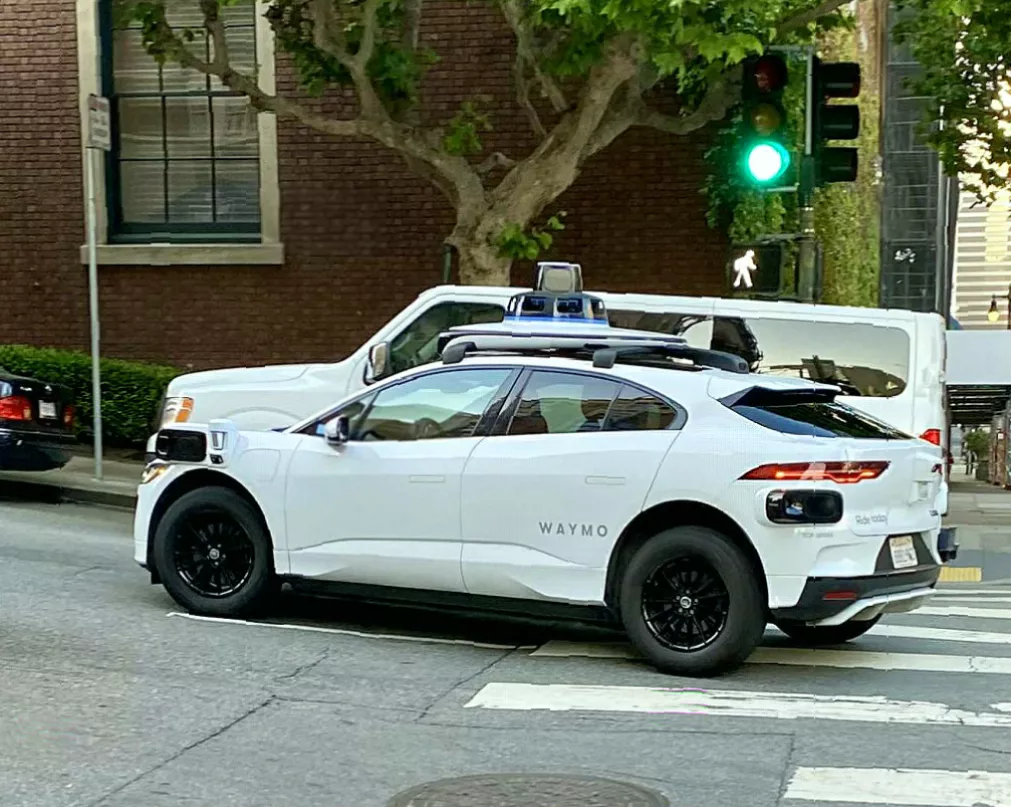
The crown jewel of the moonshots to date is Waymo, the autonomous-vehicle division that began life in 2009. Waymo shows how a massive cash cushion allows a company to outlast an industry cycle. While some car makers promised self-driving fleets by 2018 and then scaled back, Alphabet simply maintained its multi-billion-dollar funding trajectory. Waymo now operates roughly 3,700 robotaxis across major US cities, providing 500,000 paid rides per week. It is due to launch in London, with plans announced for 2026. What began as a highly speculative experiment has matured into a genuine advancement in transportation.
Deep underwater, Alphabet is building a global subsea cable infrastructure. The company has so far created 60,000 miles of armoured cabling crisscrossing the oceans — the plumbing of the internet, moving vast amounts of data at the speed of light. Notable projects include the Grace Hopper cable connecting the US, UK and Spain, and the Firmina cable running from the US to Argentina. By owning this infrastructure rather than renting space from third-party networks, Alphabet ensures its consumer services operate with lower latency than those of competitors. In December 2025, the company announced an agreement to acquire Intersect for $4.75 billion to advance energy innovation and capacity, aiming to support its data centre investments.
The acquisition machine
Alphabet has acquired more than 250 technology companies over the years, following a similar formula each time: acquire a promising but financially constrained start-up and scale it using the company’s engineering expertise and vast profits. Google Maps originated from Keyhole, a struggling start-up founded in 2001 that had developed a 3D digital globe called EarthViewer 3D, with early backing from the CIA. Keyhole sold its software on physical CDs to real-estate firms and defence agencies. Google recognised that around a quarter of all web searches were location-related and acquired Keyhole in 2004 for roughly $35 million, removing the expensive pricing and relaunching it as the free utility that is now almost as recognisable as the search engine itself.
The acquisition of YouTube in 2006 for $1.65 billion stemmed from Google’s own failure in online video — its in-house platform Google Video was losing ground. YouTube succeeded by offering a simple interface for uploading and streaming videos, but by summer 2006 it was struggling under the weight of its own popularity: hosting costs were soaring and copyright lawsuits threatened its survival. The takeover rescued YouTube from likely insolvency and allowed Google to secure the leading destination for online video. By the end of 2025, YouTube was generating more than $40 billion in annual revenue.
The 2005 purchase of Android is probably the most successful acquisition. As a start-up, it had been developing an operating system for mobile handsets but ran short of cash to fund engineering salaries. It employed just eight people and was bought for $50 million — such a small sum that it wasn’t even disclosed to the stock market. The goal was to prevent competitors from blocking Google’s search engine on mobile devices. By making Android free, Google rapidly came to dominate mobile software, capturing more than 72 per cent of the global smartphone market. This comparatively small investment helped ensure the search business continued to grow even as smartphone usage overtook computers.
The 2014 acquisition of DeepMind secured Alphabet’s lead in artificial intelligence. The London-based laboratory, founded by Demis Hassabis, Shane Legg and Mustafa Suleyman, had assembled one of the world’s strongest machine-learning research teams. Cutting-edge AI research is very expensive, requiring vast computing resources and highly paid engineers while producing little immediate revenue. Recognising that DeepMind needed the support of a deep-pocketed parent, the founders agreed to a sale to Google for roughly £400 million, with Hassabis remaining as CEO of the renamed Google DeepMind. The deal kept the research group in London and provided the resources to pursue foundational scientific breakthroughs. That long-term backing ultimately paid off: Hassabis’s work on protein folding using DeepMind recently won the Nobel Prize in chemistry.
In 2025, Alphabet made its largest acquisition to date, buying cloud-security company Wiz for $32 billion. The deal is being integrated into Google Cloud to bolster its multi-cloud protection capabilities.
Financial strength and investor perspective
Alphabet’s financial performance is robust across all segments. For the fiscal year 2025, total revenue is projected to reach approximately $402.8 billion, a 15 per cent increase from 2024. Google Search & Other alone is expected to bring in $224.53 billion, while YouTube Ads contribute $40.37 billion. Google Cloud revenue for 2025 is projected at $58.71 billion, with a segment profit margin of 23.69 per cent. The company’s net profit margin typically sits around 30 per cent, and operating income increased by 34 per cent in the third quarter of 2024, with an operating margin of 32 per cent.
The shares of Alphabet rarely look cheap on conventional valuation metrics, but history suggests that waiting for a deep-value entry point has been a fool’s errand. Ever since the company listed in 2004, there has never really been a bad time to buy — though the shares have fallen significantly several times, dropping roughly 50 per cent during the 2008 financial crisis and weathering several 20-to-30 per cent declines since. Every single decline proved to be an exceptional buying opportunity as underlying earnings moved relentlessly higher. An investor who bought $1,000 worth of stock at the IPO would have approximately $146,869 today. In 2025, Berkshire Hathaway made a significant $10 billion anchor investment in Alphabet, signaling confidence in its AI and cloud strategy. Analysts maintain a consensus “Buy” rating with an average 12-month price target around $427.38, and forecasts suggest the stock could surge past $500 by 2030, driven by AI and cloud growth.
The wealth generated by the company is not limited to senior executives. In 1999, when Google employed just 40 people, massage therapist Bonnie Brown joined the company part-time on a salary of $450 a week — but she also received stock options. Five years later, she retired a multi-millionaire and went on to create her own charitable foundation. Had she kept her shares, she would now be a billionaire.