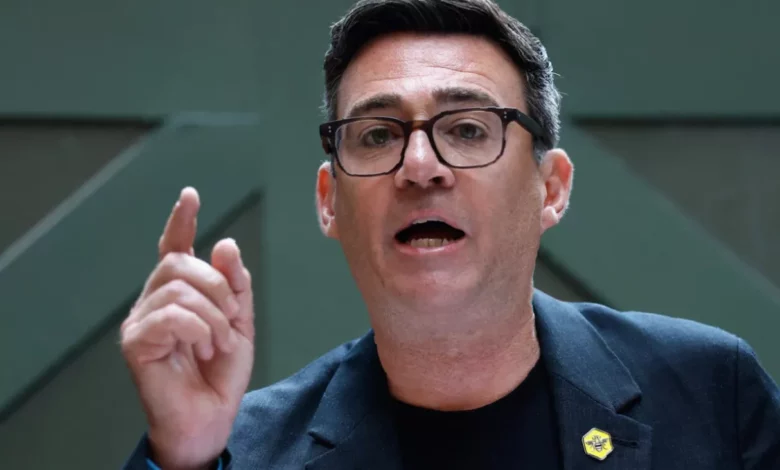
Andy Burnham’s path to Number 10 could mean significant changes to your household finances, with the Labour frontrunner signalling a series of tax and spending shifts that would affect everything from your mortgage repayments to your property tax bill. Following Keir Starmer’s resignation and his own emphatic victory in the Makerfield by-election on June 18, 2026, the former Greater Manchester mayor now stands as the clear leading contender to become prime minister. In his victory speech he called for a country that “works fairly for everywhere”, but the detail of his economic plans is only now beginning to emerge.
Economic impacts and market reaction
The first test for a Burnham premiership would be the reaction of the financial markets. Money markets are a minefield of cause and effect, and the frontrunner has already shown he is aware of the tensions involved. In September last year Mr Burnham said: “We’ve got to get beyond this thing of being in hock to the bond markets.” That matters because UK government bonds, known as gilts, are sold off if markets dislike a new economic plan – or the lack of one. When gilts are sold, their price falls but the yield rises, and that yield is effectively the cost for the government to borrow money to spend on infrastructure and public services. Higher yields mean higher interest payments.
If overseas investors also lose faith, the pound can drop. Since Friday the pound has already fallen by 1.5 per cent. A weaker pound makes imports more expensive, fuelling inflation. A Burnham government that rapidly increases public spending, causing a surge in demand for products and services, could also be inflationary. When prices rise too fast the Bank of England can step in to consider raising interest rates, and if the market smells that possibility it will quickly push up swap rates – future expectations of interest rate movements that lenders use to price mortgages. When swap rates rise, headline mortgage rates follow, as evidenced during the Iran war.
Whoever occupies 11 Downing Street will play a critical role in how the markets respond. Dan Coatsworth, head of markets at AJ Bell, said: “Burnham’s choice of chancellor if he becomes prime minister could have a major impact on bond markets. Bond investors like boring and dull – they want someone who has a plan where the maths stacks up and they stick to it.” Mr Burnham has previously stated he will stick to the current fiscal plan, which aims for tax receipts to cover day-to-day spending by 2029-30, but his allies suggest he may seek a chief economic adviser with a background in finance, such as Jim O’Neill. The current chancellor, Rachel Reeves, is seen by markets as stable, consistent and predictable – all things they like. But her future in a Burnham government is uncertain.
Ed Miliband, who is close to Mr Burnham, has been touted as a potential chancellor. There are also reports that Wes Streeting could be considered for the role to stop him from launching a leadership bid. Prediction markets give Streeting a 70 per cent chance of becoming chancellor, and he is seen as a relatively market-friendly option due to his pro-growth comments and vocal belief in fiscal rules. Mr Miliband, by contrast, is perceived as more likely to back radical policy ideas, which could cause market apprehension. Julian Morse, co-chief executive of Cavendish, believes the markets would react more negatively to Miliband than to Streeting. Former transport secretary Louise Haigh is seen as one of Burnham’s closest allies, but a fraud conviction over a decade-old incident of falsely reporting a stolen phone could prevent her from being the country’s numbers person.
Edward Allenby, senior economist at Oxford Economics, pointed out that the speed of change might mean Mr Burnham has little choice other than to run with what is already planned. “There’s little to suggest Burnham’s team has a detailed policy package already in the works,” he said. “Developing that package in time for the autumn Budget will be made even harder if Burnham has to win a prolonged leadership contest first.”
Tax reforms: land value, income and inheritance
Mr Burnham’s core philosophy, according to his team, is that “wealth is undertaxed and labour is overtaxed”. That points towards a shift in how individuals are taxed, with several major proposals that could directly affect your finances.
The most eye-catching is a land value tax (LVT) to replace stamp duty on property sales. Mr Burnham wrote about this idea in The Guardian in 2010 and has previously suggested reforming both stamp duty and council tax. The proposal backed by campaign group Fairer Share, which Mr Burnham supports, would replace stamp duty and council tax with a single levy equivalent to 0.48 per cent of a property’s value. Tom Bill, head of UK residential research at estate agents Knight Frank, said: “It won’t be a top priority but a move to tax the asset rather than the transaction appears to be on Burnham’s radar. The simplicity of the proposal is commendable and scrapping stamp duty makes sense given how it hinders social and economic mobility, but the proposal in question feels too overtly political. Shouldn’t the sole aim be to maximise tax revenue?”
The change would not be popular with everyone. Under the plan landlords, developers, overseas buyers and second-home owners would pay more. Mr Bill noted that a similar approach with stamp duty since 2014 has curbed activity in high-value locations where most revenue is presumably targeted. “A regular flow of tax receipts has obvious benefits for the chancellor, but politicising the housing market feels like an approach that’s been tried and failed.” The process could also lead to higher rents through a reduction in the number of properties available, Mr Bill added, and there are implementation costs to consider. Tim Stovold, head of tax at accountancy firm Moore Kingston Smith, warned the Financial Times: “A tax of this type will reduce property values when introduced.”
On income tax, Mr Burnham has talked about raising the personal allowance, which has been frozen at £12,570 for more than five years. That move would put more money in the pockets of low earners and basic-rate taxpayers, while recent lifts to the state pension have put retirees on the verge of paying tax even if they have no other income. At the other end of the scale, he has suggested there is “definitely a case” to reintroduce the 50p top rate of income tax. It currently stands at 45 per cent on income above £125,140.
Inheritance tax (IHT) would be abolished under one bold idea Mr Burnham has repeatedly advocated. He wants to replace it with a social care levy on inherited assets, structured so that everyone contributes but the wealthiest pay the most. This would fund social care and simplify the system. However, it may not necessarily reduce the overall tax burden on larger estates. The current system is set to soon incorporate unused pensions, which it hasn’t previously, making succession planning far more important and tricky for families.
Rob Morgan, chief investment analyst at Charles Stanley Direct, believes that “bolder moves on taxation certainly appear to be a possibility” under a Burnham premiership. On capital gains tax, Wes Streeting has proposed aligning rates with income tax bands, but Mr Burnham’s position on that is less clear.
Public ownership and transport
Mr Burnham’s record in Greater Manchester offers a glimpse of his governing style. He was instrumental in capping single bus fares at £2 after bringing the transport network into public control. Usage rose accordingly, but council taxes were raised to subsidise the move. Nationally, bus fares are currently capped at £3 for most single journeys.
On water, Mr Burnham has been outspoken. He told The Guardian earlier this month: “If you look at water as an industry as a whole, it’s run predominantly in the private interest rather than the public interest, or in other words, it’s an industry where the shareholders can never lose and the bill payers never win.” He has specifically argued that public ownership is “absolutely an option” for Thames Water, which is billions of pounds in debt and serves a quarter of the UK population. Thames Water is currently facing a £3 billion emergency bailout and ongoing restructuring talks. Share prices in FTSE 100 water firms Severn Trent and United Utilities were both down 1.5 per cent on Friday, as investors showed early caution over the potential for nationalisation. With those firms in particular, however, the conversation is markedly different: they are profitable public-listed companies, not struggling utilities.