Trump administration intensifies clash with California coastal agency over energy production

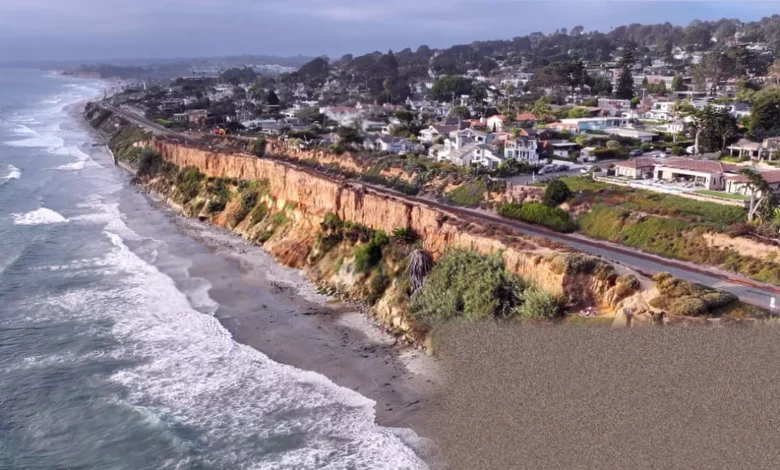
The Trump administration has formally escalated a high-stakes energy dispute with California by launching a federal performance evaluation of the state’s coastal watchdog agency. Commerce Secretary Howard Lutnick accused the California Coastal Commission (CCC) of “environmental terrorism” in a May letter that triggered the mandatory review, alleging the Golden State had obstructed spaceport developments and offshore oil production.
Federal review targets Coastal Commission
Under the Coastal Zone Management Act, the National Oceanic and Atmospheric Administration (NOAA) is legally required to conduct evaluations of federally approved coastal management programmes. These reviews assess “the extent to which the State of California has implemented and enforced the program approved by the [commerce] Secretary”. Lutnick’s letter, posted by the US Department of Commerce in May, called for such an evaluation of the CCC’s stewardship across a broad range of resources — including spaceport infrastructure, offshore oil production, pipeline maintenance, desalination projects and undersea cables. He characterised the commission’s management as “woefully inadequate at best” since the Biden administration and accused California of “environmental extremism” and “obstructing technological innovation and economic development”.
The outcome of the evaluation could lead to a reduction in federal funding for the CCC or other measures that diminish the state’s authority over its coastline. California’s Secretary for Natural Resources, Wade Crowfoot, has described the investigation as an “attack” on the collaborative relationship between state and federal agencies in managing the coast. A spokesperson for the CCC countered by noting that every offshore oil development project had been approved when it met restrictions on spill prevention, water quality and habitat protection. They also pointed out that since 1980, only two of 135 proposed space launch projects had been denied, both by Elon Musk’s company. California Governor Gavin Newsom has not yet commented on the evaluation.
Spaceport dispute and SpaceX settlement
The immediate trigger for Lutnick’s complaint appears to be a decision last August, when the coastal commission declined to grant a US Space Force request to increase the number of SpaceX rocket launches from Vandenberg Space Force Base on California’s central coast. Elon Musk’s aerospace company subsequently sued the agency, alleging political bias and retaliation due to Musk’s political views. That lawsuit was settled in April. As part of the settlement, the CCC issued a formal apology for “improper” statements made by commissioners that reflected political bias. The commission agreed that in future regulatory actions it would not consider the perceived political beliefs or practices of SpaceX or its officers. The settlement also means the CCC will not require SpaceX to obtain additional coastal development permits for its expanded launch programme at Vandenberg. The US Department of Commerce did not immediately respond to a request for comment about which specific spaceport proposals Lutnick was referencing.
Oil production dispute
California has also been at odds with the Trump administration over oil production. Democrats in the Golden State have touted a commitment to renewable energy, aiming for a carbon-neutral electrical grid by 2045. But as global gas prices have risen in the wake of the US-Israel war with Iran, the administration has doubled down on domestic oil production, including in California. The administration invoked emergency powers under the Defence Production Act to order the restart of the Sable Offshore Corp. oil pipeline in Santa Barbara County. The pipeline had been shuttered for more than a decade after it ruptured in 2015, sending over 140,000 gallons of crude oil into the ocean. Energy Secretary Chris Wright issued the order, citing a “national energy emergency” and the need to address supply disruption risks linked to the conflict with Iran.
California Attorney General Rob Bonta has filed multiple lawsuits to block the administration’s actions. “Let’s be clear: this illegal attempt from the Trump administration lets Sable profit at the expense of our environment and public health,” Bonta said in a May news release, adding that the federal government was interfering with the state’s “sovereign authority”. A California court has since ruled that the federal order does not nullify previous injunctions requiring state approval for the pipeline’s restart. Critics, including Governor Newsom, argue the move exploits the crisis to benefit the oil industry and has not led to lower gasoline prices. Sable, which purchased the pipeline system from ExxonMobil in 2024, has indicated that restarting operations could significantly increase oil production.
Obstructionist policies that delay critical national infrastructure in the name of environmental extremism are unacceptable. pic.twitter.com/16UYEsEutF
— U.S. Department of Commerce (@CommerceGov) May 22, 2026
Offshore wind battle
California has been embroiled in a separate legal dispute with the federal government over offshore wind energy. The state has a goal of developing 25 gigawatts of offshore wind capacity by 2045 and has invested over $100 million in port infrastructure, transmission systems and industry readiness. The US Department of Transportation dealt a blow to those plans when it withdrew a nearly $427 million Biden-era grant for a proposed offshore wind project that was intended to produce electricity for 25 million homes.
The conflict has deepened as the Trump administration has moved to buy back offshore wind leases, paying companies to abandon their projects. This strategy emerged after federal courts blocked the administration’s earlier attempts to halt offshore wind development through executive action. California is now threatening to sue the US Department of the Interior over a $120 million buyout of the Golden State Wind (GSW) lease off the Central California coast. GSW, a joint venture, agreed to cancel its lease in exchange for the payout, with the condition that the funds be reinvested in US oil and gas, energy infrastructure, or liquefied natural gas projects. California alleges the deal violates the Outer Continental Shelf Lands Act by excluding the state from the decision-making process and by circumventing required regulations.
The administration has also reportedly paid $765 million to Invenergy and $1 billion to TotalEnergies for similar lease buyouts. Interior Secretary Doug Burgum stated that these companies were incentivised to invest in “dependable, secure energy infrastructure” rather than projects previously “propped up by massive taxpayer subsidies”. California officials argue the buyouts threaten the state’s clean energy goals, thousands of jobs, and public investments in the offshore wind industry. Last week, Bonta sent the Trump administration a notice of intent to sue. “California won’t stand idly by as the Trump Administration illegally strikes deals to kill offshore wind projects and replace them with more windfalls for his fossil fuel friends,” he said in a statement.
California’s renewable energy ambitions face additional headwinds beyond the lease buyouts. The state has seen renewable energy generation rise — renewables accounted for 41.3% of generation in 2024, up from 36.9% in 2023 — but it missed its 2024 target of 44% from Renewable Portfolio Standard-eligible sources. A federal budget bill passed in July 2025 eliminated the Investment Tax Credit for utility-scale wind and solar projects, creating a further obstacle for expansion. Key legislation supporting the state’s goals includes SB 100 (the 100 Percent Clean Energy Act of 2018) and SB 1020 (the Clean Energy, Jobs, and Affordability Act of 2022), alongside AB 1373 for offshore wind procurement and AB 3 for seaport readiness.