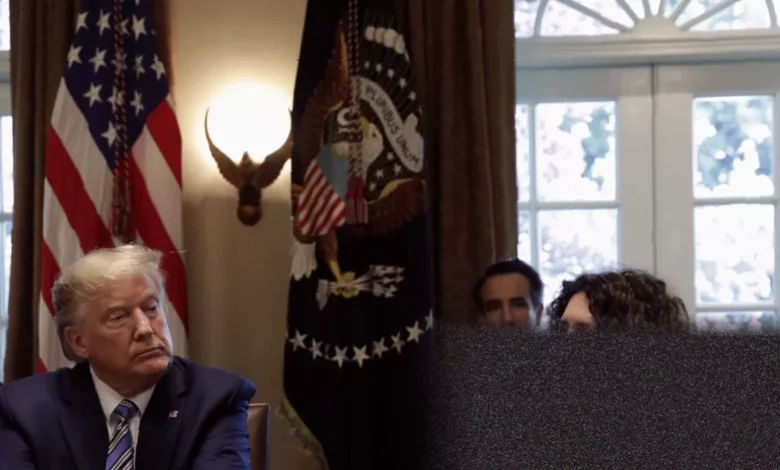
A 30-second video launched in Washington DC this month depicts a father helping his son at the wheel of a tractor, a smiling couple on a grass-lined pavement, and then cuts to grainy images of “crypto insiders” in suits. “American families don’t want experiments with their money,” a voice booms over the images of small-town America. “They want jobs, growth, and available credit. When crypto gets a free pass, communities pay the price.”
The advert is the centrepiece of a six-figure advertising campaign by the Independent Community Bankers of America (ICBA), a trade group that represents around 4,000 small community banks across the United States. The campaign aims to build public opposition to the Digital Asset Market Clarity (CLARITY) Act of 2025, a landmark piece of legislation that would create the first comprehensive federal regulatory framework for the country’s multibillion-dollar crypto sector.
What the Clarity Act would do
Introduced by House Committee on Financial Services Chairman French Hill, the CLARITY Act is designed to provide clear rules for digital-asset market participants while prioritising consumer protection and innovation. The bill would divide oversight of digital assets between the Securities and Exchange Commission (SEC) and the Commodity Futures Trading Commission (CFTC). The CFTC would gain exclusive jurisdiction over “digital commodity” spot markets, while the SEC would retain authority over assets that qualify as investment contracts. It also establishes a registration regime for digital commodity exchanges, brokers and dealers under CFTC oversight, includes tailored disclosure requirements and restrictions on insider trading, and expands safe harbour provisions for decentralised finance (DeFi) platforms, exempting non-custodial protocol participants from registration.
The bill passed the House of Representatives on July 17, 2025, with a bipartisan vote of 294–134, and was advanced by the Senate Banking Committee on May 14, 2026, by a 15–9 vote. It now sits on the Senate Legislative Calendar, though further reconciliation with a version produced by the Senate Agriculture Committee and a 60-vote floor majority are still required before it can reach the President’s desk.
A separate piece of legislation, the Guiding and Establishing National Innovation for U.S. Stablecoins (GENIUS) Act, was signed into law in July 2025. That law established a federal framework for stablecoins — cryptocurrencies whose value is typically pegged to an asset such as the US dollar — requiring issuers to back them one-to-one with reserves and prohibiting the payment of interest on stablecoin holdings. The CLARITY Act goes further by addressing rewards for using or transferring stablecoins, and it is this provision that lies at the heart of the ICBA’s opposition.
Community banks warn of a deposit drain
The ICBA is concerned that the Clarity Act, in its current form, would allow crypto companies to pay out rewards and incentives to customers for transferring or using stablecoins. Those incentives, the association argues, would encourage individuals to shift their cash out of local lenders and on to international crypto platforms, potentially draining $1.3tn (£980bn) of deposits from community banks. That loss of deposits, in turn, would deprive small businesses and farmers of an estimated $850bn in loans — credit that is primarily funded by customers’ savings held in local banks.
“Community banks fund more than 60% of all small business loans and 80% of agricultural loans across the US,” said Rebeca Romero Rainey, president and CEO of the ICBA. “They are, in many cases, that local economic engine, because they are taking local deposits and redeploying them in the form of loans, and creating economic growth.” If the Clarity Act passes as drafted, Rainey asked: “How are those loans funded in the future? And we might argue they wouldn’t be.”
The ICBA has engaged in extensive lobbying, sending more than 8,000 letters to Senate offices ahead of key votes. Rainey has also testified before Congress and met with past presidents. The group’s campaign broadens the battle over crypto regulation beyond Wall Street — where big banks such as JP Morgan have long opposed elements of the bill, putting them against crypto bosses like Coinbase’s billionaire chief executive, Brian Armstrong — and into rural America, raising questions about the real impact of the Trump administration’s push to legitimise cryptocurrencies.
Troy Richards, president of Guaranty Bank & Trust, a nine-branch community lender in north-east Louisiana with 68 staff and $330m in assets, is already counting the costs. He says $40,000 has flowed out of customer accounts to crypto investments over the past 90 days alone. While that remains a relatively small amount for his bank, Richards fears it is a sign of what is to come. “It’ll only be exacerbated if the issuers of stablecoins, or the exchanges that are involved, are going to be allowed to pay interest or rewards. That’s just going to accelerate that deposit outflow, even more than now.”
Whether that could lead to a “silent bank run” — a slow demise as deposits trickle away to tech firms — “that’s the question of the day,” Richards said. If deposits dwindle, community banks will have to find more expensive sources of funding, pushing up costs and restricting the loans available for local borrowers. The ripple effects would be felt throughout the communities that Richards has worked with for more than 40 years. “These crypto issuers are not in our local communities. They can’t sit across the desk from a farmer, or from a small business owner, and counsel with them on how to improve their business. They don’t sponsor the local little league team, they don’t buy ads in the local high school yearbook, and they’re not paying local ‘ad valorem’ taxes” — a reference to local property taxes that benefit school systems and municipalities.
Some crypto advocates argue that stablecoin reserves will end up being held at traditional banks, potentially offsetting the losses. Richards is sceptical: “I don’t think any of the issuers of stablecoins are going to be looking to have their reserves at Guaranty Bank in north-east Louisiana. So that’s not going to happen for us.”
The crypto industry’s counter-argument
Crypto lobbyists contend that major concessions have already been made. The Clarity Act was originally drafted to allow rewards on stablecoin holdings — akin to interest on bank deposits — but was later amended to permit rewards only for bona fide activities or transactions. The ICBA views this distinction as a loophole, arguing that it still allows crypto platforms to offer incentives that compete directly with bank deposits. The updated language in the bill bars stablecoin yield that is “economically or functionally equivalent” to interest, but the ICBA says that falls short of a robust prohibition.
Cody Carbone, chief executive of the American crypto trade group Digital Chamber, dismissed the ICBA’s campaign as an attempt to protect an outdated business model. “ICBA’s campaign isn’t about protecting Main Street, it’s about shielding an outdated model from competition,” Carbone said. “Our industry is fighting for clear federal rules through the Clarity Act, while ICBA is fighting to keep Americans locked out of innovation. Clear rules of the road will protect consumers and establish a transparent, fair way for crypto to be a choice for the 70 million Americans who own crypto.”
The ICBA responds that it welcomes competition, but only on a “level playing field” where any firm vying for deposits is subject to the same regulation, safeguards and capital requirements. Community banks, it argues, have already adapted to the rise of fintechs and have been forced to innovate. “We’re not afraid of competition so long as it’s fair,” Richards said.
The legislative fight also creates an ideological dilemma for Republican lawmakers heading into the midterm elections, forcing them to choose between the Trump administration’s pro-crypto agenda and the small farmers and rural business borrowers who have historically formed a bedrock of Republican support. Meanwhile, some law enforcement associations and anti-corruption advocates have warned that the Clarity Act, as currently written, could create gaps in safeguards against money laundering in digital currencies, arguing that a “light-touch regulation” could foster a false perception of safety. Broader analyses have also flagged that insufficient investor protections may disproportionately affect Black Americans, who are significant investors in cryptocurrency. The European Union’s Markets in Crypto-Assets Regulation (MiCA) is often cited as a more proactive international framework.
“The crypto industry, I think, has done a pretty effective job of getting their message across,” Richards said. “It’s our turn now.”