Mercury has raised $200 million in a Series D funding round led by TCV, lifting its valuation to $5.2 billion — a 49 per cent increase from the $3.5 billion it commanded after its Sequoia-led Series C just 14 months ago. The San Francisco fintech, which serves one in three early-stage US startups, said the round included participation from returning investors Andreessen Horowitz, Coatue, CRV, Sapphire Ventures, Sequoia, and Spark Capital. TCV, the growth equity firm whose portfolio includes Revolut, Nubank, and Netflix, is the sole new institutional backer. The raise brings Mercury’s total primary and secondary funding to approximately $700 million, according to the company.
The financing comes as Mercury pursues a national bank charter and positions itself as the financial infrastructure layer for the current AI startup surge. The company said it hit $650 million in annualised revenue in the third quarter of 2025 and has been profitable on both GAAP net income and EBITDA bases for four consecutive years. In the first quarter of 2026, new account applications jumped 2.5 times year-on-year, tracking almost exactly with the US Census Bureau’s reported 18 per cent surge in new US business formations over the same period.
From frustrated founder to fintech builder
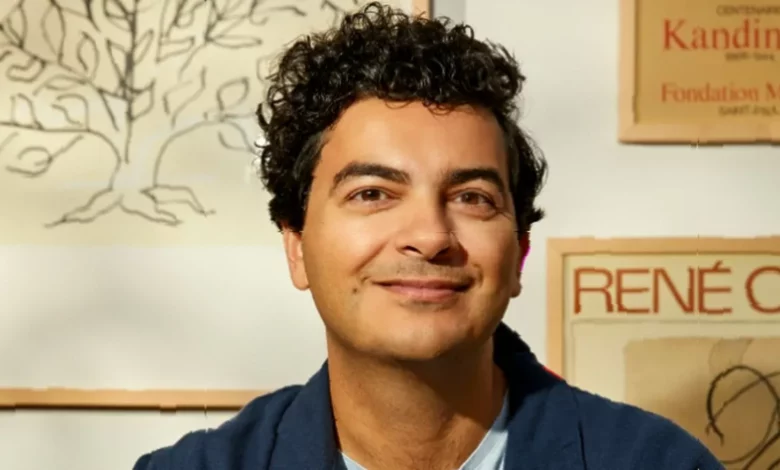
The man behind Mercury is Immad Akhund, a Pakistani-born entrepreneur who moved to London at nine, studied computer science at Cambridge, and arrived in San Francisco on a Y Combinator visa. Before founding Mercury in 2017, he had opened business accounts in three different countries and watched banks treat his startup customers like an afterthought. That experience shaped every decision at Mercury. Akhund knew what founders — especially immigrant founders building their first US company — actually needed: speed, transparency, no minimum balances, no branch visits, no relationship managers who didn’t return calls. He did not discover this through user research; he lived it. When he sold Heyzap, his mobile developer tools company, to Fyber for $45 million in 2016 and began thinking about what to build next, the answer was the thing that had frustrated him across every company he had ever run.
Akhund has since backed more than 100 seed-stage companies as an angel investor, including Airtable, Substack, and Rappi, giving him a front-row seat to early-stage company formation. He co-founded Mercury with Max Tagher, the chief technology officer who has contributed to open-source Haskell projects, and Jason Zhang, the chief operating officer who previously served as vice president of business development at Heyzap. Zhang, who has a background in biology, oversees product strategy, design, customer support, and operations.
Mercury’s AI push and the path to becoming a bank
Mercury is not a bank. It operates as a financial software platform that routes business accounts, corporate cards, bill pay, invoicing, and expense management through banking partners Choice Financial Group and Column N.A. What it has built on top of that infrastructure is what 300,000 customers are actually paying for.
Over the past year, Mercury has moved aggressively beyond core banking. Mercury Insights gives customers real-time, AI-driven visibility into their finances without requiring external tools. The company has also introduced a command-line interface and Model Context Protocol access that let AI agents interact directly with banking infrastructure. In April 2026, Mercury acquired Central, an AI-native payroll and benefits platform — a move widely seen as an acqui-hire that brings in a team with deep payroll expertise. Later this year the company plans to launch Mercury Command, an AI assistant that handles banking and financial tasks through natural language prompts.
The most significant development came on April 27, 2026, when the Office of the Comptroller of the Currency granted Mercury conditional approval to establish Mercury Bank, N.A. — just five months after the company filed its application in December 2025. Once the charter is finalised, it will allow Mercury to offer Zelle integration, expand its lending capabilities, and take direct control over payments infrastructure that it currently routes through partners. The approval signals a maturing regulatory landscape for fintechs seeking to operate as regulated institutions.
“AI is collapsing the friction between an idea and a company faster than anything I have seen in my career,” Akhund said. “We are going to see more founders in the next five years than in the last twenty. But legacy banking in 2026 still works the way it did when I started my first company in 2006. I started Mercury because banking should do more than be a vault — it should help customers run the best business possible.” For two decades, Silicon Valley’s banks were the same banks everyone else used: JPMorgan, Bank of America, Wells Fargo with a startup-branded landing page bolted on. Mercury spent eight years filling that gap, and its customer list today reads like a roll call of the current AI cohort: Supabase, ElevenLabs, Lovable, Linear, Phantom, Tempo.
The competitive landscape just got simpler
Capital One completed its $5.15 billion acquisition of Brex on April 7, 2026, absorbing Mercury’s closest historical startup-banking rival into a traditional bank holding company at less than half its 2022 peak valuation of $12.3 billion. The acquisition price reflected broader valuation compression across the fintech sector, where the “growth-at-any-cost” era has given way to a greater emphasis on profitability, unit economics, and margin discipline.
Ramp, valued at $32 billion in November 2025 and reportedly in talks to raise at over $40 billion, competes primarily on expense management and corporate cards rather than full banking infrastructure — formidable but structurally adjacent rather than a direct banking rival. Its business model centres on interchange fees and subscription services, using AI-powered financial automation to save businesses money. Meanwhile, Revolut’s aggressive push into the US market, backed by a $3 billion raise at a $75 billion valuation, represents the most credible international threat to Mercury’s founder-banking turf, targeting the same AI-native startup demographic from the consumer side.
The broader fintech landscape is consolidating. The acquisition of Brex by Capital One is indicative of shifting market conditions and tighter funding. At the same time, 2026 has seen an unprecedented surge in AI startup funding: in the first quarter alone, AI startups attracted $242 billion, representing 80 per cent of total global venture funding. Seed rounds are commanding a 42 per cent premium, and mega-rounds exceeding $100 million are becoming common even at the seed stage. Mercury reportedly gained significant customers and deposits following the March 2023 failure of Silicon Valley Bank, and it has maintained profitability for four consecutive years — a record few fintech competitors can match.