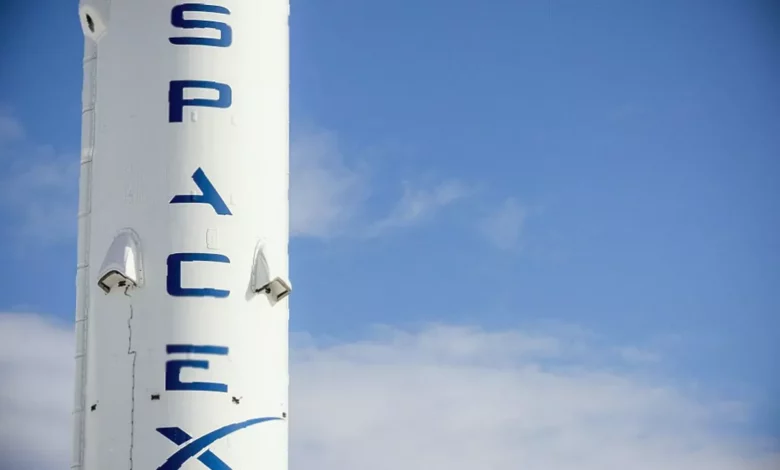
SpaceX has filed for its stock market debut, potentially the largest initial public offering in history, after months of speculation over when the space and artificial intelligence giant would go public.
IPO Details and Timeline
The company submitted its S-1 registration statement to the US Securities and Exchange Commission on 20 May 2026, confirming it will list on the Nasdaq exchange under the ticker ‘SPCX’. Documents show SpaceX aims to begin a roadshow of investor presentations around 4 June, when the price range will be set, with the flotation tentatively scheduled for 12 June — a date previously reported by Reuters, citing unnamed sources familiar with the company’s plans. The registration statement itself says the IPO will take place “as soon as practicable” after the SEC declares the filing effective. Investment administration firm Computershare notes that the gap between an S-1 filing and listing is typically about 35 days, which would place the debut in late June or early July.
Goldman Sachs is leading the underwriting syndicate, with a total of 21 banks involved. In an unusual move, SpaceX has allocated approximately 30% of the IPO shares for retail investors — three times the typical level for a mega-cap flotation.
Valuation and Market Impact
The potential valuation of SpaceX dwarfs almost every other company on the planet. Reports indicate the company is targeting a valuation of between $1.75 trillion and $2 trillion at its IPO. To put that in context, it would leapfrog Microsoft and trail only Apple and Nvidia among the world’s most valuable businesses. London-listed investment trust Scottish Mortgage, which holds a significant stake in the company, currently assumes a $1.25 trillion valuation for its internal book-keeping.
The sheer scale of the valuation is driven by SpaceX’s belief in its total addressable market (TAM), which the filing estimates at $28.5 trillion. The vast majority — $26.5 trillion — is ascribed to artificial intelligence, with enterprise AI applications expected to account for $22.7 trillion alone. AI infrastructure is seen as a $2.4 trillion opportunity. By contrast, space-enabled solutions are pegged at just $370 billion, and connectivity services such as Starlink broadband and mobile are expected to make up $1.6 trillion.
Dan Ives, head of global technology research at Wedbush Securities, described the listing as potentially “the largest IPO in stock market history as the company remains at the centre of two of the largest growth opportunities over the coming decades” — space and AI. The company’s dominance in the launch market is already established: in 2025 SpaceX performed more than 80% of all US licensed space launches and 165 orbital launches globally, accounting for approximately 51% of worldwide launches and carrying 85% of all satellites.
Yet the financial picture is complex. SpaceX generated $18.7 billion in total revenue in 2025, a 33% increase from the previous year, but posted a net loss of $4.9 billion. Losses have continued into 2026, with a $4.28 billion deficit in the first quarter alone, bringing the accumulated shortfall to over $41 billion. Starlink is the company’s only consistently profitable segment on a GAAP basis, producing $11.4 billion in revenue (61% of total) and an operating profit of $4.4 billion last year. The AI division, significantly expanded after the merger with xAI in February 2026, reported operating losses of $6.35 billion in 2025, with capital expenditure on AI reaching $12.7 billion that year and $10 billion in the first quarter of 2026. Meanwhile, the launch business posted a $662 million loss in the first quarter of 2026, as investment in the Starship programme continues. Payload delivery to orbit using Starship is planned for the second half of 2026.
The IPO’s success could trigger a wave of similar mega-cap tech flotations, according to Stephen Dover, chief market strategist at investment manager Franklin Templeton. He said AI developers OpenAI and Anthropic, along with other private giants such as Databricks, Stripe and Anduril, could follow, “potentially creating a wave of new market capitalisation large enough to reprice growth equities more broadly”. However, he warned that if several huge IPOs occur in the same window, “they will compete for capital not only with each other, but also with existing publicly traded growth stocks. That could create rotation pressure across software, semiconductors, fintech, defence tech and AI beneficiaries.” Dover added that the increased scrutiny of public markets could test the valuations of these companies, most of which have raised large sums at very high prices.
Investment Options
Until SpaceX lists, most individual investors cannot buy shares directly, but there are indirect routes. UK-based investment trusts hold significant positions: Scottish Mortgage (LON: SMT) had 17.9% of its portfolio in SpaceX as of 30 April, Edinburgh Worldwide (LON: EWI) held 18.9%, and Schiehallion (LON: MNTN) held 11.8%. Alphabet, the parent company of Google, also holds an estimated stake of more than 6% as of the end of 2025, offering another indirect exposure.
For accredited investors, pre-IPO marketplaces such as Hiive and EquityZen provide opportunities to buy stakes before the flotation. After the IPO, most brokers that allow trading in US shares should enable direct purchases. Investors who have not yet traded US-listed stocks may need to complete a W-8BEN form to qualify for a reduced US tax rate. Depending on how quickly SpaceX is added to major indices, it could also appear in index tracker funds, giving passive investors exposure without any action.
The risks are considerable. The company is targeting a valuation of around 100 times sales — Nvidia trades at roughly 20 times sales — and continues to burn cash heavily. Elon Musk holds more than 50% of the equity and approximately 85% of the voting power through super-voting shares, raising governance concerns. The filing also reveals that SpaceX holds 18,712 bitcoin, worth between $1.29 billion and $1.45 billion at the time of the document, and that the company purchased $131 million worth of Tesla Cybertrucks. Musk’s compensation is largely tied to financial performance and goal achievement, mirroring his package at Tesla. Whether the IPO meets its lofty valuation targets will depend on investors’ appetite for a business that blends rapid revenue growth with deep losses, a dominant space franchise, and an ambitious but unprofitable AI bet.