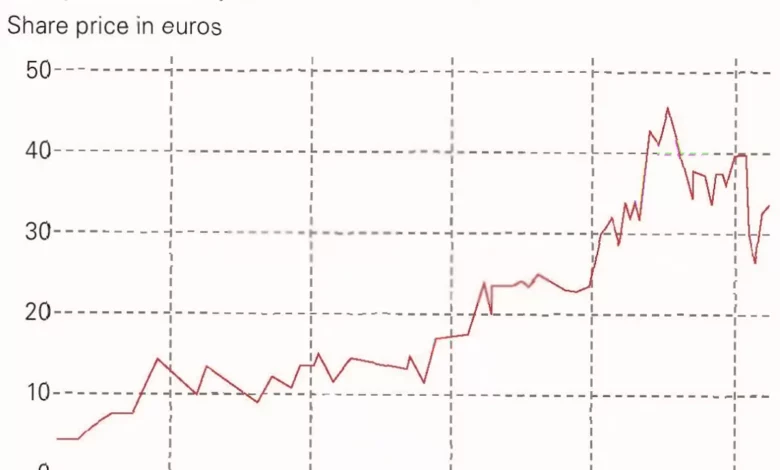
In the world of corporate investment, few strategies have proven as durable as the buy-and-build model, and one of its most compelling modern exponents is the German conglomerate, Chapters Group. The firm’s playbook is to systematically acquire unloved, often ageing businesses at low valuations, professionalise their operations, and weave them into a larger, more valuable whole.
A Demographic Tailwind and a Fragmented Market
The opportunity Chapters is exploiting is rooted in a stark European demographic reality. According to the company, there are an estimated 1.1 million small software businesses across the continent, many founded in the 1980s and 90s. Their founders are now reaching retirement age, often with no succession plan in place. These are not flashy startups but “mission-critical” B2B software providers—the unglamorous systems that keep police forces, public transport, and niche industries running. Their revenue is incredibly sticky, as the cost of failure for clients is catastrophic.
Chapters Group, shaped since 2018 by CEO Jan-Hendrik Mohr, a former fund manager and student of Warren Buffett’s philosophy, targets these businesses. It acquires them at what it describes as “sensible multiples” of roughly six to seven times earnings, a significant discount to the double-digit multiples common in larger tech deals. Since 2019, the group has completed over 30 such acquisitions.
Platforms for “Mission-Critical” Needs
To manage this growing portfolio, which expanded from 9 operating companies in 2020 to 55 across 10 countries by mid-2025, Mohr has organised Chapters into distinct vertical platforms. Each focuses on areas where software is a functional necessity. The public-sector hub provides essential infrastructure, such as software for German police forces or bus timetable systems. The enterprise hub develops specialised industrial tools, like bespoke management systems for motorcycle retailers. The financial technologies hub is led by Fintiba, which digitises regulatory compliance for international students and workers moving to Germany.
The “Manuscript Method”: Scaling Without Strangling
The true secret to Chapters’ ambitious scaling, however, lies in its operational framework, dubbed the “manuscript method.” This system is designed to prevent the corporate bureaucracy that often stifles acquired entrepreneurs. It grants local business units near-total autonomy over daily operations, contract negotiations, and hiring, provided they adhere to rigid, non-negotiable parameters on financial reporting, HR standards, and integration into central data systems.
This “freedom-within-limits” model aims to preserve the entrepreneurial drive at the subsidiary level while allowing the wider group to benefit from shared efficiencies and data. The company states that developing this pragmatic, trusted exchange with its platforms has also enabled an aggressive group-wide AI strategy. For Chapters, AI is not a threat to its legacy systems but a tool to enhance its own products and accelerate development, thereby lowering costs.

Backing from the “Outsiders” and a Financial Snapshot
This long-term, systematic approach has attracted a notable roster of permanent-capital investors. The shareholder list includes Mitch Rales, co-founder of the industrial giant Danaher, which itself used a similar buy-and-build strategy to achieve colossal scale. It also features Spotify founder Daniel Ek, whose investment philosophy prioritises infrastructure and long-term compounding. Perhaps most telling is the backing of William Thorndike, author of the seminal book *The Outsiders*, which profiles CEOs who delivered legendary returns through disciplined capital allocation—suggesting he views Mohr as a potential successor to that legacy.
Financially, Chapters Group has demonstrated rapid top-line growth. Preliminary results for the full year 2025 show pro-forma revenues of approximately €193 million, a 53% increase on the prior year. For the first half of 2025, revenues were approximately €85 million, up 51% year-on-year. This expansion has been fuelled by capital raises, including an €85 million round in August 2024 and a €40 million junior debt facility. However, the company has also reported net losses, which deepened to €11.47 million in 2024, a trend it attributes to factors like amortisation and consolidation effects as it integrates new acquisitions.
The Path to a Main Market Listing
For UK investors interested in the story, a practical hurdle remains. Chapters’ shares are currently traded on the German Scale exchange, a junior market akin to the UK’s AIM, which makes them ineligible for most ISAs and SIPPs. Management has signalled a clear intention to promote the company to the Frankfurt Stock Exchange’s Prime Standard, the German main market. This move, anticipated as early as later this year, is seen as a significant potential catalyst, as it would open the stock to a far wider pool of institutional and retail capital.
With an executive team, including CFO Marlene Carl and COO Marc Maurer, still in their 30s and 40s, Chapters Group is being orchestrated on a multi-decade horizon. Its journey underscores a patient form of value creation, building a whole it believes will be far greater than the sum of its acquired, mission-critical parts.