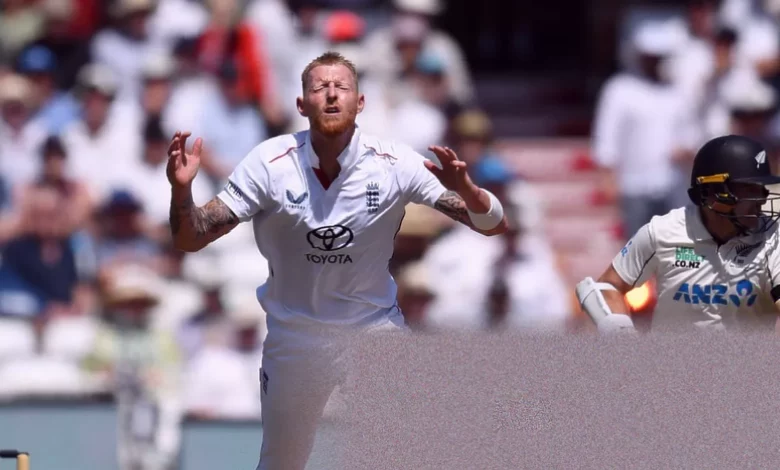
New Zealand reached 120-0 after 30 overs, with Tom Latham on 61 and Devon Conway on 56, as England’s bowlers toiled under sweltering Nottingham heat on the opening day of the series-deciding third Test at Trent Bridge. The opening partnership, which brought up its hundred in the 26th over, left the home side searching for a breakthrough on a pitch that offered little assistance and prompted questions about the direction of the team under the much-discussed “Bazball” approach.
Match situation: England’s attack struggle for answers
After New Zealand won the toss and elected to bat on a surface described as flat and dry, Latham and Conway made serene progress. The pair reached lunch at 108-0 from 28 overs, with Latham bringing up his 32nd Test half-century shortly before the interval. The post-lunch session continued in similar vein, Conway raising his fifty from the second ball of the afternoon. Gus Atkinson, returning to the side after missing the second Test for disciplinary reasons, was described as the pick of England’s bowlers for “the little that’s worth”, but conceded a full-toss that Conway dispatched for four through cover. Josh Tongue, Jofra Archer, and Shoaib Bashir all struggled to build pressure, with only a handful of maidens in the first 30 overs. Ben Stokes introduced himself into the attack in the 19th over, but the captain’s first delivery was edged for a single and the over yielded six runs. The sense of inevitability was captured by the OBO’s observation that “there’s no sense of pressure building, never mind a wicket coming.”
England’s selection for this match had already raised eyebrows. Ollie Robinson, who took 7-77 in England’s first-Test victory at Lord’s, was left out despite being available. Captain Ben Stokes, when pressed on the decision, cited “conditions-based” reasoning, saying the squad was being made larger to allow different options. However, the omission was widely interpreted as a fitness call, with concerns that Robinson would struggle in the extreme heat, where temperatures were forecast to reach 31°C. Stokes’s own return came after a disciplinary episode — a breach of curfew and an altercation at a nightclub — that also sidelined Atkinson. The pair were recalled for the decider, alongside wicketkeeper Jamie Smith, returning after the birth of his child, and off-spinner Shoaib Bashir, recalled in place of Sonny Baker.
Bazball’s spiritual home and its deeper philosophy
Trent Bridge is regarded as the spiritual home of Bazball, the aggressive, high-tempo style of cricket that England adopted under captain Stokes and head coach Brendon McCullum after the 2022 home series against New Zealand. It was here, in that same series, that Jonny Bairstow’s swashbuckling innings helped birth what became a cricketing movement. But the philosophy has evolved — and, some argue, been tested — after a tumultuous period that saw England lose the second Test at The Oval by 253 runs, equalising the three-match series at 1-1.
The original definition of Bazball, as encapsulated by the Collins dictionary, describes “a style of cricket in which the batting side attempts to gain the initiative by playing in a highly aggressive manner”. Yet a reader’s email published during the day’s play offered a more nuanced take, arguing that this description “misses its point completely”. The writer, Nigam Nuggehalli, suggested that Bazball has two essential elements: encouraging players to perform without fear, and encouraging them to “immerse themselves in and enjoy their work”. The aggression, he wrote, is “only a symptom”. The most remarkable aspect, he argued, is that the philosophy recognises that neither fearlessness nor enjoyment can be achieved individually — they require “a cultural shift, a community and most importantly, leadership”. The email concluded: “The tragedy is that we need a nurturing community to do so, and the presence of such a community is often just a matter of fortune. It happened to the English cricket team but such environments are more propitious than planned.”
The OBO’s author admitted to being an “early acolyte” for similar reasons, noting that Bazball was presented not merely as a tactic but as “a way of life” — a reminder to “take back ourselves and take attacking options”. The author also acknowledged that “changing something as resistant as Test cricket is also praiseworthy; we just got a little lost.” That sense of a philosophy under scrutiny is reinforced by the current match context. After England’s heavy defeat at The Oval, and with disciplinary issues clouding the dressing-room atmosphere, the question of whether the Bazball environment remains as nurturing as it once was has become part of the subtext.
Historical echoes and the weight of a series decider
The opening stand brought to mind an infamous morning at this ground. One reader, Steven Pye, recalled the 1989 Ashes Test at Trent Bridge, where Australia reached 301-0 at close of play on day one — a match England lost by an innings and 180 runs. The comparison was grimly apt: England’s bowlers, with only three slips and a gully, watched as Latham and Conway drove confidently through the off side and flicked through midwicket. The pitch, described as “as flat as a pancake”, offered little for the seamers, while Bashir — introduced as early as the 11th over, a rarity for a spinner in a home Test — found only a modicum of turn. The off-spinner has a good record at Trent Bridge, having taken a five-wicket haul against West Indies in July 2024 and six wickets against Zimbabwe in May 2025, but on this surface his early spell appeared a holding operation rather than a wicket-taking one.
New Zealand, meanwhile, were without key players of their own. Strike bowler Matt Henry was ruled out for two to four weeks with a calf injury; Glenn Phillips had a side strain that required a scan; and Kyle Jamieson was rested for workload management. Their replacements — Mitchell Santner, Ben Sears, and Blair Tickner — formed a less experienced attack. The visitors also wore black armbands in memory of Bob Blair, a New Zealand cricketer whose tragic but inspiring story was related by Simon Doull during the commentary.
The series decider carries significant implications for both sides in the World Test Championship. England, currently seventh in the standings, were fined 50% of their match fee and docked 12 WTC points for a slow over-rate in the second Test. A defeat here could effectively end their qualification hopes. New Zealand, fourth in the WTC table, are well placed but need results. The pressure also extends beyond the playing XI: England’s managing director of men’s cricket, Rob Key, and head coach Brendon McCullum are seen as facing scrutiny after the second-Test defeat and the off-field controversies. As the OBO’s pre-match commentary noted, “a win for England and things might move on; a win for New Zealand and it might be people moving on.”
With Latham and Conway still together at the crease after 30 overs, and the forecast for more sweltering heat, England face a long day — and a defining test of the Bazball project that began here four years ago. The bowlers’ workload, the captain’s return, and the philosophy’s resilience are all now in the spotlight.