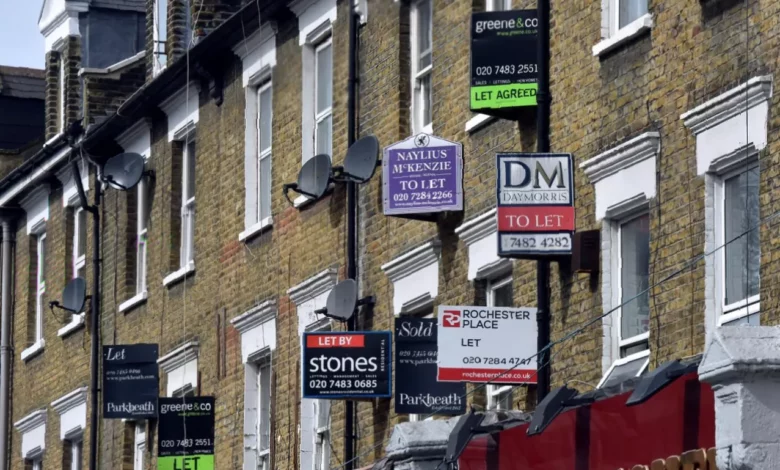
A leading left-of-centre think tank has called on the Government to introduce a “double lock” rent cap that would tie annual increases in the private rented sector to the lower of either inflation or average wage growth, arguing that tenants are being “pushed to the brink” by a market that passes the full force of global economic shocks on to households.
What is the ‘double lock’ rent cap?
The Institute for Public Policy Research (IPPR) has proposed a mechanism under which annual rent increases would be limited to whichever is the smaller figure: consumer price inflation (CPI) or the rise in average wages. The cap would apply to both existing tenancies and new tenancies, meaning that even when a tenant moves to a different property the increase from the previous rent could not exceed the double-lock ceiling. The aim, the IPPR says, is to ensure that rents rise in line with what people can actually afford to pay, rather than being dictated by landlord costs or wider market speculation.
To prevent the cap from discouraging new building, the IPPR recommends a time-limited exemption for newly constructed properties: they would be free from the cap for the first ten years. Landlords who make substantial improvements to a property, such as installing double glazing or solar panels, would also be permitted to raise rents above the cap. Beyond the cap itself, the think tank wants a licensing system for short-term let platforms such as Airbnb, including caps on the number of nights a property can be rented out on a short-term basis, to prevent landlords from converting homes out of the long-term rental market. It also proposes increasing housing benefit to cover the cheapest 30 per cent of rents in each area, which it estimates would cost the public purse around £600 million a year.
Why the IPPR says it is needed
The IPPR’s analysis paints a stark picture of affordability in England’s private rented sector. It estimates that more than 45 per cent of private renters now live in unaffordable housing, defined as spending 30 per cent or more of their post-tax, post-benefits income on rent. That represents an increase of more than 250,000 households since 2023/24. Without any intervention, the think tank warns the figure will reach 2.5 million by the end of the current parliament – a further rise of 340,000.
Official data supports the trend. In the financial year ending 2024, private renters in England spent an average of 36.3 per cent of their gross income on rent, well above the 30 per cent affordability threshold. London is the least affordable region, with rents swallowing 41.6 per cent of household income. Separate polling from late 2022 and early 2023 found that between 47 and 50 per cent of private renters were paying more than 40 per cent of their income on rent, and 97 per cent said they were worried about paying their bills.
The IPPR argues that recent global shocks – from high inflation to rising interest rates – have been passed directly from landlords on to tenants, who have little ability to absorb or avoid sudden rent hikes. Its modelling suggests that had a double-lock system been in place since 2020, rents would be around 7 per cent lower by the end of this decade, saving the average renter in England approximately £850 a year and more than £1,700 in London, while reducing the number of households facing unaffordable rents by 140,000.
Dr Maya Singer Hobbs, senior research fellow at the IPPR, said: “Millions of renters are being pushed to the brink by a housing market that simply isn’t working for them. This is no longer a marginal issue affecting a small group – it is a mainstream cost-of-living crisis hitting working households across the country. Without action, things will get worse. The current system leaves renters exposed to global shocks and rising costs they have no power to control. Government has taken important steps to strengthen renters’ rights, but it now needs to go further. A fair system of rent caps would rebalance the market, protect households from sharp increases, and ensure that rents grow in line with what people can actually afford.”
Landlord opposition and concerns
The proposal has been met with strong opposition from the National Residential Landlords Association (NRLA), which has consistently warned that rent controls do not work. The NRLA argues that imposing a cap risks locking in mandatory annual price rises, reduces the quality of rental homes because landlords have less cash to invest in improvements, and could lead to landlords quitting the market altogether, thereby shrinking the overall supply of homes to rent. It points to international evidence: Scotland introduced temporary rent controls in 2022 but saw rents increase sharply after the measures expired in 2024. Academic research also suggests that while controls lower rents on covered properties, they can cause rents on exempt properties to rise faster.
Landlords also face a series of tax changes introduced well before the current debate. Investors already pay extra stamp duty on buy-to-let purchases and have lost the ability to deduct mortgage interest from rental income before tax. Further increases to property income taxation are scheduled for April 2027. The NRLA has noted that a uniform rent cap across England would disproportionately affect London and the South East, where yields are already lower, potentially accelerating an exodus of landlords from those markets.
How the IPPR would address those concerns
The IPPR has attempted to pre‑empt those criticisms with the detail of its proposal. The ten-year exemption for new-builds is designed to ensure that developers and investors still have an incentive to construct additional housing, maintaining or increasing overall supply. The allowance for above-cap increases when a landlord makes substantial improvements – such as energy‑efficiency upgrades – is intended to protect the quality of existing stock. The licensing regime for short‑term lets is meant to prevent a loophole that could see landlords switch to holiday rentals to evade the cap, a phenomenon that has already reduced long-term rental supply in some cities.
The housing benefit uplift, costing an estimated £600 million annually, is presented as a complementary measure to ensure that the lowest-income households are not priced out of the market even with a cap in place. The NRLA, however, remains sceptical, arguing that none of these safeguards address the fundamental imbalance between demand and supply, which it says is the true driver of rising rents.
Government position and wider context
The Treasury has previously ruled out rent caps, but the IPPR has been presenting its recommendations to government officials. Chancellor Rachel Reeves has stated that she will “do everything in my power and use every lever we have to bear down on the cost of living, including for people in the private rented sector”. The proposal arrives as landlords are still adapting to the Renters’ Rights Act, which received Royal Assent in October 2024 and is being rolled out through 2025 and 2026. That Act abolished Section 21 ‘no‑fault’ evictions, introduced periodic tenancies as standard, and banned discriminatory policies, but it did not include any mechanism to cap how much a landlord can increase rent. Under the current law, landlords can still raise rent once a year, provided the increase is set at the ‘market rate’ and is notified with two months’ notice.
The IPPR says that the Renters’ Rights Act, while welcome, does not go far enough on affordability. Tenant groups, including Generation Rent, have highlighted the problem by calculating the “Cost of Rent Day” – the point in the year when the average renter has earned enough to cover their annual rent payments. For 2026 that date falls on 11 May, indicating that renters are spending nearly five months of their income purely on housing before they begin paying for anything else.
Historically, rent controls were a feature of the UK housing market until 1989, when rents on new private sector lettings were deregulated. The IPPR’s proposal would effectively reintroduce a form of that regulation, albeit with a modern formula tied to wages rather than a fixed ceiling. The think tank insists that the combination of a double-lock cap, new‑build exemptions, improvement allowances and short‑term let restrictions offers a balanced package that can protect tenants without choking off supply. Whether the Treasury’s stated opposition to rent caps will soften in the face of the worsening affordability crisis remains to be seen, but the IPPR’s detailed blueprint now hands ministers a ready‑made alternative to the status quo.