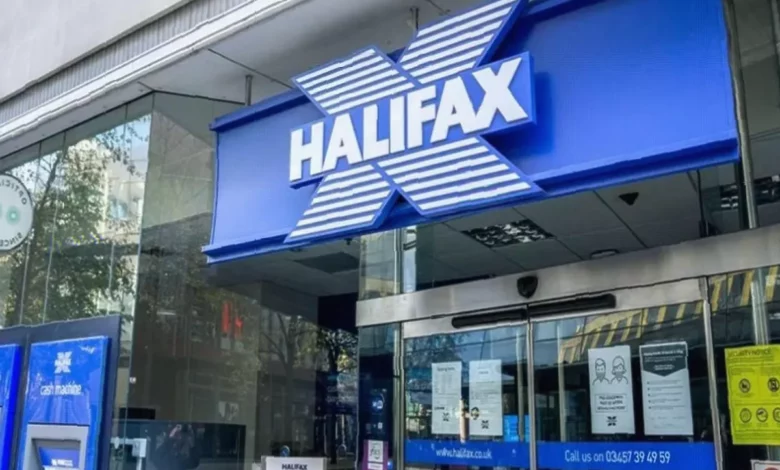
Halifax is to disappear from Britain’s high street after 173 years, with Lloyds Banking Group confirming it will absorb the brand into its overarching Lloyds name. The FTSE 100 giant announced on Wednesday that the Halifax retail banking operation will cease opening new accounts, and existing customers will be migrated to Lloyds over the coming months. Branches will begin to shed Halifax signage from early 2027, though the bank has stressed there are no planned branch closures as a result of the move.
The rebranding process
Jas Singh, Lloyds’ chief executive of consumer relations, said the shake-up is designed to streamline customer service by consolidating around a single main consumer banking division. “There are no changes to previously announced plans for branches, and there are no role reductions as part of today’s announcement,” he added. Existing Halifax customers will retain their current sort codes and account numbers as they transition to the Lloyds app and online banking services; the rebranding of accounts will happen gradually. Halifax branches will either be rebranded to Lloyds or customers will be directed to a nearby Lloyds branch throughout 2027. From next year, Lloyds will stand as the group’s only brand across England, Wales and Northern Ireland, alongside Bank of Scotland and Scottish Widows.
The changes also affect the intermediary arm: Halifax Intermediaries will rebrand to Lloyds Intermediaries from early 2027, allowing brokers to write product transfer business from existing Lloyds mortgage customers. From July 7, 2026, Halifax mortgage customers will gain access to the Lloyds Premier Current Account mortgage discount.
Historical roots and integration into Lloyds
Halifax takes its name from the West Yorkshire town where it began life as a building society in 1852 – or, according to more detailed records, founded in 1853 – to help working people buy or build homes. It had become the UK’s largest building society by 1913. Halifax relinquished its mutual status in 1997 when it floated on the London Stock Exchange as Halifax plc, but ceased trading independently four years later following a merger with Bank of Scotland to create HBOS. Lloyds TSB, established in Birmingham in 1765, stepped in to rescue HBOS in January 2009 amid the financial crisis, bringing Halifax into its stable and forming the present-day Lloyds Banking Group. The UK government held a significant stake in the group following that acquisition.
Lloyds Banking Group has reaffirmed its commitment to the town that gave the brand its name. It recently invested £116m in refurbishing its Trinity Road office in Halifax town centre, where between 3,000 and 3,500 employees are based. The Trinity Road site, which has been a significant part of Halifax’s business community since 1973, now includes zero-carbon heating and modernised workspaces focused on sustainability.
Broader high street banking consolidation
The disappearance of Halifax comes amid a wider wave of consolidation in the UK banking sector. Santander is reportedly considering removing TSB from the high street following its near-£3bn – £2.65bn – acquisition of TSB, completed in April 2026. The decision would bring to a close TSB’s 215-year presence on Britain’s high street, bringing approximately five million customers and 218 branches under the Santander UK banner. The transaction, unveiled last July, incorporated TSB’s £34bn in mortgages and £35bn in deposits into Santander’s portfolio.
Other significant consolidation in recent years includes Barclays’ £600m acquisition of Tesco Bank’s retail banking business, completed in November 2024, which enabled it to return £700m to shareholders through an incremental share buyback. The acquired business continues to operate under the Tesco Bank brand as part of a long-term strategic partnership. HSBC also extended its partnership with M&S Bank in 2024, signing a new seven-year deal to enhance Marks & Spencer’s credit and payment offerings. HSBC has owned M&S Bank since 2004; M&S exited current accounts and branches in 2021 to focus on credit and digital payments.
The broader shift towards digital banking, combined with falling demand for physical branches, is squeezing profitability across the sector. KPMG has reported that the UK banking sector faces a squeeze on profitability, with earnings likely to be squeezed unless significant transformation occurs. High-street banks have seen a marked drop in deposit market share to online rivals and challenger banks, while margin compression and rising costs add further pressure.
Financial performance and consumer impact
Lloyds Banking Group reported a robust financial performance despite these headwinds. For 2025, the group posted a 12% jump in pre-tax profits to £6.66bn, up from £5.97bn in 2024, even after a substantial charge for motor finance compensation. Underlying net interest income for 2025 was approximately £13.5bn, with operating costs around £9.7bn. The group’s common equity tier 1 capital ratio stood at 13.6% at the end of December 2025. For 2026, Lloyds expects underlying net interest income of around £14.9bn.
Halifax customers moving to Lloyds will gain access to a broader range of products, including Club Lloyds, Lloyds Premier, and Lloyds Rewards, as well as enhanced features in the Lloyds app. Deposits remain fully protected under the Financial Services Compensation Scheme (FSCS). The group has confirmed there will be no role reductions as part of this announcement.