Labour and Reform MPs have voiced fury after key transport infrastructure projects were scrapped or postponed to help fund a £15bn uplift in defence spending, with two roads in the East Midlands among the schemes facing the axe. Hamish Falconer, the Labour MP for Lincoln and Middle East minister, said he was “disappointed” by uncertainty over the A46 Newark bypass-widening scheme, describing it as “well advanced, long awaited, excellent value for money and of strategic importance” to both his constituency and the region. Robert Jenrick, the Reform MP for Newark, has also expressed anger at the cuts to road improvements in his constituency, with the savings channelled into the government’s defence investment plan (Dip). Claire Ward, the mayor of the East Midlands, said she had been unaware of the impending cuts until Sir Keir Starmer made his defence speech on Wednesday.
Defence spending controversy
The prime minister announced that overall defence spending will rise from 2.6% of GDP in 2027 to 2.7% – nearly £80bn – by 2030. Starmer said this would put the UK “on a trajectory” to hit 3% in the next parliament, although that remains well below the Nato target of 3.5% by 2035. Transport and energy departments have accepted cuts to their capital budgets to fund the increase. In an unusually blunt statement for a sitting minister, Falconer backed the extra defence funding but warned that the A46 upgrade programme – which also includes the Newark bypass widening – was “well advanced, long awaited, excellent value for money and of strategic importance to both Lincoln and the region”.
Retail and financial sector
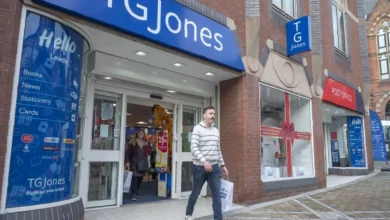
Up to 150 former WH Smith high-street stores are to close after the High Court approved a swingeing restructuring that could affect thousands of jobs. The retailer, now rebranded as TG Jones and owned by private equity firm Modella Capital, operates 450 stores and employs about 5,000 staff. It had warned it could be forced to call in administrators if the plan – which involves writing off debts to suppliers and cutting rent for many landlords – was not approved. Mr Justice Hildyard approved the restructure despite criticising the short time given for the court to consider the matter. Alex Willson, chief executive of TG Jones, welcomed the decision, saying it “protects the substantial core of the store estate and makes TG Jones a stronger, more sustainable business”.
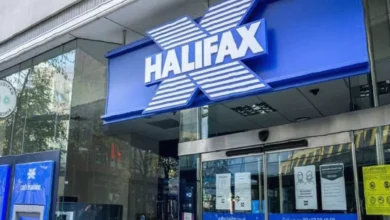
Lloyds Banking Group has announced it is axing the Halifax brand, meaning the 173-year-old former building society’s name will disappear from UK high streets. The group will stop opening new accounts under the Halifax brand and begin shifting existing accounts to Lloyds branding in the coming days. Signs will be removed from 190 of the group’s 531 branches from early 2027, though no branches will close as a result. The decision, first reported in May, has proved controversial among loyal customers and Halifax residents, and follows a review of Lloyds’ branding strategy. The group has operated under three brands – Lloyds, Halifax and Bank of Scotland – since January 2009, when the financial crisis brought the combined Halifax-Bank of Scotland group to its knees.
Topps Tiles has warned that its annual profit could drop by 29%, triggering a 10% slump in its share price, as customers shifted to cheaper products and the heatwave forced builders to down tools. Britain’s biggest tiles specialist, with about 300 stores, has been cutting costs and closing underperforming shops as stretched household budgets and a subdued housing market hold back demand. The company said extreme heat led to temporary stoppages among housebuilders and tradespeople, and while it expects a catch-up, this is unlikely to come back fully before the end of its financial year in September. Alex Jensen, chief executive, said the company continued to outperform the wider market despite weaker consumer sentiment. Topps Tiles expects adjusted pretax profit above £6.5m, down from £9.2m last year. Shares were 7.5% lower at 33p in early trading, and the gloomy update also weighed on rivals Howden Joinery and Travis Perkins, which fell 1.5% and 2% respectively. Analysts at Peel Hunt said the weaker consumer sentiment and shift to lower-priced products were “unlikely to change in the short term”.
Associated British Foods (ABF), the owner of Primark, still expects annual profits to come in below last year’s, with its sugar business making losses and Primark also struggling. ABF shares fell 2.3% and were among the biggest fallers on the FTSE 100, which dipped just under 30 points. The group, which plans to spin off Primark from its food businesses before the end of 2026, said group revenue on a constant currency basis was flat in its third quarter. Primark’s revenue increased 3%, but like-for-like sales were down 2.2%, reflecting a “challenging” retail environment in most markets. The company said a strong start to spring-summer trading in March was followed by weaker trading in April and May, largely due to the impact of the Middle East war on consumer sentiment, but that improved weather in June contributed to stronger trading. Sales in ABF’s grocery business – which includes Ovaltine, Ryvita and Twinings – rose 1%. Revenue in the sugar business dropped 4%, reflecting lower average selling prices in Europe, volume declines in Tanzania and higher imports in South Africa. ABF said the duration and severity of the Middle East war has increased gas price expectations for next year, hitting its European profit outlook. It now expects an adjusted operating loss for sugar of £25m to £60m in the current financial year and “a further deterioration” in 2026-27. Aside from sugar, its full-year outlook remains unchanged, with group profits seen below the £1.73bn made last year.
The competition watchdog has launched an in-depth investigation into the £2bn proposed deal by the owners of Virgin Media O2 to buy the UK’s fourth-largest broadband operator. The Competition and Markets Authority (CMA) said it had accepted a request from Nexfibre – owned by VMO2 shareholders Liberty Global, Telefonica and InfraVia Capital – to fast-track its investigation into the deal to buy Netomnia. The Nexfibre joint venture aims to build scale by buying smaller “alt-nets” to create a challenger to BT’s Openreach. Rajiv Datta, chief executive of Nexfibre, said a fast-track to phase 2 would “get to the right answer faster”. The deal would create a business with an 8m fibre network. Goldman Sachs-backed CityFibre, the largest alt-net, has publicly called for the deal to be blocked, arguing that a high degree of overlap between VMO2’s broadband network and Netomnia would materially reduce competition. Simon Holden, chief executive of CityFibre, said the deal “would remove a successful challenger and reduce choice for consumers”. The CMA said its in-depth investigation will conclude in December.
Paramount has formally submitted commitments to European regulators to win clearance of its $110bn takeover of Warner Bros Discovery (WBD). The European Commission revealed the move in an update to the competition case on its website on Wednesday; no details were provided about what remedies Paramount has submitted. The deal is expected to win approval in Europe and has already been cleared by the US Department of Justice. It would create a media powerhouse controlling assets including Paramount and HBO Max streaming services, Channel 5, TNT Sports, and the Hollywood studios behind franchises including Superman, Batman and Top Gun. However, on Tuesday the UK culture secretary, Lisa Nandy, said she intends to ask Britain’s media and competition watchdogs to investigate public interest and competition concerns relating to the deal. Nandy said she is “minded” to task Ofcom and the CMA to investigate on media plurality and competition grounds.
Airlines and airports have called for the new EU biometric border check system to be suspended during the peak summer holiday period, warning that some flights are leaving half full and passengers are struggling in queues of up to five hours. In a letter to Ursula von der Leyen, the president of the European Commission, industry groups ACI Europe, Airlines 4 Europe and IATA asked for an option to suspend checks when passenger volumes exceed the operational capacity of border control facilities during July and August. The letter said passengers have been forced to queue for extended periods outside terminal buildings and on exposed aprons, and that airlines face half-empty planes at gate closing time while passengers are stuck in border control queues. Some planes have had to delay take-off or leave passengers behind.
Economic indicators and housing market
Oil prices have fallen as negotiations for a final peace agreement between the US and Iran continued at a technical level. Brent crude fell 1.6% to as low as $71.62 a barrel and was trading at $72.25, down nearly 1%, close to levels seen before the war started. Technical talks between the two sides are under way in Doha, with Qatar and Pakistan acting as mediators. Donald Trump, his son-in-law Jared Kushner and envoy Steve Witkoff arrived in Doha for what the White House described as “high level” talks on Tuesday, but Tehran and host Qatar said they would meet with mediators rather than directly with Iranian representatives. Brent crude fell by around $45 a barrel between April and June, its biggest quarterly loss since the global financial crisis in 2008, amid relief over a ceasefire and negotiations for a permanent deal.
Inflation in the eurozone slowed more than expected last month, easing pressure on the European Central Bank to raise interest rates again this month. Overall inflation in the 21 nations sharing the euro slowed to 2.8% in June from 3.2% in May, below analysts’ forecasts of 3%, as prices for food, energy and services all rose at a slower pace. Core inflation, which strips out volatile food and fuel prices, slowed to 2.4% from 2.6%, and services inflation dropped to 3.2% from 3.5%. Although the June figure remains well above the ECB’s 2% target, the recent decline in oil prices triggered by US-Iran peace negotiations has raised hopes that price pressures will ease. Several policymakers have said there is no rush for the bank to follow up June’s quarter-point rate hike with another move this month, although Joachim Nagel, president of the Bundesbank, said inflation is still too high. Most economists and investors think the ECB will raise rates again in September or October if it pauses in July. There are worries that the shortage of fertiliser from the Middle East coupled with the European heatwave could reduce crop yields and push up food prices in the months ahead.
UK manufacturing activity cooled in June despite a boost from companies stockpiling ahead of price increases and supply chain problems stemming from the Middle East conflict. The final reading of S&P Global’s purchasing managers’ index for June fell to 52.5, below a preliminary estimate of 53.1 and May’s reading of 53.9. Readings above 50 indicate expansion. The survey’s output index was the highest since September 2024 at 52.6, but growth in new orders slowed sharply. Supplier delivery times lengthened by the smallest amount since February. New export business increased for the sixth month in a row, although at the slowest pace during that period, with firms flagging new work from mainland China, the EU and the US, while growth opportunities in the Middle East stalled as a result of the Iran war. Rob Dobson, director at S&P Global Market Intelligence, said sustaining the upturn is becoming a bigger concern, noting that manufacturers are currently benefiting from client strategic stockpiling but that “a drop in the rate of growth of new work intakes suggests this boost is already starting to fade”. Manufacturers’ raw material and other costs rose at the slowest pace since March. The Bank of England, which held interest rates steady last month, is monitoring how higher energy prices caused by the closure of the Strait of Hormuz feed into inflation and the wider economy.
Factory production in the eurozone ended its best quarter in nearly four years last month with easing cost pressures as the US and Iran negotiated a ceasefire, even though sluggish export demand is still weighing on activity. The monthly purchasing managers’ index from S&P Global slipped to 51.4 in June from May’s 51.6 but remained above the 50 mark separating growth from contraction. The output sub-index rose to 51.7 from May’s 51.3, marking a two-month high. New orders increased only marginally, while export demand fell for the second consecutive month. Chris Williamson, chief business economist at S&P Global Market Intelligence, said the expansion rounds off the strongest calendar quarter for eurozone manufacturing production since early 2022 and was accompanied by a welcome cooling of cost pressures, but warned that the boost from precautionary stockpiling could start to drag on growth in the coming months.
The yen has hit a 40-year low against the dollar, as a sharp rise in US government bond yields boosted the US currency ahead of key jobs data that could bolster the case for a Federal Reserve rate hike this month. The dollar rose as high as 162.84 yen, well above levels that prompted Japanese authorities to intervene a few weeks ago, and later settled at 162.71 yen, up 0.1% on the day. Chidu Narayanan, head of macro strategy for APAC at Wells Fargo, said Japan was “close to potential action” at current levels. Traders see Friday’s US public holiday as a potential window for Tokyo to step in to buy yen. Japan’s top currency diplomat said the authorities’ intervention two months ago had been effective, and that some US officials had been “supportive” of the move, according to Bloomberg News. However, Joey Chew, head of Asia FX at HSBC, said Japan’s ministry of finance appeared more tolerant of yen weakness than in the past. The dollar has strengthened against other major currencies, with the euro dipping 0.1% to $1.1404 and sterling easing 0.1% to $1.3245. A selloff in US Treasuries pushed the benchmark 10-year yield up 4 basis points to 4.465%. Traders now see a 67% chance of a Fed rate hike in September, up from 20.5% a month ago, according to the CME FedWatch tool.
Yields on UK government bonds rose after oil prices edged up on concerns that peace talks between the US and Iran have stalled. The yield on 10-year gilts rose as much as 6 basis points to 4.818%, and the 30-year gilt also climbed 6 basis points to 5.539%, both at their highest levels since 22 June. Investors see an 85% chance of a quarter-point rate hike from the Bank of England by the end of the year. Brent crude rose slightly to $73.53 a barrel earlier before trading at $72.77, down 0.25% on the day.
Shares in some of Britain’s biggest housebuilders fell for a second day, after analysts at Kepler Cheuvreux downgraded some target prices and a class action lawsuit against seven companies over alleged price collusion was filed on Tuesday. On the FTSE 100, Barratt Redrow fell 1.5%, while on the FTSE 250, Berkeley Group dropped 1.9%. UK house price growth stalled for a second consecutive month in June, according to Nationwide Building Society, as rising mortgage rates triggered by the war in Iran deterred home buyers and estate agents warned of a summer slump. The average price of a home was little changed at £277,484 in June, versus £278,024 in May. Compared with June last year, property values were 2.2% higher, up from 1.7% in May. Robert Gardner, Nationwide’s chief economist, said it was “not surprising that the market has softened a little in recent months, given the uncertainty caused by developments in the Middle East and the subsequent rise in energy prices and market interest rates”. Nationwide also published regional figures for the second quarter: house prices rose fastest in Northern Ireland at an annual rate of 8.6%, with an average price of £226,699; the annual pace was 3.9% in the north west and northern England, 3.5% in Scotland and Wales, and 1.6% in London, where the average property value is £540,903. Gardner noted that the mortgage payment on a typical first-time buyer property in Northern Ireland is now equivalent to 31% of an average earner’s take-home pay, up from 24% in the second quarter of 2022, though still lower than the UK average of 33%. He added that if the energy shock continues to subside, the Bank of England may not need to raise interest rates, or at least by less than anticipated, and that a shift in market expectations has already helped bring down the market interest rates that underpin fixed-rate mortgage pricing.
The government’s new energy price cap comes into effect today, with warnings that millions of households in Great Britain will be pushed into fuel poverty following months of volatility on global gas markets. The cap on gas and electricity rates rises to the equivalent of £1,862 a year, an increase of more than £220. Using new calculations that assume lower energy consumption, the regulator believes the average UK household will spend £1,663 a year from July. The End Fuel Poverty Coalition warned that the steepest summer rise in energy charges in four years would leave almost 5.5m homes facing energy bills of about 20% of their income, up sharply from 4.3m in April. The number of households forced to spend more than 10% of their income on energy bills will increase to 13.5m from almost 11.3m, according to the coalition, which calculated the figures based on research by the University of York.