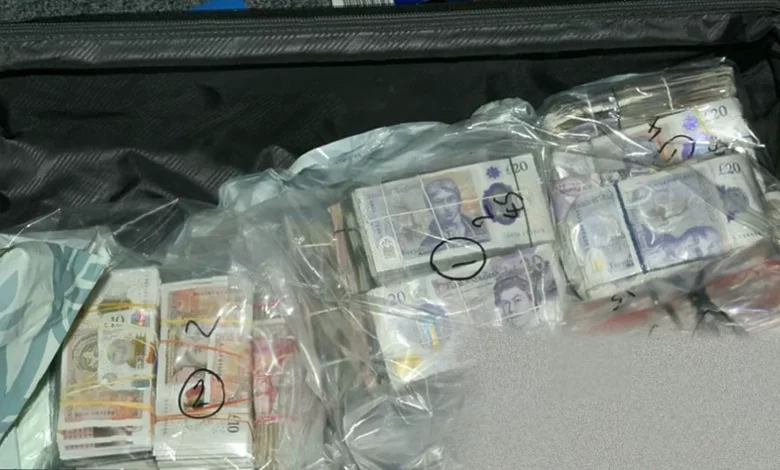
Dirty money worth at least £325bn flows through the UK every year – a sum equivalent to more than 10 per cent of the country’s GDP, according to the first comprehensive attempt by researchers to quantify the scale of illicit finance linked to Britain. The figure, calculated by the Finance Innovation Lab charity, covers funds tied to financial crime, money laundering, corruption, illegal trade and tax evasion. When the UK’s crown dependencies and overseas territories – including Jersey and the Cayman Islands – are added, the total jumps to more than £788bn annually.
The UK’s global financial standing, openness to trade and investment, and ease of doing business have made it a central hub for dirty money from across the world, the report warns. Cross-border data on tax evasion and financial crime reveals the extent of this international role, painting a picture of a system that, in the words of one of the report’s authors, Jesse Griffiths, “all too often … is in fact playing a central role in supporting illicit financial flows: harming our economy, taking money from our public services, and supporting crime.” Griffiths contrasted this with Chancellor Rachel Reeves’ description of the UK financial sector as the “crown jewel” of the economy – a description he said obscured the damage being done. Reeves has also called for regulatory reform in the sector to “regulate for growth”, arguing that post-2008 crisis rules may have “gone too far”, a stance that has drawn concern given her earlier advocacy for tighter banking oversight.
The UK’s overseas territories and crown dependencies are a key part of the problem. Transparency International UK has highlighted that corporate secrecy in these jurisdictions facilitates economic crime on a global scale, with the British Virgin Islands featuring in 92 per cent of large-scale corruption and money laundering cases examined. More than £250bn in diverted funds have been linked to these territories, and nearly 28,000 properties in the UK are owned through companies registered there. Despite repeated commitments, many overseas territories have missed deadlines to implement public registers of beneficial ownership, with a previous target of the end of 2023 slipping. The Finance Innovation Lab’s report calls for a crackdown on UK-linked tax havens, demanding full transparency over the real owners of shell companies in territories including the British Virgin Islands.
Enforcement underfunded as scale dwarfs action
The all-party parliamentary group (APPG) on Anti-Corruption and Responsible Tax backs the Lab’s call for a significant increase in funding for state investigators such as the National Crime Agency (NCA) and the Serious Fraud Office (SFO). The NCA estimates money laundering alone costs the UK £24bn annually – though other figures put the figure at £100bn – and it uses powers such as Unexplained Wealth Orders and Account Freezing Orders to recover criminal assets. The SFO, which recovered £160m under the Proceeds of Crime Act between March 2021 and March 2024, targets serious fraud, bribery and corruption. Both agencies have highlighted the need for more resources and expert staff. The APPG argues that additional funding would probably pay for itself through higher fines and asset seizures.
The scale of the problem far outstrips current enforcement. In 2022, 64 per cent of UK businesses experienced fraud, corruption or other economic crime – significantly above the global average of 46 per cent. Yet prosecutions for fraud have fallen by 67 per cent since 2011, and for money laundering by 35 per cent since 2016. Phil Brickell, Labour chair of the APPG, said: “After years of inaction from previous governments it is time for us to become part of the solution, not part of the problem. It’s time to give our enforcement agencies the resources they need to crack down on the scourge of economic crime, and for key UK overseas territories to finally lift their veil of corporate secrecy.”
Government crypto hub ambitions under scrutiny
The Lab is also urging a “pause” on ministers’ plans to make London an international crypto hub – a push influenced in part by the Trump administration’s promotion of digital assets. The report warns that crypto assets are increasingly linked to money laundering and hidden market dealings, and that making the City a global hub for them “risk exacerbating” the problem. The UK is currently shaping a new regulatory framework for crypto: from October 25, 2027, crypto activities will be brought under the Financial Services and Markets Act perimeter, requiring authorisation from the Financial Conduct Authority (FCA). Until then, many firms operate under anti-money laundering (AML) registration. The Money Laundering and Terrorist Financing (Amendment) Regulations 2026 are tightening AML controls for cryptoasset businesses, including enhanced due diligence and a “Travel Rule” requiring the sharing of originator and beneficiary information on transfers. Critics argue that the government’s ambition to lead the crypto sector runs directly against the need to close the loopholes that allow illicit finance to thrive.
Summit postponed as global tensions grow
The release of the Finance Innovation Lab’s figures coincided with the UK postponing its Illicit Finance Summit, originally scheduled for 23-24 June, to December. The Foreign Office said the delay would “enable broader participation, ensuring the summit generates the strongest possible international commitments to drive impact at a time of heightened global economic and geopolitical tension.” The summit aims to strengthen global enforcement against illicit finance, including tackling money laundering in property, crypto-asset misuse and illicit gold trading. The postponement has drawn criticism, with some suggesting the extra time should be used to develop more ambitious proposals rather than simply kicking the issue down the road.
The report itself is clear about what is required: a crackdown on tax havens, full transparency over shell company ownership, properly resourced enforcement agencies, and a rethink of the government’s crypto ambitions. The Treasury was approached for comment but has not yet responded. The research is believed to be the first attempt to put a comprehensive figure on the illicit flows linked to the UK, and the numbers are stark: at least £325bn a year, rising to £788bn when overseas territories are included. As Griffiths put it, “Understanding the true scale of this is an essential first step toward ensuring the financial system works for society, not against it.”