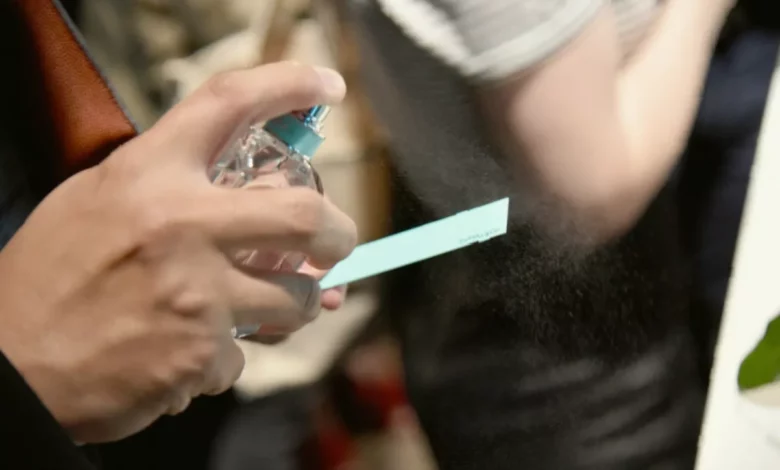
Forget the old joke about the side effect that empties your fridge. A growing number of people taking GLP-1 weight-loss drugs are reporting a different kind of financial drain: an expensive new obsession with perfume. Users describe a sudden, almost compulsive fascination with scent — particularly sweet, dessert-like fragrances — that has led them to spend thousands of pounds building collections of niche bottles.
Katie, a 46-year-old teacher living in the Washington, D.C., suburbs, started taking Eli Lilly’s Zepbound in March 2024 after struggling to lose weight following a total hysterectomy. “I was always mildly into fragrance, but it increased by a factor of a thousand,” she told The Independent. Within two years she had gone from a handful of designer scents bought at Sephora or Macy’s to a collection of more than 50 full bottles, mostly from niche houses. She estimates she has spent around $3,000. Her current favourite, Byredo’s Alto Astral ($330), smells of coconut water and incense.
Katie is far from alone. On Reddit, the phenomenon has been nicknamed “Ozempic smell”. Users swap perfume suggestions, photograph their growing “armies” of bottles and describe how their preferences have shifted. “I started taking a GLP-1 last May and I’ve gone from owning two perfumes to 24,” one user wrote. “I’m also a total gourmand girl, I just want to smell like a bakery all the time lol.” Another said the drug made them want to smell everything – “from soap to dog shampoo – as long as it’s fragranced I’m gonna smell it.” A third user noted that they could now enjoy a sweet, gourmand fragrance “without getting ravenously hungry”, adding: “This has opened up my world of fragrances significantly.”
The intensity of the shift varies. While some report a broad increase in sensory awareness, others find the urge strongest during dose changes. Not every user experiences it; some notice no change at all, and others develop aversions to certain smells – particularly heavy or fried foods – alongside the new perfume cravings.
Why GLP-1 drugs rewire the brain’s sense of smell
The explanation lies in the way these drugs interact with the brain’s olfactory circuitry. GLP-1 receptor agonists mimic a natural hormone that regulates blood sugar and appetite, but those same receptors are also scattered across the olfactory bulb – the part of the brain that first processes odours.
Paule Joseph, a senior investigator at the National Institutes of Health, explained that “GLP-1 receptors sit on mitral cells, the main output neurons of the olfactory bulb that carry the smell signal onward to the brain, so a drug that reshapes appetite is also acting on the tissue that processes odor.” In plain terms, the medication is tweaking the very machinery that decides what smells good and what does not.
Leslie Kay, a professor of psychology and neuroscience at the University of Chicago, told The Independent that the drugs make the brain’s smell-processing regions extremely sensitive to food odours. She suggested this could “help engage the olfactory pleasure circuits and feelings of satisfaction, hijacking them for non-real food smells, like gourmand and other types of perfumes.” In other words, the reward pathway that once lit up for a slice of cake now fires for a spritz of vanilla perfume.
Hiroaki Matsunami, a professor of molecular genetics and microbiology at Duke School of Medicine, theorised that the underlying process is happening inside the brain, not inside the nose. He pointed out that GLP-1 drugs affect nerve cells linked to nausea and other internal states. “It is not too surprising that it could also influence odor perception or odor-associated responses,” he said.
Catherine Dulac, the Xander University Professor at Harvard’s Department of Molecular and Cellular Biology, noted that the sense of smell is powerfully shaped by internal metabolic state – we are more sensitive to odour when hungry, less so when full. “Because GLP1 affects so much the organism metabolic state, in ways that we do and do not understand, this is not extremely surprising,” she said.
Research also points to the vagus nerve, a key gut-brain communication pathway, as another conduit. GLP-1s can stimulate the vagus nerve, which processes taste and smell signals, potentially heightening sensory sensitivity. And while the focus is often on smell, separate studies have found that GLP-1 receptor agonists can significantly impair taste perception across all five basic tastes – sweet, sour, salty, bitter and umami – with 85% of users scoring worse than controls in taste tests. Smell function itself appears largely unaffected in those studies, suggesting the effect is not about better smell but about how the brain interprets and values smells.
Long-term effects: a lasting change
So far, the phenomenon has not appeared in clinical trial data and seems to primarily affect users’ wallets. But for those who experience it, the shift can persist even after they stop the drug. Katie went off Zepbound for six months following surgery and found that her interest in fragrance did not wane. “I’ve learned so much, and am fascinated by the whole process – the artistic side of the creation of a scent, but also the sourcing of ingredients, the creation of new aromachemical molecules and the industry as a whole,” she said.
The broader context of the UK fragrance market reinforces why this matters. Premium and niche perfumes are growing fast, driven by social media platforms such as TikTok – where #PerfumeTok has billions of views – and a cultural shift toward “gourmand” scents with edible notes like vanilla, caramel and coffee. Industry analysts note that consumers increasingly seek out scents that provide indulgent sensory experiences without calories, a trend that dovetails neatly with the needs of GLP-1 users who have lost their appetite for food but not for pleasure. The UK market, with London as a key hub, has seen a particular rise in independent and artisanal brands, as well as affordable “dupes” that allow collectors to keep building their stashes.