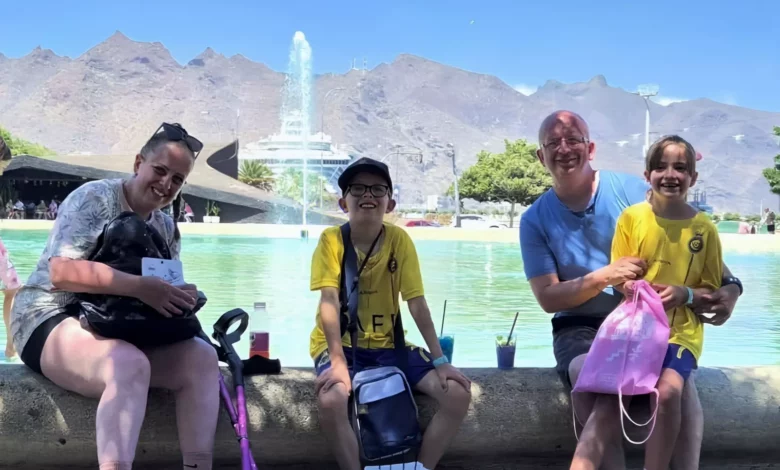
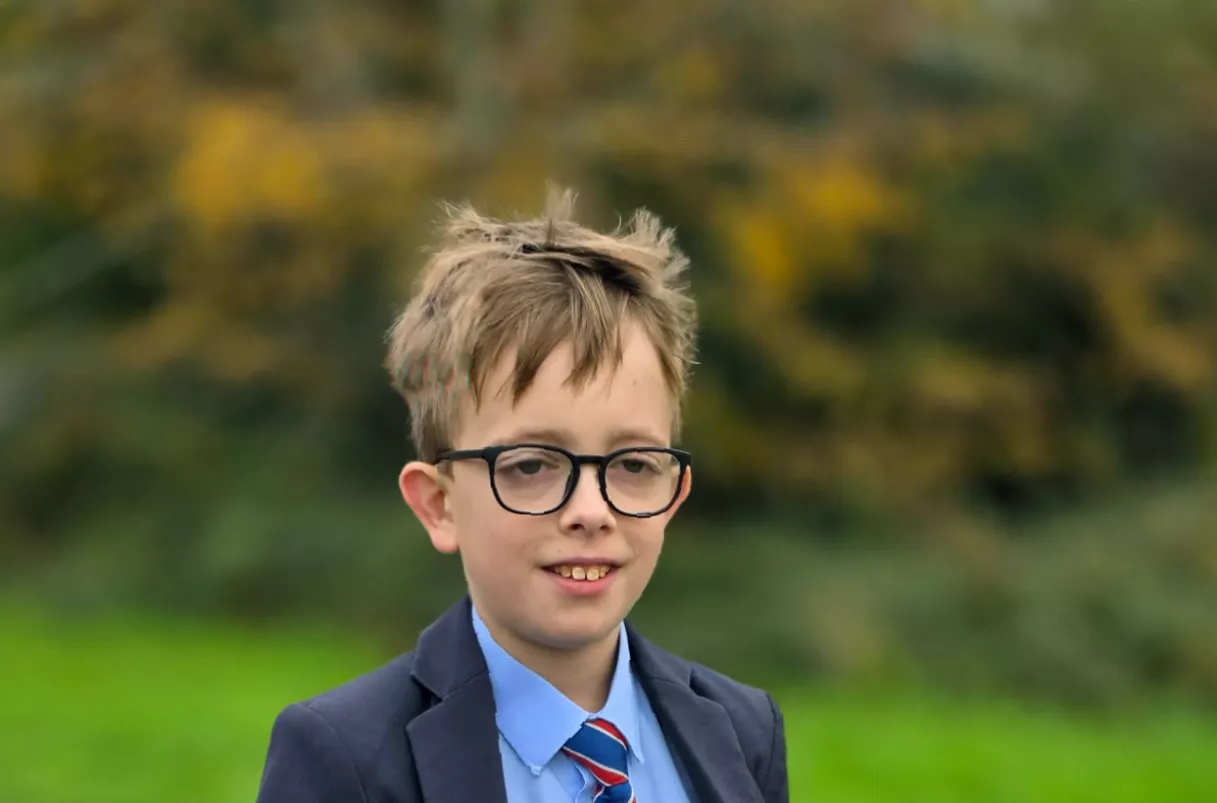
A 13-year-old boy from Cornwall is urgently calling for more O negative and B negative blood donors after a rare blood disorder and a catastrophic arterial bleed left him fighting for his life.
Elliott Wills has now returned to school and is back playing football with his friends, though he tires easily and must take extra care during sports. His 14th birthday falls on June 29th. His recovery, however, masks a crisis that unfolded last October when a routine operation turned into a desperate race against time.
The rare blood disorder that demands constant transfusions
Elliott has an inherited condition called spherocytosis, which affects the shape and durability of red blood cells and can cause severe anaemia. He requires regular blood transfusions to manage the disorder. In October last year, he underwent surgery to remove his spleen and gallbladder after complications from a virus. During the procedure, a main artery burst. According to doctors, Elliott lost approximately seven litres of blood — roughly three times his body’s entire circulatory volume — as fast as it could be transfused. A team of 20 medical staff worked for three hours to save his life. He was given 23 units of blood, totalling seven litres. Emergency supplies of O negative blood proved crucial because it can be given to anyone in an emergency when a patient’s blood type is unknown.
Spherocytosis is an inherited disorder that affects the red blood cell membrane, making the cells spherical instead of the usual disc shape and more prone to breakdown. This leads to chronic anaemia and often requires lifelong monitoring and transfusions. For patients like Elliott who need regular transfusions, closely matched blood is ideal to prevent immune responses. Although blood transfusions are generally safe, potential risks include allergic reactions and, rarely, more severe complications such as transfusion-related acute lung injury or graft-versus-host disease. The NHS Blood and Transplant service works to ensure that patients receive blood that is as closely matched as possible.
The crisis and the family ordeal
After the arterial rupture, Elliott spent three days in an induced coma and three weeks in hospital. His father, Phil Wills, 53, was told to prepare for the worst. His mother, Gill, could not travel to Bristol Royal Hospital for Children because of her own health problems, including major spinal surgery she underwent in March. She remained at home in Truro with Elliott’s 12-year-old sister, Marnie. Phil Wills, who is also a carer for his wife, faced the additional strain of the incident occurring on his eldest son Josh’s 25th birthday.
Elliott’s survival was made possible by the blood donors whose contributions were immediately available. Now he and his family are urging more people to come forward, specifically those with O negative and B negative blood types, because donor numbers are declining.
Why O negative and B negative blood are in such demand
O negative is the universal donor blood type, meaning it can be given to anyone in an emergency or when a patient’s blood type has not been determined. Despite making up only about 8% of the population, O negative accounts for around 13% of hospital requests for red blood cells. Air ambulances and emergency response vehicles carry O negative supplies as a standard precaution. Collecting enough O negative blood is a constant challenge, and the situation is worsening. According to NHS Blood and Transplant (NHSBT), the number of regular donors with O negative and B negative blood has dropped by 5% since 2020. Around 107,000 donors with O negative blood donate regularly, which is 6,000 fewer than six years ago. NHSBT needs over 155,000 new donors annually to maintain sufficient stocks.
B negative is one of the rarest blood types, with only 2% of donors having it. Hospital demand for B negative blood is high, and collecting enough is a constant challenge. People with B negative blood can only receive donations from B negative or O negative donors, making every new B negative donor especially valuable.
Gerry Gogarty, director of blood supply for NHSBT, said that blood donations not only saved Elliott’s life during the emergency but also help him manage his underlying blood disorder. He highlighted that new donors with O negative, B negative, and Ro blood types are especially needed. The Ro subtype is a rare blood group vital for treating sickle cell disorder, and it is ten times more common in people of Black heritage. Around half of the requests to the NHSBT Rare Donor Team are for patients with sickle cell disorder. AB negative is the rarest of the eight main blood types, with just 1% of donors, but demand for it is relatively low.
Elliott’s plea
Elliott’s story is being highlighted during National Blood Week, which runs from 8 to 14 June. He is asking the public to register as blood donors and book appointments, especially if they are O negative, B negative, or from Black heritage communities who can help supply the Ro subtype. NHSBT encourages people to register, noting that donors will find out their blood type after their first donation. For Elliott, the difference between life and death came down to the blood already on the shelves.