Russia has imposed entry bans on the 17-year-old son of prominent Kremlin critic Sir Bill Browder, two journalists and two executives linked to a London-based security conglomerate, in the latest round of retaliatory sanctions between Moscow and London.
The Russian Foreign Ministry announced the measures on Tuesday, targeting Alexander Browder, a British student; Richard Holmes, security correspondent at The i Paper; Catherine Belton, an investigative correspondent for The Washington Post; and Richard Nicholas Westbury and Alice Mary Laugher, the chairman and a senior executive respectively of the Chelsea Group, a conglomerate of financial and security firms.
Who is targeted
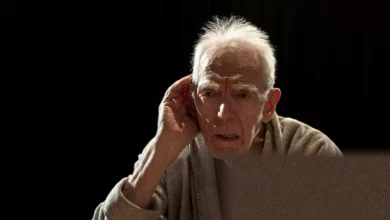
Alexander Browder is the son of Sir Bill Browder, the financier-turned-activist who spearheaded the Magnitsky Act in the United States and has been barred from entering Russia since 2005. The teenager has been sanctioned for his research into cryptocurrency networks used to bypass Western restrictions. His work, published by the Henry James Society, identified the A7A5 ruble-pegged stablecoin as a significant tool for sanctions evasion, with the report claiming it processed over $100bn in transactions within its first year. The A7 network, linked to Kyrgyzstan’s financial system, is alleged to channel funds to Russia’s war effort. Alexander Browder described the ban as a “badge of honour”, saying it showed his work had “touched a nerve”. His database documented 164 cases of “illegal crypto deals”, including Russian transactions, and estimated $350bn in illicit funds had been laundered through cryptocurrency. He has previously presented evidence to the UK Parliament.
Catherine Belton is an investigative journalist known for her reporting on Russia, author of Putin’s People, and a former correspondent for The Financial Times and Reuters. Richard Holmes is an award-winning security correspondent who has investigated Russian informants in the UK and was a Pulitzer Prize finalist.
Richard Nicholas Westbury, educated at Harrow School and Sandhurst, served in the Scots Guard and the SAS before co-founding the Hart Group, which evolved into the Chelsea Group. The conglomerate employs around 8,000 people across 49 countries, offering services in security, power generation and remote site management. Alice Mary Laugher is the managing director of Committed to Good (CTG), a Chelsea Group subsidiary that specialises in humanitarian staffing and HR in fragile and conflict-affected countries.
The reasons behind the bans
Russia’s Foreign Ministry stated the entry bans were a response to what it called “provocative anti-Russian rhetoric of British officials”, “insinuations about Russia” and “London’s practical steps to supply the Kyiv regime with weapons”. It also accused the targeted individuals of “circulating defamatory speculations and false information about the policy of the Russian authorities”.
The sanctions reflect Russia’s increasing use of retaliatory measures against those it perceives as critical or disruptive. Alexander Browder’s inclusion is notable because his research has direct implications for how Moscow attempts to circumvent financial restrictions. His findings on the A7A5 stablecoin and the broader cryptocurrency network have been credited with influencing UK sanctions against entities involved in the system, and his work was presented to parliament as evidence of Russian sanctions evasion.
The two journalists are understood to be targeted for their reporting on Russia. Catherine Belton’s work has extensively covered the Kremlin’s inner circle and alleged influence operations, while Richard Holmes has investigated Russian intelligence activities in the UK. Moscow has previously imposed entry bans on dozens of British journalists and media representatives, citing the “spreading of false information about Russia”.
The inclusion of two Chelsea Group figures suggests a broader sweep of individuals linked to security and humanitarian sectors that Russia may view as indirectly supporting Ukraine. The Chelsea Group operates in fragile states and provides services to humanitarian missions, including rapid mobilisation of personnel for conflict-affected areas. Russia did not provide specific allegations against Westbury or Laugher beyond the general framing of defamatory speculation.
UK government response and context
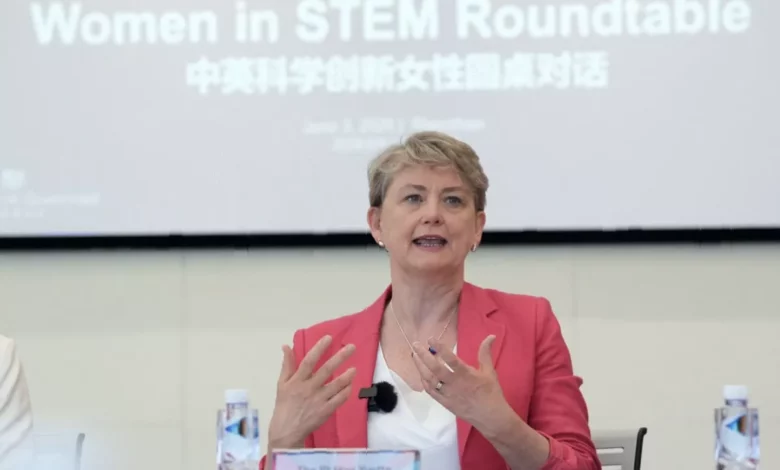
Foreign Secretary Yvette Cooper condemned the sanctions as “desperate” and “appalling”, particularly targeting a 17-year-old and journalists. She said the government would continue to increase its own sanctions against Moscow to maintain economic pressure and described the move as an “assault on media freedom”.
The UK has imposed sanctions on more than 3,000 Russian individuals, entities and ships since the full-scale invasion of Ukraine in February 2022, including travel bans and asset freezes. Russia has repeatedly retaliated with reciprocal measures, including entry bans on British politicians, officials and media figures. The latest round is part of this cycle of tit-for-tat actions that began after the annexation of Crimea in 2014 and escalated after the 2022 invasion.
Alexander Browder is believed to be the youngest person ever sanctioned by Russia. His father, Sir Bill Browder, has been the subject of Russian arrest warrants and Interpol red notices, both of which have been rejected by international authorities. The UK government has signalled it will continue phasing in new sanctions, including measures targeting refined oil and cryptocurrencies.