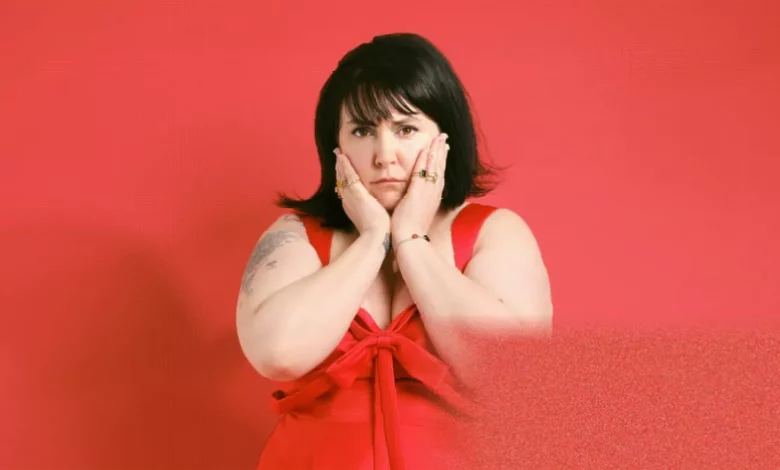
Sitting in a beige room in a rehab facility, unable to keep tweezers in her possession, Lena Dunham arrived at a stark conclusion: the chaos she was living through was not something happening to her. She was the chaos.
This moment of clarity, detailed in her upcoming memoir “Famesick,” punctured a narrative of passive victimhood. It marked the beginning of a painful recalibration for the writer and actor, whose early success with the HBO series “Girls” had catapulted her into a world of overwhelming pressure, obligation, and physical agony.
The 50-Car Pile-Up
As she explained to her rehab therapist, Dr. Mark, the path to dependency was not a single wrong turn but a catastrophic collision of circumstances. She was supporting multiple families financially, shouldering a burden where her failure meant theirs. Her body was failing her, ravaged by severe endometriosis that led to a total hysterectomy at age 31 in February 2018, a procedure that plunged her into early menopause and extinguished her dream of biological motherhood.
The surgery, following years of pain and numerous operations, left her feeling violently disconnected. She described the sensation of many hands inside her during the procedure as reminiscent of past sexual trauma. “It wasn’t that – but it sure felt like it,” she told her therapist. Concurrently, she grappled with her sister’s gender transition and a distant relationship with her artist parents, Carroll Dunham and Laurie Simmons, who she felt were searching for glimpses of her former self.
Into this “50-car pile-up,” as Dr. Mark termed it, came the medication. Klonopin, a benzodiazepine prescribed for anxiety and OCD since her teenage years, and Percocet for pain. They provided a “blank euphoria,” a pause button on her aggressively racing thoughts. The relief became a necessity, then a dependency. Dunham has stated she misused Klonopin for a three-year period, and in April 2018 entered a 28-day rehab program in Los Angeles to detox from it, an experience she called “probably the hardest thing” she had ever endured.
Life as ‘Rose O’Neill’
Upon admission to a stone manor house in the Berkshires, she retreated behind an alias: Rose O’Neill. The name, borrowed from the pioneering early 20th century female cartoonist who created the Kewpie doll, was a telling choice. Dunham related to O’Neill’s arc of spectacular early success and fortune, followed by an inability to replicate it and eventual financial decline. “Rose” was what the staff called her, a protective shell for the person inside who felt creatively spent since “Girls” ended in 2017.
In this environment, hierarchies dissolved. The massive man in a Harley shirt was a sober companion; the grandmother knitting baby booties was battling a crippling Benadryl and wine addiction. The first lesson, Dunham wrote, was to never judge a drug addict by their Patagonia fleece. The shared truth was that they had all terrified their families and loved drugs, whether it was cocaine, heroin, or prescription pills, for their own “different and special reasons.”
Her attempts to frame herself as a “better” addict, there for “medical trauma,” crumbled. An incident where a fellow patient, Walter, breached her confidentiality and was expelled forced her into the centre of group dynamics. Facing accusations of being a “man-hater” from Walter, she struggled to navigate the raw politics of recovery.
A Sobering Return to the World
A brief leave to attend the Met Gala laid bare the gulf between her old life and her new reality. Her stomach knotted meeting her longtime collaborator and “Girls” co-showrunner, Jenni Konner, for the first time since entering rehab. Dunham has since indicated that her recovery played a part in their decision to professionally “pause and clear the slate” in 2018; reports suggest they have since ceased contact.
At the gala, she felt like a ghost, unable to drink the champagne, seeing the event as a fever dream. Returning to rehab at midnight, she was required to surrender her designer dress for a contraband search—a stark metaphor for her changed existence.
It was in the final weeks that a shift occurred. For the first time, she identified as a drug addict and committed to sobriety. A simple moment, sitting in the sun with a younger patient named Gaylen, became profound. Noticing a robin’s egg in the grass, Dunham asked who put it there. “Nobody put it there!” Gaylen laughed. “It just is.” The ordinary beauty of an unmanufactured moment signalled a return to clarity.
Lena Dunham has now been sober for five years, as of April 2023, calling it “the right thing for me.” “Famesick,” published by Fourth Estate on 14 April 2026, chronicles this journey from the peak of fame through illness and addiction to a hard-won stability. It is an account not of a chaotic life that happened to her, but of one she ultimately took responsibility for, piece by painful piece.