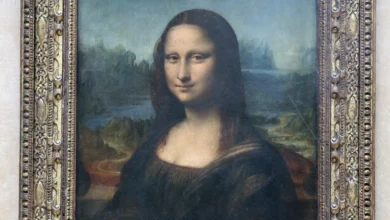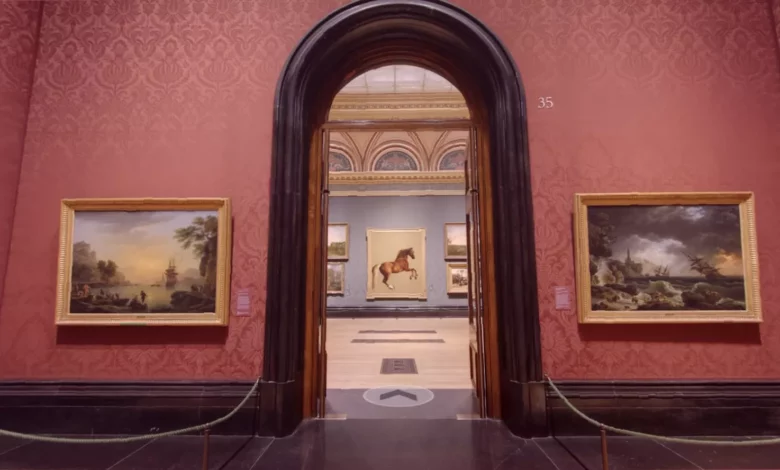
The National Gallery now offers a complete virtual tour of all its rooms, allowing art lovers to explore every picture space from home as part of its bicentenary redisplay. The expanded online experience, created in partnership with Google Arts & Culture, replaces a previous tour that covered only eight rooms and gives the public a full digital walkthrough of the gallery’s entire collection display for the first time.
Expanded virtual tour
The newly available virtual tour coincides with the gallery’s major bicentenary rehang, titled “CC Land: The Wonder of Art”, which was unveiled in May 2025 and is the most significant rearrangement of works in Trafalgar Square in more than 30 years. The redisplay features more than 1,000 works spanning 700 years of art history, arranged broadly chronologically — with Italian Renaissance paintings in the recently renovated Sainsbury Wing, designed to evoke a Renaissance basilica, and later works in the Wilkins Building. Thematic interventions such as “The Spectacle of Portraiture”, “Flowers” and “Still Life” are also woven into the layout.
Visitors to the virtual tour can now navigate every picture room in the gallery, not just the eight previously accessible online. Lawrence Chiles, the National Gallery’s Head of Digital Services, said the project allows people to “wander the Gallery’s rooms in your own time”, whether revisiting favourite paintings or discovering works for the first time.
Options and zoom capability
The virtual experience offers two ways to explore. A full walkthrough covers all gallery rooms, while a shorter highlights tour recreates the feel of a whistle-stop visit by guiding users through seven curated rooms. That route includes such renowned works as Jan van Eyck’s Arnolfini Portrait, Johannes Vermeer’s A Young Woman Standing at a Virginal, and Claude Monet’s The Water-Lily Pond. Other masterpieces available across the tour include Sebastiano del Piombo’s The Raising of Lazarus, Elisabeth Louise Vigée Le Brun’s Self Portrait in a Straw Hat, Edouard Manet’s Eva Gonzalès, and Sir Thomas Lawrence’s The Red Boy.
A key feature of the digital tour is the ability to zoom into selected paintings using gigapixel imagery on the Google Arts & Culture platform. Gigapixel technology captures images at an extremely high resolution — billions of pixels — allowing viewers to inspect individual brushstrokes, fine cracks in the paint, and subtle details that can be difficult to see even when standing before the original canvas in the gallery. This level of detail brings the viewer close to the artist’s technique, revealing textures and nuances often lost in standard photography. The capability is particularly valuable for works with complex surface treatments or minute iconographic elements that reward close inspection.
Past success and collaboration
The idea of digitally wandering through galleries became especially popular during the Covid-19 lockdowns, when physical museums were forced to close. The National Gallery’s earlier eight-room virtual tour attracted more than a million views between November 2020 and January 2021, as people sought cultural escapes from home. The gallery’s digital team, which includes a dedicated in-house content group of 23 people, was able to pivot quickly when the pandemic hit, having reinvested in digital capabilities and established a new directorate in 2017. In 2019, the gallery launched the NGX studio in partnership with King’s College London, described as a “laboratory and a place to experiment” with online innovation to enhance cultural experiences and grow audiences.
The expanded online tour is part of a long-running collaboration between the National Gallery and Google Arts & Culture that dates back to 2011, when the gallery first began offering high-resolution digital views and 360-degree virtual tours of its collection. For the bicentenary, the partnership has also led to the digitisation of 200 paintings in high resolution and the creation of an AI-powered experience called the “National Gallery Mixtape”, which allows users to generate personalised soundtracks from the collection using artificial intelligence. The gallery’s wider digital engagement has grown substantially: in the year to August 2024, digital engagement rose by 26 per cent year on year, and in 2024 the National Galaxy attracted more than 159 million virtual visits — a 106 per cent increase on the previous year — with 14.2 million visits to its website. The institution also ran a “200 Creators Programme” for its bicentenary, involving paid creative collaborators and a wider network that generated significant online views and engagement.