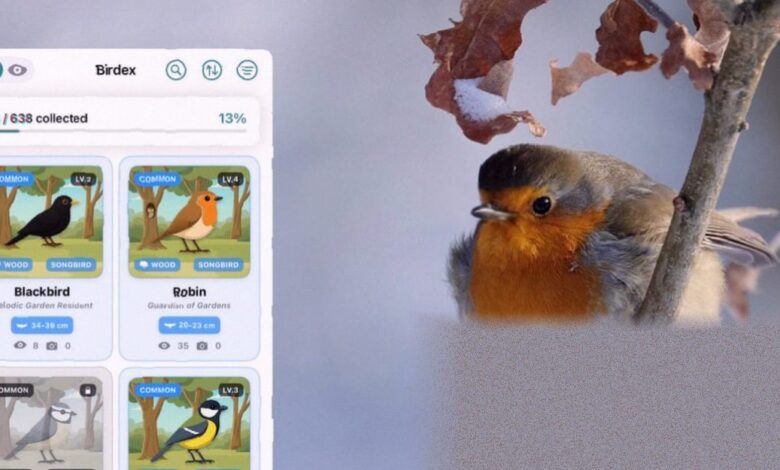
A smartphone application that transforms birdwatching into a digital collecting game is drawing both keen interest and pointed criticism from nature enthusiasts and conservationists across the UK. The app, Birdex, allows users to accumulate digital cards depicting British bird species for every sighting they log, with a points system that rewards encounters with rarer birds and features enabling competition among friends.
The Gamification Appeal
Developed as a six-month side project by marketing professional Harry Scott, 24, and a collaborator, Birdex explicitly aims to layer a rewards-based experience over traditional birdwatching to engage younger generations with nature. “Birds are great,” said Scott, who drew a comparison to the popular franchise Pokémon. The app’s mechanics extend beyond simple logging, incorporating elements like levelling up a birder profile with experience points, maintaining daily streaks, completing quests and challenges, and earning achievements, all designed to be accessible for both beginners and experienced birders.
Early adoption suggests the approach is resonating. Users have already recorded sightings of more than 200,000 birds through the platform. Michelle Williams, a psychologist in London, told sources she enjoys using Birdex to record garden birds like robins with her two young children, seeing it as a positive tool to help them engage with the natural world and appreciating the simple pleasure of “collecting a set.”
AI Art Backlash
However, the app has ignited controversy for its use of AI-generated artwork to create its digital bird cards, leading some to voice strong objections online. One Reddit user stated it would be an “instant uninstall.” Harry Scott acknowledged the criticism, explaining that limited development funds led them to utilise AI, but with plans to hire artists in the future.
This dispute taps into a much broader and unresolved legal and ethical debate surrounding AI-generated content. Courts have shown reluctance to grant copyright for works lacking “human authorship,” as demonstrated by a US Copyright Office decision. High-profile lawsuits, such as that between Getty Images and Stability AI, underscore the complex copyright battles over the use of copyrighted material to train AI models. Many artists express concern that their work is used without consent or compensation, leading some online art communities and platforms to ban AI-generated imagery.
Citizen Science and Conservation Concerns
The potential scientific value of the data collected by Birdex has been noted by ornithological experts. Viola Ross-Smith, Science Communications Manager at the conservation charity the British Trust for Ornithology (BTO), said the app was “pretty engaging” and noted her son, a Pokémon fan, thought it looked “quite cool.” She highlighted a possible citizen science impact if the records were made available to bodies like the BTO, which operates its own global recording app, BirdTrack—a tool that contributes directly to conservation research.
Yet, Ross-Smith, who has a background in seabird ecology, also raised significant concerns about potential risks to bird welfare. She questioned whether gamifying sightings might encourage users to seek out vulnerable species, specifically citing the rare capercaillie, a large woodland grouse in Scotland. Disturbing capercaillies during their nesting season is illegal, and visitors to areas like the Cairngorms are frequently warned against searching for them. Ross-Smith suggested Birdex could include such conservation warnings.
This touches on a wider ethical dilemma in birdwatching, where the pursuit of rare species for “life lists” can sometimes overshadow bird welfare, paradoxically putting pressure on the very populations enthusiasts wish to observe.
The Broader Landscape of Birding Tech
Birdex enters a market populated by several other applications blending technology with ornithology. The BTO’s BirdTrack is a dedicated citizen science tool for logging sightings globally. Birda, launched in 2022, styles itself as “Strava for birdwatching,” combining identification tools with a social community. The Cornell Lab of Ornithology’s Merlin Bird ID uses sound, photos, or quizzes for identification and can function as a collection game, while eBird allows for detailed data tracking and hotspot discovery. Another concept, Birdle GO, applies a GPS-based, Pokémon GO-style model where players find animated 3D birds.
The gamification strategy itself is recognized as an effective method for fostering environmental engagement, particularly among younger audiences. By employing mechanics like points, badges, and leaderboards, such apps can promote awareness and action. However, experts caution that an over-reliance on superficial game elements can lead to shallow engagement, where users focus more on points than the underlying purpose of conservation, raising ethical questions about user autonomy within designed systems.
The company behind Birdex, BDEX, lists key personnel including David as Co-Founder and CEO and Vitaly as Principal Software Engineer. The app is currently free to use, though the developers indicate some content or features may eventually be placed behind a paywall. As with any app, users are advised to be cautious of potential privacy risks or “fleeceware” tactics sometimes associated with software, including some in the AI art space.