A public footpath runs through the Prime Minister’s heavily guarded country estate. While VIPs arriving at the main gates of Chequers are met by armed police officers, security cameras and legal warnings under the Serious Organised Crime and Police Act, anyone else can quite simply walk through the estate. This splendid absurdity arose because the footpath represents an ancient right of way that refused to budge – and a series of determined battles by ramblers and locals have kept it open.
The footpath’s defiant history
The fight to preserve the right of way began shortly after the government moved the estate’s entrance road in the 1920s, inadvertently placing it across the ancient footpath. An attempt to remove it was met with the sort of fury normally reserved for village bypass proposals. Ramblers, locals and assorted defenders of England’s sacred footpath network dug in their heels – and they won.
That victory did not end the contest. In 1972, the estate tried again to close the footpath, only to be beaten back by an army of outraged walkers who valued the path between Kimble and Dunsmore. Three years later, in 1975, it looked as though national security concerns would finally seal the footpath’s fate. After a court battle, a compromise was reached: the path, which had crossed the driveway about halfway along and offered a much better view of the house, was moved roughly 150 metres southwards, closer to the main security gate. The view of the manor from the driveway was lost, but the principle – that a right of way existed and shall remain existing – was upheld.
In 1989, the Daily Star ran a scare story claiming an IRA sniper could shoot the Prime Minister from the footpath, reporting that its reporter had walked the route for an hour without being stopped. The article noted the footpath is barely a couple of hundred yards long; the newspaper’s reporter, as was said at the time, must have walked exceptionally slowly.
In June 2007, the Chequers estate was designated a protected site under Section 128 of the Serious Organised Crime and Police Act 2005, criminalising trespass. Yet the public footpath remains – a narrow strip of tarmac and field where the Prime Minister’s security apparatus meets the English right to roam.
Chequers: a retreat for the nation’s leader
Chequers takes its name from the medieval Checker family, who owned the land in the 12th and 13th centuries. Elias del Checker, an usher at the King’s Exchequer, is the first recorded member, lending his name to the estate. The Tudor manor house was built around 1565 by William Hawtrey, who also acted as custodian for Lady Mary Grey, a relative of Queen Elizabeth I, confined to Chequers for two years. Although its timbered appearance looks delightfully ancient today, that is partly thanks to a 20th-century restoration by Bertram Astley, advised by Reginald Blomfield, which wisely reversed a Victorian attempt to make the house look more Gothic. In the 19th century, Henry Rhodes and later William Atkinson had carried out Gothic-style alterations, removing Tudor panelling and adding battlements. The restoration returned the house to its Elizabethan origins.
In 1910, the estate was bought by Sir Arthur Lee and his American heiress wife, Ruth Lee, who was already living there – the Edwardian equivalent of buying the house you are renting because moving sounds exhausting. Well connected politically, they were aware that a new breed of working-class people was moving into government, and soon a Prime Minister could be elected who lacked a country estate of their own to retreat to. Being childless, they took the remarkable decision to gift the entire estate to the nation, to be used as a residence of the Prime Minister. The Chequers Estate Act 1917 enabled the gift and was also the first piece of legislation to formally recognise the role of a Prime Minister, even though the head of government had been referred to unofficially as “Prime Minister” since the early 18th century. The Lees provided an endowment of £100,000 for upkeep; the estate is now managed by the Chequers Trust and costs approximately £1 million annually to maintain. The Act aimed to provide a country retreat for the Prime Minister, promoting their health and well-being, with the hope that “the better the health of our rulers the more sanely will they rule.”
Chequers has served as the official country residence for British Prime Ministers since 1921, with David Lloyd George the first to occupy the house. It has hosted numerous significant political meetings and world leaders, including US Presidents Richard Nixon, Donald Trump and Bill Clinton, Queen Elizabeth II, Pakistani Prime Minister Benazir Bhutto, Indian Prime Minister Narendra Modi, and Chinese President Xi Jinping. Winston Churchill broadcast his World War II radio speeches from the Hawtrey Room. Theresa May held a crucial Cabinet meeting there in July 2018 to discuss Brexit proposals. Boris Johnson recuperated at Chequers after contracting COVID-19 in April 2020. Some Prime Ministers, notably Margaret Thatcher, expressed a strong fondness for the estate, considering it a vital part of their personal and professional lives. If the Prime Minister does not want to use the house, it passes down the line to the Chancellor, the Foreign Secretary, the US Ambassador, the Secretary of State for Environment, the First Lord of the Admiralty, the Defence Minister, the Speaker of the House of Commons, and finally, the Lord Chief Justice. In practice, the Prime Minister of the day has always used Chequers for themselves.
The estate, a Grade I listed building, covers approximately 1,000 to 1,500 acres. Inside, the Great Hall hosts social events, while the Great Parlour is set up like the Cabinet Room for meetings. It houses a significant collection of art and memorabilia, including items related to Oliver Cromwell, Peter Paul Rubens, and Sir Joshua Reynolds – among them Cromwell’s death mask, Elizabeth I’s ring, Lord Nelson’s pocketwatch, and Napoleon’s dispatch case. Modern amenities include a heated indoor swimming pool and a tennis court.
The walk: from Wendover to Little Kimble
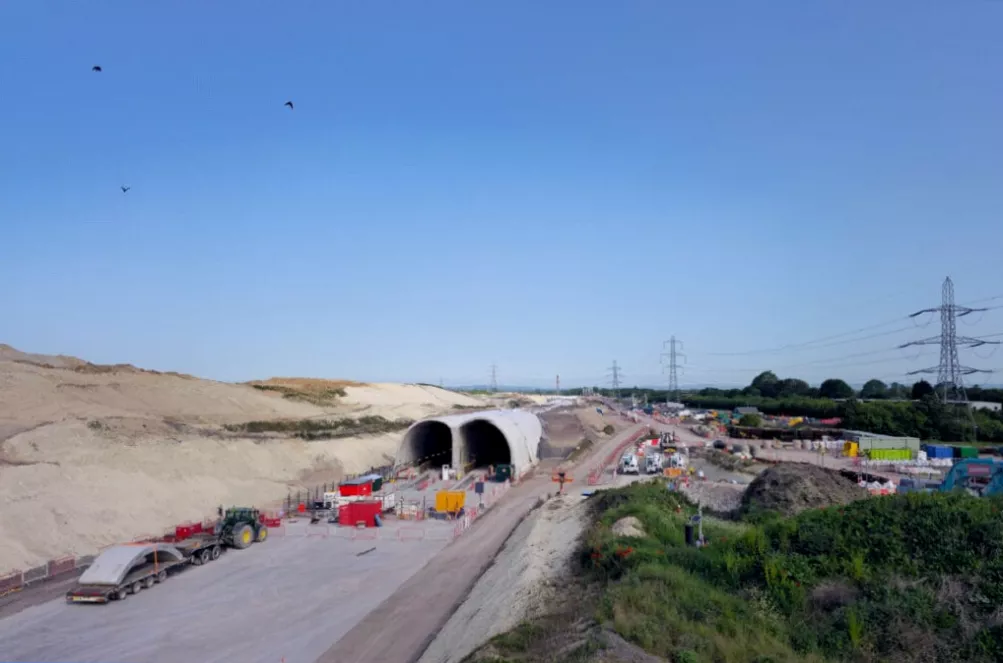
Taking the footpath today requires a walk of about two hours from Wendover to Little Kimble, via Chequers. Leaving Wendover and crossing the busy A413, you cross over the future HS2 railway. Despite the scar in the landscape today, the railway is being buried in tunnels to protect outraged locals from noise – expensive tunnels for a line that runs next to the A413, whose unending roar fills the air for miles.
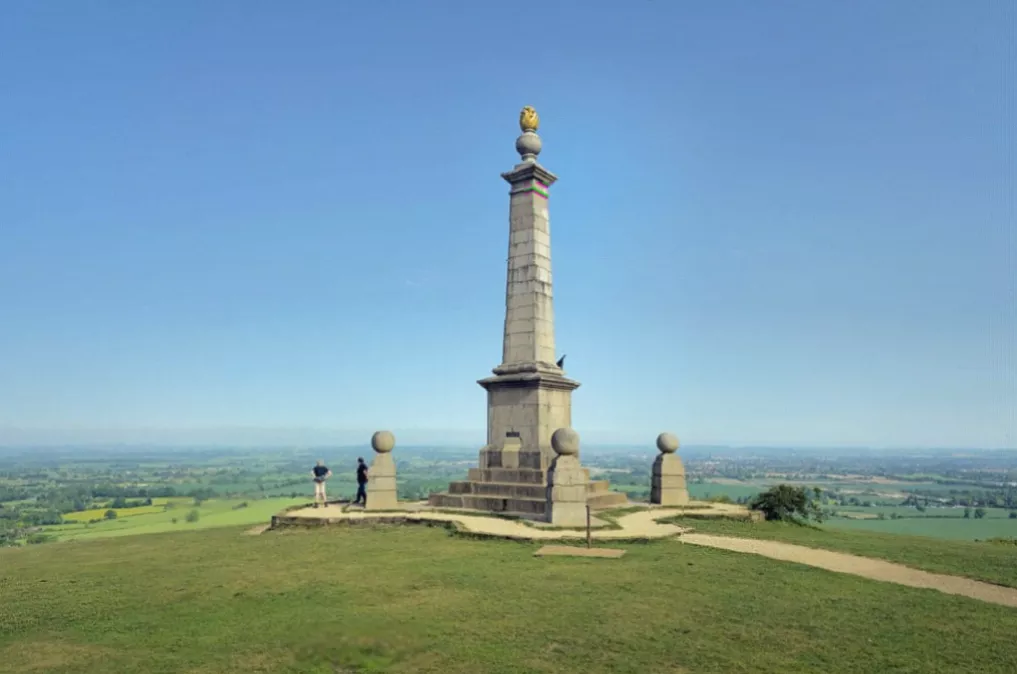
Head into the woods and up the steep slopes to Bacombe Hill, with views of the landscape for miles. The destination is the Coombe Hill Monument, the highest viewpoint in the Chilterns, offering stunning views. It also has a memorial to the British dead in the Boer War. A sign notes it was erected in 1904, but was almost totally destroyed by lightning in January 1938, and then rebuilt, with further repairs in the 1990s. The monument is a Grade II listed structure. Coombe Hill, once part of the Chequers Estate, was gifted to the National Trust in the 1920s. During the walk, a Red Kite may be seen circling overhead – the Chilterns are a significant habitat for these birds, successfully reintroduced in the 1990s after near extinction. The M40 motorway nearby has been nicknamed “kite alley”.
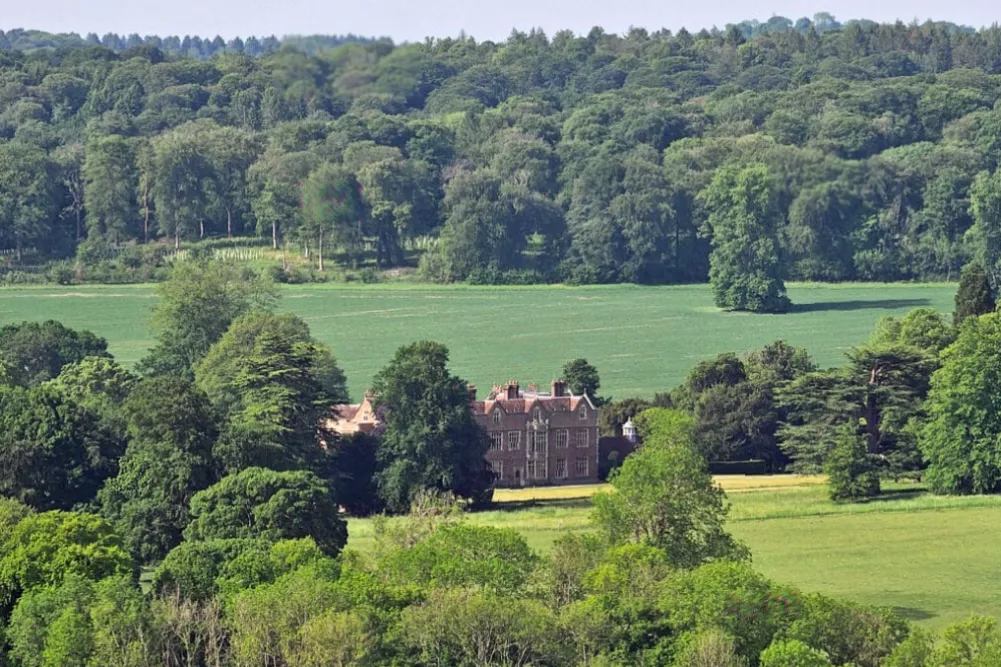
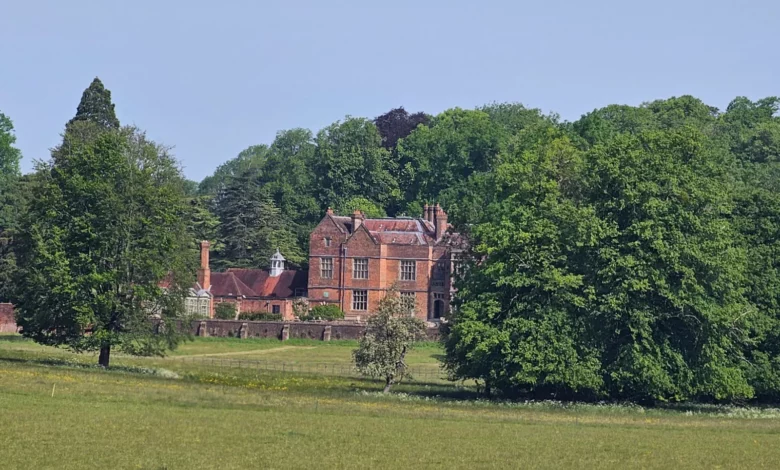
Turn your gaze away from the rolling valleys, and over there you can see a red-brick house: the back of the Chequers manor. From here, it is largely downhill to Lodge Hill road and then to the junction with Missenden Road. Here, on the border of the estate, the Tudor-style gatehouse marks the original entrance that lords and ladies down the centuries would have passed through. Now you may spy the first Section 128 warning sign and notice the first of many security cameras that will follow your route. A short walk along the road to Buckmoorend farm shop – and opposite is the incongruous sight of security cameras watching a gate with warning signs not to trespass, and next to it, the footpath gate inviting you to do just that.
And so you shall. It is a nice walk through a field, not fenced off now, though the poles that once held wires to stop people and their dogs from wandering off are still visible. Older signs remind you this is a protected site. The path is popular – some people walk alone, most walk dogs. A few minutes later, a pedestrian gate in the fence leads to the famous driveway added in the 1920s that tried to slice through a footpath – and the walkers won. Step gingerly onto that road, look left to see the secure gates that would have stopped you passing had you tried. On this narrow band of tarmac, you have the right of way to stand there, take photos, enjoy the moment. But do not linger too long, as sometimes that results in a visit from stern folk carrying guns and kindly asking you to move along. The trees along the driveway were planted after the road was laid out, apparently to conceal it from enemy planes during World War II. You cannot see the house itself from this location, but you can glimpse it through the woods on either side. Cross over, then follow the footpath up the hill and down to Little Kimble for the train home, or to Princes Risborough for more frequent trains.
There are other government-owned estates for ministerial use. Chevening House near Sevenoaks has a garden open day once a year, and although the house is not open, the gardens are worth a visit. Dorneywood House in Buckinghamshire is open to the public for a couple of weeks a year. But only Chequers has a footpath that runs straight across the Prime Minister’s driveway – a stubborn, glorious relic of the English countryside, still open to anyone who cares to walk it.