Burke rebuffs One Nation’s bid for his constituency, claims Hanson detests his Sydney patch

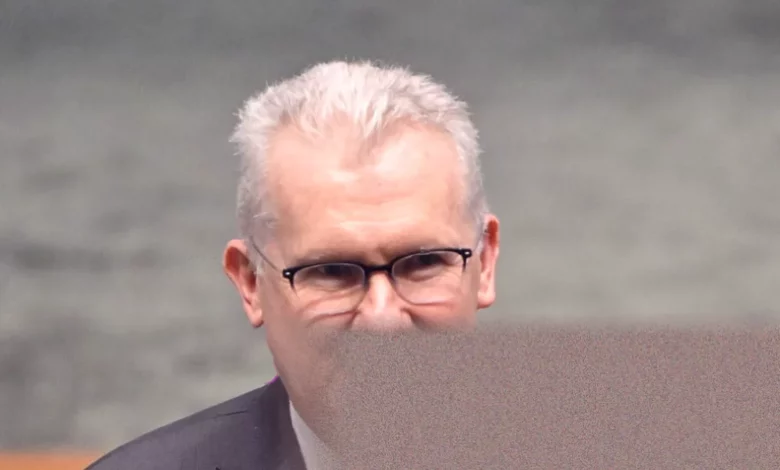
Tony Burke has dismissed One Nation’s warning that his western Sydney seat is under threat, declaring that Pauline Hanson “hates my part of Sydney” and that anyone who demeans modern Australia cannot claim to be patriotic.
The home affairs minister was responding to Hanson’s announcement that she plans to target his electorate of Watson, along with a raft of other Labor-held seats, at the next federal election. Burke, who has held the seat since 2004, was blunt in his assessment of the One Nation leader’s motives.
“She hates my part of Sydney, and she said so,” Burke told reporters on Thursday. “And this is where I’m really conscious, people shouldn’t pretend to be patriotic if they hate modern Australia. I love Australia and I love Australia for who we are, not for some fake idea of the nation that we’ve never been.”
He acknowledged that One Nation regularly fields candidates in the area and would do so again, but issued a pointed challenge. “It’s a democracy, everybody’s welcome to run. But I have to say, as a message to people who want to demean their fellow Australians, we’re a better country than that. And please, people should not pretend to be patriotic if their actual view is that they hate modern Australia.”
Watson and Lakemba: a multicultural stronghold
Watson is consistently ranked as one of the most culturally diverse electorates in the country. At the 2021 census, half of its residents were born overseas, and English was the only language spoken by just 30 per cent of the population. The suburb of Lakemba, which lies within the seat, is a significant hub for Australian Muslims and a community Hanson has previously targeted with inflammatory rhetoric.
Earlier this year, Hanson claimed that people “feel unwanted” in Lakemba, comments that drew widespread condemnation and multiple public invitations for her to visit the suburb. Burke, who also holds the portfolios of Minister for Multicultural Affairs and Minister for the Arts, has long been a vocal opponent of hate speech and bigotry. He has been involved in local initiatives such as the “Walk for Respect” in Lakemba, which aimed to counter attacks on the Racial Discrimination Act.
The electorate has been in Labor hands since its creation in 1993, and Burke retained it at the 2022 election with a comfortable 15 per cent margin. However, there have been reports of a potential “Muslim voter backlash” affecting some Labor MPs, and One Nation’s campaign will test whether that sentiment translates into votes.
One Nation’s target and recent performance
Hanson’s party has identified Watson as one of several seats it intends to contest seriously. Yet its recent record in the electorate suggests an uphill battle. At the 2025 federal election, One Nation polled just 3.2 per cent in Watson – a drop of two percentage points from the previous ballot. Nationally, recent polls have shown a rise in One Nation support, with some surveys placing its primary vote ahead of Labor, but analysts caution that this surge is largely a reflection of turmoil within the Coalition and that the party’s electoral ceiling remains low, particularly outside Queensland and the upper house.
Despite the poor local result, Hanson has insisted on targeting Watson, a decision Burke sees as part of a broader pattern. “One Nation always run in my part of Sydney, they’ll run again,” he said. “But people should not pretend to be patriotic if their actual view is that they hate modern Australia.”
The minister’s comments come amid a wider political row over donations and campaigning. Nationals Senate leader Bridget McKenzie has challenged Prime Minister Anthony Albanese to release real-time donation data, after One Nation claimed its “fire the liar” campaign was raising money at a rapid rate. McKenzie said she did not disbelieve the figure, which the party’s website showed reaching more than $2.1 million by Thursday afternoon. She also rejected suggestions that the Coalition should carve up electorates with One Nation, a notion floated by Liberal frontbencher Tony Pasin. McKenzie insisted the idea was not on the table.
For Burke, the contest is about more than electoral arithmetic. It is a fight over what kind of country Australia is. “I love Australia for who we are,” he said, “not for some fake idea of the nation that we’ve never been.”