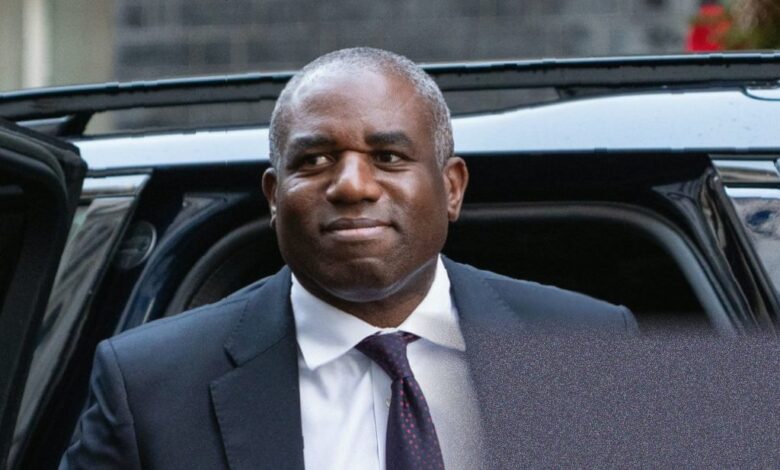
Justice Secretary David Lammy has moved to tackle a Crown Court backlog exceeding 80,000 cases by agreeing to lift a controversial cap on the number of days courts can sit across England and Wales in the next financial year.
The Crown Court backlog has reached record levels, with Ministry of Justice figures showing nearly 80,000 outstanding cases by September 2025, a 10% rise over the previous year. This has resulted in victims, witnesses, and defendants facing waiting times for trial dates of up to four years, with cases open for a year or more exceeding 20,000 for the first time.
Announcing the policy following discussions with the Lady Chief Justice, Baroness Carr, Mr Lammy said the agreement guaranteed there would be no limit on sitting days, allowing courts “to sit at their maximum” in an attempt to “turn the tide on the backlog as quickly as possible”. The government and judiciary have agreed a £2.8bn settlement for courts and tribunals for 2026/27, an increase from £2.5bn last year.
A System Under Strain
The cap on sitting days has been a recurring budgetary tool for the Ministry of Justice, often deployed to manage costs and staff shortages. In 2019, sitting days were capped at 85,000, before being temporarily uncapped in 2021/22 to address the post-pandemic backlog. More recently, the cap was set at 105,000 days for the current year, a 2% reduction on the previous year.
Baroness Carr has been vocal about the impact of such restrictions, stating that decisions to limit sitting days have had a “drastic effect across the board,” leading to cases being removed from lists and causing years of delay. She has stated that Crown Courts have the capacity to sit for 113,000 days.
The newly announced funding package includes £287m in capital investment to help repair what the Law Society identifies as a £1.3bn repairs backlog in crumbling court infrastructure. While the MoJ had previously planned for 111,250 crown court sitting days this year, the latest move is expected to raise that figure to 113,000.
Legal Profession Reacts
The move has been welcomed by criminal barristers as a crucial step. Riel Karmy-Jones KC and Andrew Thomas KC, the chair and vice-chair of the Criminal Bar Association, described lifting the cap as “a brave and significant first step” and “the single most important measure” the government could take to reduce delays.
The Bar Council had previously urged the government to remove the cap and invest in legal aid, arguing that focusing on restricting jury trials was a misdirection. Their concern was echoed by the pressure group Justice, whose chief executive, Fiona Rutherford, warned against using the sitting days announcement as cover to cut jury trials. “Restricting the right to jury trial would trample on one of the few parts of the system the public still trusts,” she said.
The Law Society said the funding package was a step in the right direction but warned it was not enough to clear the backlog or fix infrastructure, highlighting the need for sufficient judges, prosecutors, and defence lawyers, and to address operational issues like prisoner transport delays.
Further Reforms Expected
Mr Lammy is expected to announce further changes on Tuesday, focusing on efficiencies highlighted in the second part of Sir Brian Leveson’s review, which contains over 130 recommendations, including greater use of remote hearings. The Justice Secretary signalled that “investment alone will not be enough to deliver timely justice,” stating it must be “combined with our pragmatic reforms and modernisation.”
Among the contested reforms he intends to support is the introduction of new judge-only trials for certain offences, a proposal originating from the first part of the Leveson review that has faced strong opposition from legal professional bodies. The Criminal Bar Association has stressed the importance of retaining existing rights to trial by jury while prioritising the Leveson efficiency recommendations.
The backlog crisis has been exacerbated by a post-pandemic productivity slump where disposals have not kept pace with resources, alongside staff shortages and an increase in case complexity. Sexual offences now constitute a growing proportion of the longest-delayed cases, with one in five backlog cases open for at least two years being for this category.