Annual mating ritual of 1,000 virgin queens secures resurgence of Europe’s dark bee

In the forests and fields of Europe, a quiet crisis is unfolding for a native pollinator now classified as ‘Endangered’ within the European Union. The European dark bee (Apis mellifera mellifera), a subspecies evolved for the region’s climate, is fighting for survival against hybridization and habitat loss, sparking a unique conservation movement centred on a Belgian town.
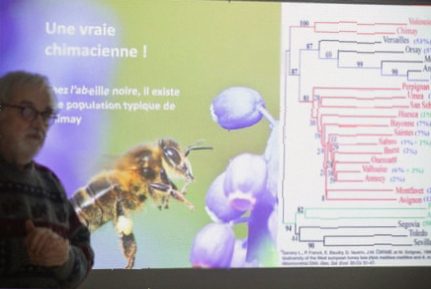
Each summer in Chimay, a crucial genetic rescue operation takes place. Approximately 1,000 virgin queens embark on a “wedding flight”, mating mid-air with males who die after the act. Beekeepers from across the continent then collect the fertilised queens from small, colourful hives, driving them hundreds of kilometres to establish new colonies in countries like the Netherlands, France, and Germany. This event, running since 2000 and coordinated from the Maison de l’Abeille Noire, is designed to spread the genes of the dark bee, which conservationists argue is the only honeybee subspecies that truly belongs here.
The driving force behind this sanctuary is Belgian beekeeper and biologist Hubert Guerriat, who has worked with the dark bee for four decades. “They are not the same animal,” he says, comparing farming dark bees to keeping Scottish highland cows versus intensive dairy cattle. Through his organisation Mellifica, which unites dark bee keepers across Europe, Guerriat breeds hundreds of queens annually and has been pivotal in the subspecies’ return.
Historically widespread across northern and western Europe, the dark bee’s fortunes plummeted in the mid-20th century as beekeepers imported hybridized subspecies like the Italian and Caucasian bees, and artificial breeds such as Buckfast, for higher honey yields. This caused what Guerriat describes as “irreparable” damage through crossbreeding. Today, pure populations are fragmented and rare, clinging on in parts of Scandinavia, France, and Spain, with a population rediscovered in the UK just over a decade ago.
A Protected Haven and a Changing Reputation
To stem the tide, Guerriat founded a beekeeping school in 1983 to train locals. Now, a protected zone spanning 30,000 hectares across Chimay and Momignies permits only dark bees, involving an estimated 50 to 100 beekeepers with plans to expand. One participant is cheesemaker Isabelle Noé, who started her colony of over 100 hives in 2017 from a retrofitted van. “It’s addictive,” she says, using differently coloured hives to help her bees navigate home.
This approach represents a shift in sustainable beekeeping. While dark bee colonies are smaller and produce less honey—Noé yielded a tonne last year, selling 250g pots for €4.50—they require fewer inputs, like winter sugar feeding, and suffer fewer losses. A niche market for “miel de noire” supports keepers, alongside products like lip balm, candles, sweets, and throat syrup.
The dark bee’s historical reputation for aggressiveness is increasingly challenged; research suggests hybrid bees often exhibit more aggressive behaviour. Their true nature is one of resilience. The dark bee queen lays fewer eggs, maintaining a smaller, hardier workforce that conserves resources. “This means the European dark bee’s needs are much lower, allowing it to more easily withstand periods of bad weather,” explains Guerriat. This trait proved advantageous during the rainy summer of 2024, which hit hybrid honeybee crops harder.
Restoring Wild Populations and Ecological Balance
Conservation efforts extend beyond managed hives. Ecologists are restoring wild populations by placing log hives in forests to replicate the tree cavities lost to deforestation. “Protecting the dark bee is also a way to contribute to the resilience of our forest ecosystem,” says Estelle Doumont, a conservation biology researcher at the University of Liège.
The ecological rationale is pressing. While the western honeybee is a vital pollinator, evidence suggests introduced colonies can damage wild pollinator communities. “All the beekeepers who use foreign bees contribute to the disappearance of the native bee,” Guerriat states, comparing nature to a precision watch where parts are not interchangeable.
Recent scientific and policy developments underscore the urgency. In October 2025, wild honeybee populations in the EU were officially classified as Endangered on the IUCN Red List, a move that frames them as native wildlife requiring stronger protection. Research confirms that locally adapted genotypes, like those of the dark bee, have significantly higher survival rates than non-local ones, offering better resistance to parasites and disease—a critical asset amid record mass die-offs, such as the average 60% colony losses reported by US beekeepers.
This local adaptation may also offer a defence against invasive Asian hornets. Guerriat notes that dark bees’ tendency to stay in the hive late in the season, when hornets are active, could help them avoid predation, though he cautions this “remains to be proven.”
As beekeepers grapple with climate change, disease, and invasive species, the European dark bee stands as a testament to the resilience of native biodiversity. “In apiculture, you have to explain to people how to work with dark bees,” says Hubert Guerriat. “With time they find that it is a beautiful bee.”