A dramatic 51% surge in electric vehicle sales across continental Europe in March has presented a stark counter-narrative to the turmoil emanating from the Middle East, with some analysts suggesting the Iran war and its disruption of global energy supplies may be inadvertently accelerating the continent’s green transition. The International Energy Agency has labelled the crisis in the Strait of Hormuz the “biggest energy crisis in history,” yet it appears to be driving a significant consumer shift away from fossil fuel dependency at the point of purchase.
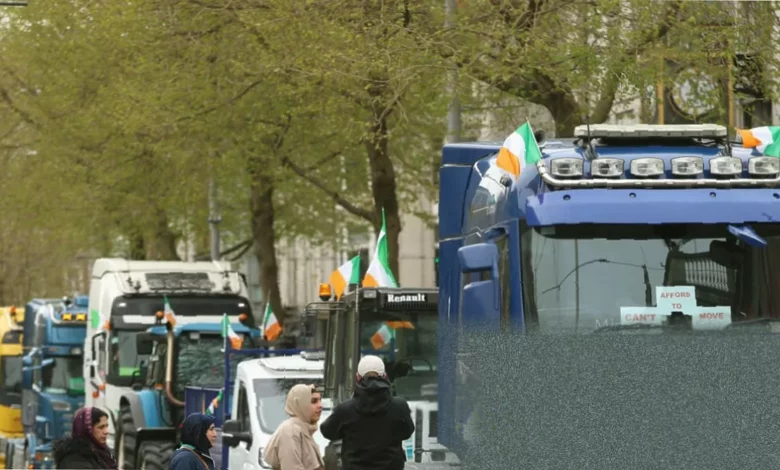
This burgeoning demand for EVs, which commentator George Monbiot termed a potential “silver lining,” exists in direct tension with the groundswell of anger over the soaring fuel prices caused by the same geopolitical shock. Nowhere was this tension more explosively realised than in Ireland, where the vulnerability of a nation deeply reliant on imported oil was laid bare. For six days, the country was brought to a standstill as farmers, hauliers, and transport-dependent workers, coordinated by groups like “The People of Ireland Against Fuel Prices Protest,” blockaded ports, fuel depots, and the nation’s only refinery at Whitegate in County Cork. At its peak, the action left up to 700 petrol stations dry and threatened critical infrastructure.
The protesters’ fury was squarely aimed at the government, with fuel taxes constituting a significant portion of pump prices—approximately 16 cents per litre of petrol and 19 cents for diesel, based on Ireland’s carbon tax of €71 per tonne of CO2. As the Community Action Tenants Union (CATU) Ireland stated, the root cause was seen as “Government greed and neglect” in planning for a clean energy future. The disruption drew immediate comparisons to Europe’s history of fuel-driven, grassroots movements, from France’s Gilets Jaunes to the tractor protests seen in Germany and Italy in 2024.
Facing escalating chaos and a subsequent motion of no confidence from Sinn Féin, the coalition government capitulated after a tense stand-off. An initial €250 million support package in March was followed by a further €505 million rescue deal. This included extended cuts to excise duties until 2026, targeted supports for agriculture and haulage, and, most significantly for climate policy, a six-month delay to a planned increase in the carbon tax. The Irish Defence Forces were deployed to assist in clearing blockades, a move that raised concerns about policing peaceful protest.
Europe’s Broader Dilemma: Subsidy or Strategy?
Ireland’s crisis is a concentrated version of a dilemma now facing governments across Europe. The urgent question is how to alleviate acute cost-of-living pain without sabotaging long-term climate objectives and locking in continued dependence on volatile fossil fuels. Hannah Daly, a professor of sustainable energy at University College Cork, argues the Irish package, while offering temporary relief, is a counterproductive “ransom” to the fossil fuel system. “It has artificially shielded motorists and others who are dependent on fuel, from an international fuel crisis. But it is temporary relief, at huge expense, that everybody is paying for,” she said.
Professor Daly identifies the carbon tax, a cornerstone of EU climate policy, as having become a “lightning rod” for public frustration, particularly for those without the means to switch to cleaner alternatives. The fear among energy experts is that larger economies, such as Germany and Poland, will follow Ireland’s lead with blanket fuel subsidies rather than more targeted income supports for vulnerable groups. Such a panicked response, experts warn, would only prolong collective suffering and send the clean energy transition into reverse.
The European Commission has outlined plans to provide relief by favouring electricity over oil and gas through tax cuts, alongside setting targets to electrify all road transport. The scale of the challenge is immense: despite the March sales spike, 96% of the EU’s transport fleet still runs on petrol or diesel. Ireland’s own situation underscores the gap; despite an exceptionally high reliance on road transport, only one electrified heavy goods vehicle had been registered in the country by April this year. The contrast with Norway, where EVs account for 32% of passenger cars, is stark.
The path forward, Professor Daly suggests, lies in accelerating the availability of affordable alternatives. “That could be done; there are huge strides in battery technology that make it a no-brainer for any new car, van or bus,” she said. The current crisis has, ironically, aligned geopolitical pressure with climate policy goals. Countries like Spain and Denmark, which made earlier, generous investments in domestic renewables, are now insulated from the worst of the price shocks, reaping rewards in lower and more stable electricity prices.
There are historical precedents for turning energy crisis into lasting innovation. Following the 1973 oil crisis, which saw prices rise nearly 300%, Nordic countries like Sweden dramatically reduced their exposure to shocks through bold solutions ranging from home insulation to extensive public transport. The current fossil fuel crisis could turn out to be Europe’s last, Professor Daly concluded. “But only if the right lessons are learned.” The disruption caused by the Irish blockades, while opening a Pandora’s box of unhelpful narratives, may have demonstrated the alarming price of fossil fuel vulnerability more powerfully than any climate protest ever could.