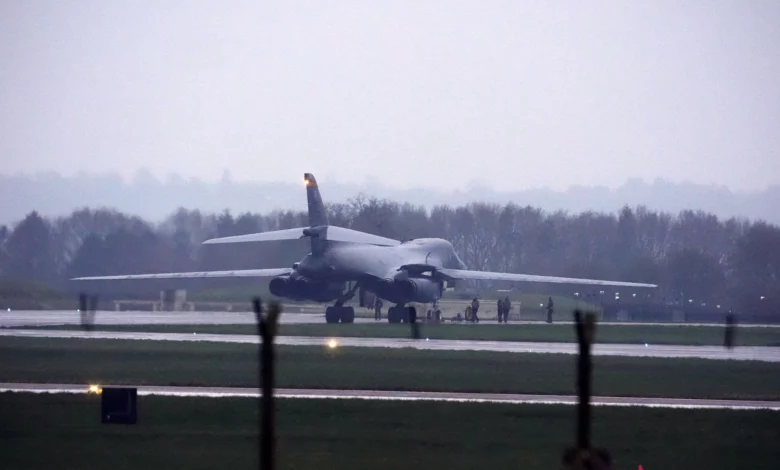
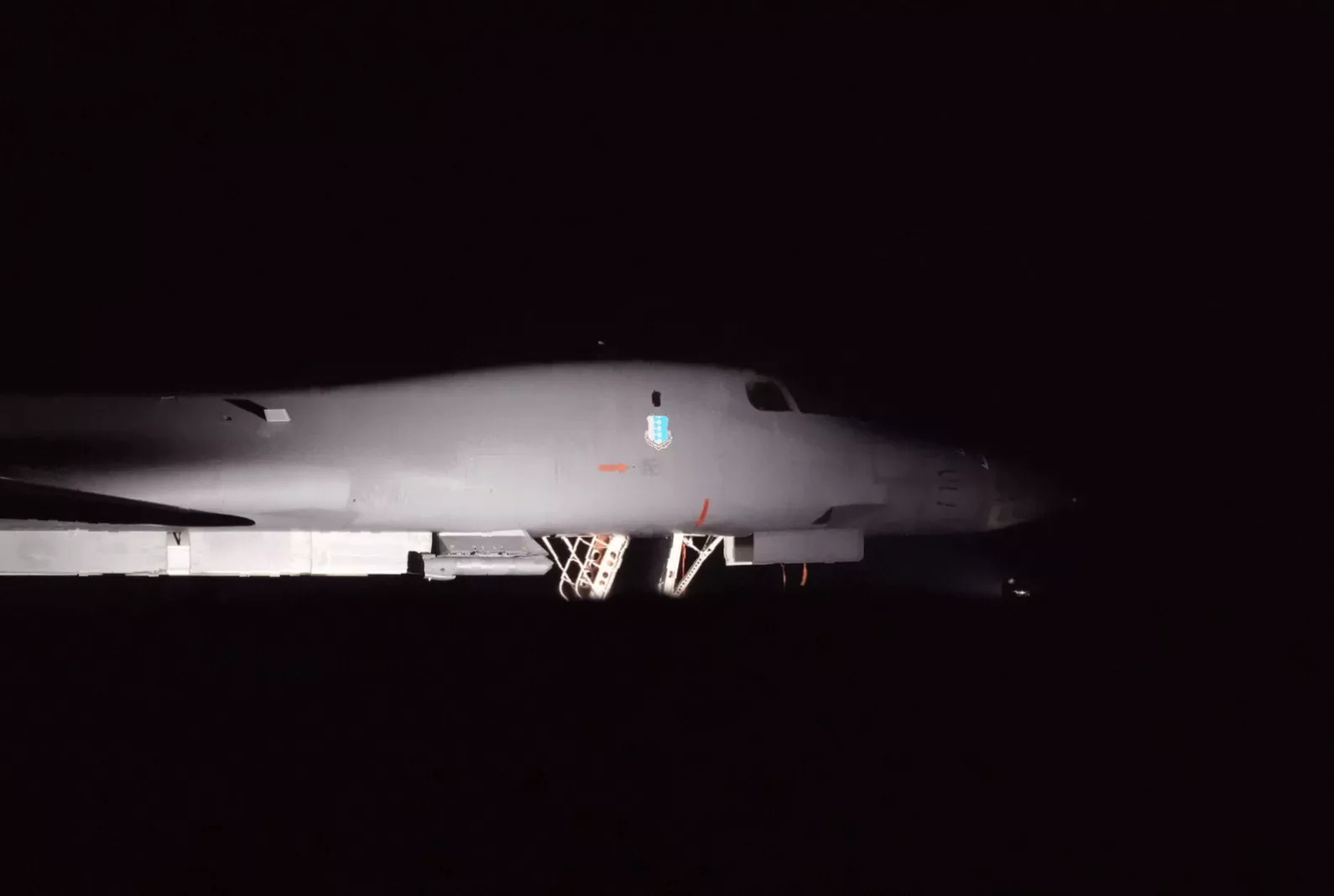
The first of four American B-1 Lancer bombers touched down at RAF Fairford in Gloucestershire on Friday evening, a potent signal of escalating US military readiness as the conflict with Iran intensifies. Three more of the heavy bombers, each capable of carrying a formidable payload including up to 24 cruise missiles, followed on Saturday morning.
The Ministry of Defence confirmed the deployments are part of “specific defensive operations” for which US forces are now using British bases. The objective, stated by the MoD, is to “prevent Iran firing missiles into the region” and protect British lives. Permission for this “specific and limited defensive purpose” was granted by Prime Minister Sir Keir Starmer, covering operations from both RAF Fairford and the UK-US base on Diego Garcia in the Indian Ocean.
UK Military Posture: Defence and Deterrence
Alongside the US bomber deployment, the UK is bolstering its own military assets in the region. The Royal Navy Type 45 destroyer HMS Dragon is being deployed to the Eastern Mediterranean, equipped with the Sea Viper missile system designed to counter aerial threats like drones and missiles. It will be accompanied by two Martlet-armed Wildcat helicopters.
In the air, RAF operations continue. Typhoon and F-35 jets are conducting missions over Jordan, Qatar, and Cyprus. The RAF has been actively engaged in defensive actions; in recent operations, RAF F-35B jets shot down drones over Jordan—the first such combat engagement for the British F-35—while a Typhoon destroyed an Iranian drone directed at Qatar. A Merlin helicopter is also being sent to enhance aerial surveillance.
These movements follow a direct attack on a UK base. RAF Akrotiri in Cyprus was struck by a drone, suspected to have been launched by Hezbollah, causing minimal damage and no casualties. The incident raised questions about base security, with the Cypriot government reportedly disappointed by a lack of timely warning. Sir Keir Starmer has since reiterated the UK’s “full commitment” to the security of Cyprus and personnel stationed there.
Political Crosscurrents and Legal Justifications
The Prime Minister’s decision to permit defensive US operations followed initial refusal to allow British bases to be used for offensive strikes, a stance he defended as potentially unlawful and requiring a “cool head.” In a Sunday Mirror article, Sir Keir argued the country needs “seriousness, not political games,” and stated the UK was not involved in initial strikes and would not join offensive actions, but would support allies’ collective self-defence.
This nuanced position has attracted criticism from across the political spectrum. Tory leader Kemi Badenoch accused the Prime Minister of being “too scared to make foreign interventions,” insisting the UK is “in this war whether Keir Starmer likes it or not.” Former Labour Prime Minister Sir Tony Blair reportedly told a private event he believed Britain “should have backed America from the very beginning.”
Within government, Deputy Prime Minister David Lammy outlined a legal basis for potential escalation, stating RAF jets could legally strike Iranian missile sites being used to attack British interests. He also called for an investigation into leaks from a top-secret National Security Council meeting on the issue, describing them as a “travesty.” The Prime Minister has insisted all ministers on the NSC supported the UK’s final position, despite reports of cabinet divisions.
From Washington, US President Donald Trump had expressed frustration at the initial UK refusal, stating it “took far too long” for Sir Keir to change position and reportedly quipping, “this is not Winston Churchill that we’re dealing with.” On Saturday, he appeared to warn on Truth Social that “Today Iran will be hit very hard!” US Defence Secretary Pete Hegseth warned that strikes were “about to surge dramatically,” referencing more fighter squadrons and “more bomber pulses more frequently.”
Regional Unrest and Evacuation Efforts
The bomber arrivals coincided with renewed missile and drone attacks across the Gulf. Qatar, Bahrain, and the United Arab Emirates all reported intercepting projectiles from Iran. The UAE stated Iran launched 16 ballistic missiles and 121 drones, with only two drones striking the nation. The Islamic Revolutionary Guard Corps claimed to have targeted the US Juffair naval base in Bahrain.
In a televised address, Iranian President Masoud Pezeshkian apologised to neighbouring nations for the attacks but rejected US demands for unconditional surrender. He also warned regional governments against allowing groups to use their territories to threaten Iran’s security. Meanwhile, a prominent cleric, Ayatollah Nasser Makarem Shirazi, urged Iran’s Assembly of Experts to act quickly to name a new supreme leader.
The UK Foreign Office continues evacuation efforts for British nationals. A second Government charter flight from Oman landed at Gatwick Airport in the early hours of Saturday, with a third scheduled for Sunday. A commercial flight from Dubai is also planned for early next week, subject to conditions. The government states that over 13,000 Britons have returned from the UAE and nearly 27,000 from the wider region since March 1.
The conflict’s ripple effects disrupted commercial aviation briefly on Saturday, as Emirates suspended all flights to and from Dubai after blasts were reportedly heard in the city, resuming services about 30 minutes later.
The Iranian ambassador to the UK offered a cautionary note to the British government, telling the BBC it should be “very careful” about becoming further involved. As US bombers now operate from Gloucestershire and the Royal Navy steams towards the Eastern Mediterranean, the UK’s depth of involvement—defensive for now, but under intense political and strategic pressure—remains a defining question of the crisis.