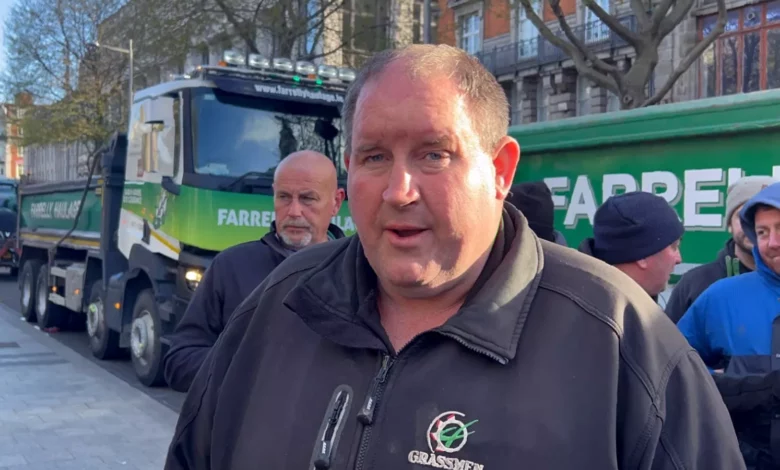
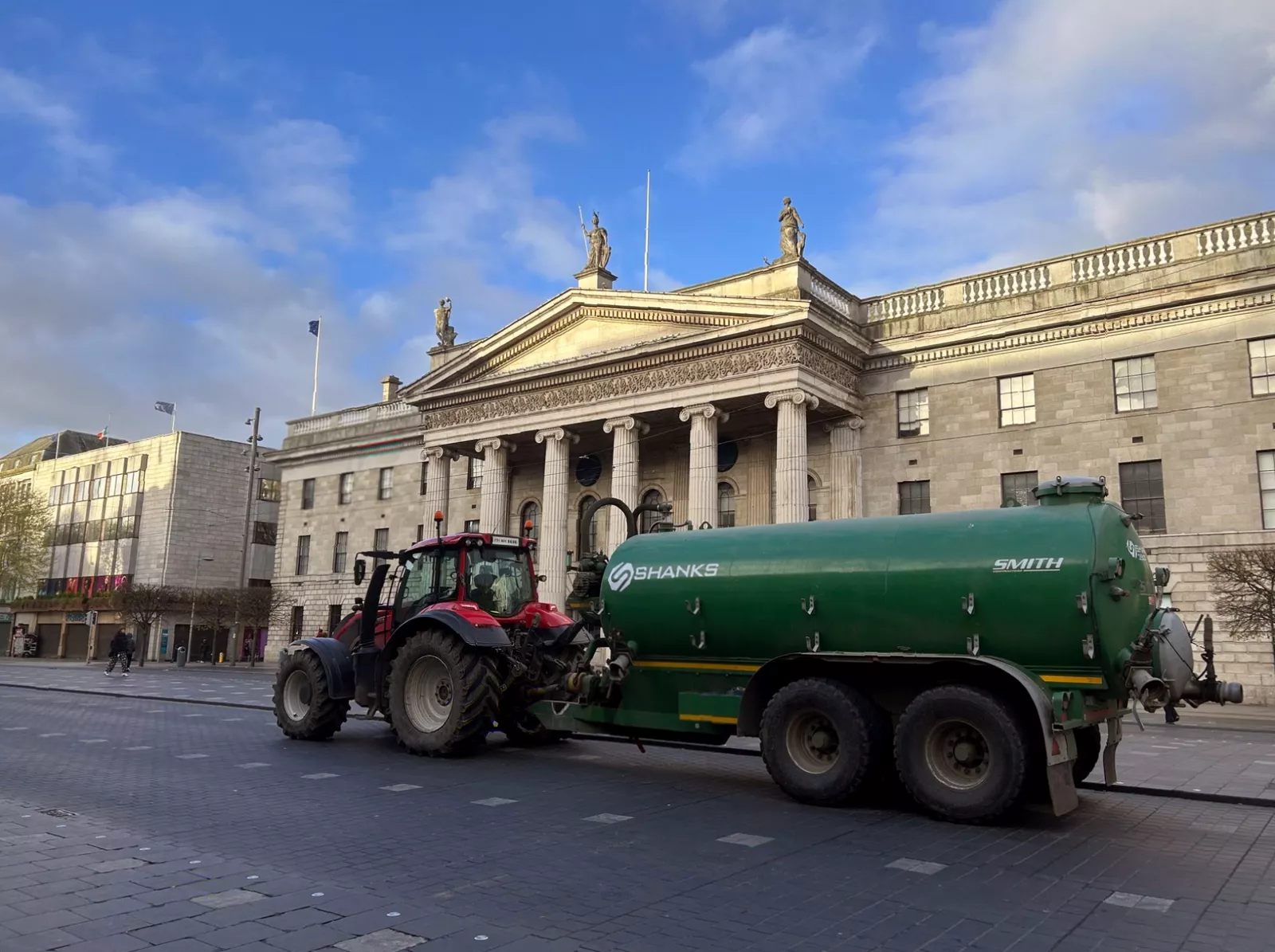
Protesters who had blockaded the centre of Dublin for days have claimed they were “ambushed” by what they described as an “army” of public order police in a dramatic late-night operation to clear the capital’s main thoroughfare.
Christopher Duffy, a spokesman for the demonstrators on O’Connell Street, said the group had been given no choice but to move after Gardaí threatened to tow their vehicles. “We got absolutely ambushed here last night by what I can only describe as an army,” he said. “We have no choice, financially we have to move the vehicles.” He claimed towing could cause damage they could not afford.
Protester Demands and Mounting Pressure
The claims follow six consecutive days of nationwide action that began on Tuesday, 7 April 2026. The protests, largely led by hauliers, farmers, and agricultural workers, were triggered by rapidly rising fuel prices and broader cost-of-living pressures. Spokespeople, including James Geoghegan and John Dallon, had called for urgent government intervention, stating unsustainable costs would force people out of business.
Their specific demands included a fuel price cap, the suspension of carbon taxes, and even launching oil exploration off Ireland’s west coast. The crisis is set against a global backdrop of energy price increases linked to the 2026 Iran war and the closure of the Strait of Hormuz. In Ireland, taxes account for approximately 59% of petrol and 52% of diesel prices, a point highlighted by the Irish Road Haulage Association (IRHA), which accused the government of “price gouging”.
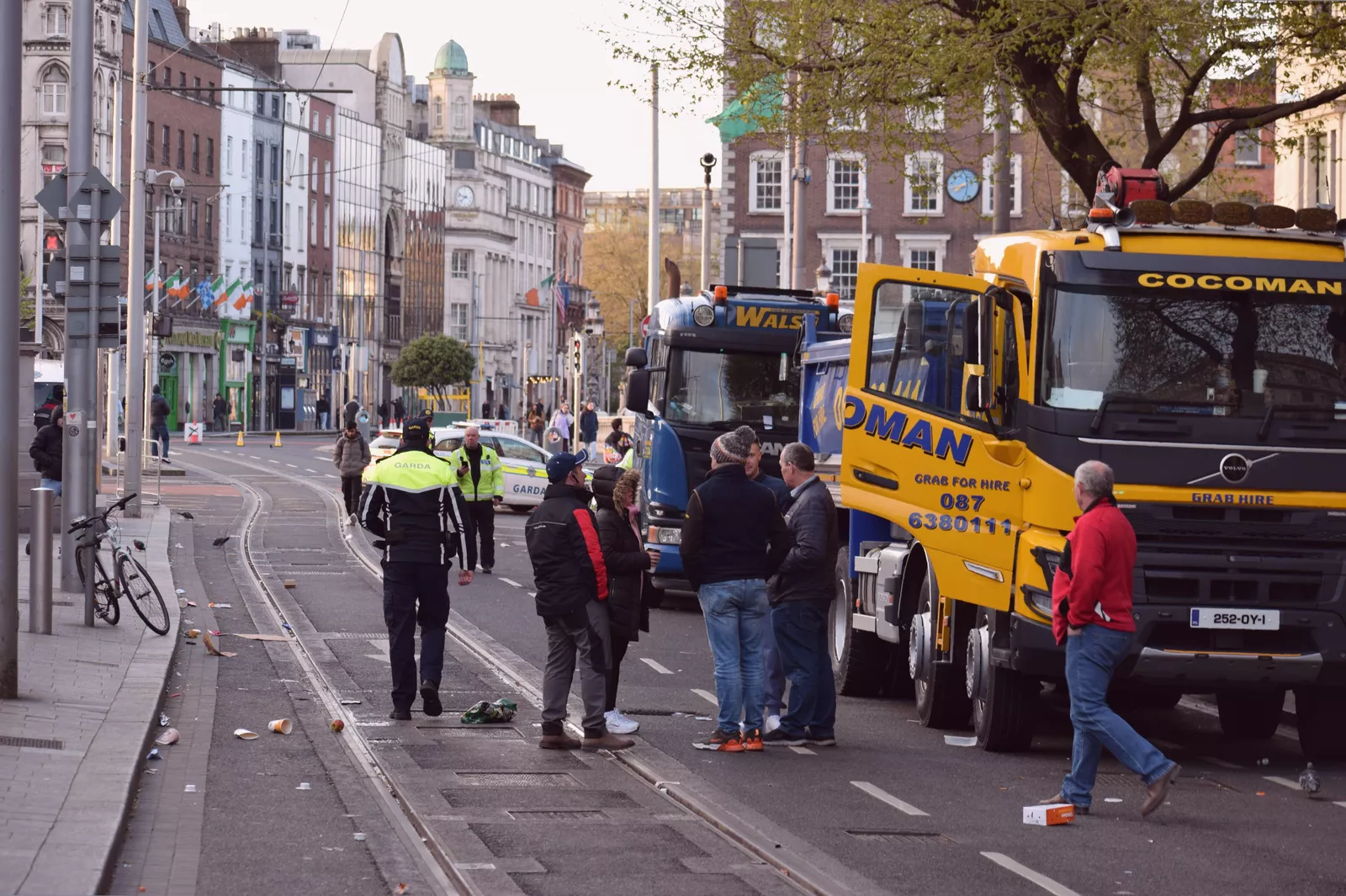
While the IRHA stated it was not officially involved, its president, Ger Hyland, empathised with drivers’ frustrations and offered to act as an “honest broker”. The government had previously introduced a €250 million package in March 2026, cutting fuel prices, but protesters deemed it insufficient.
A Coordinated Police Operation to Reopen Critical Routes
The clearance of O’Connell Street was part of a significant escalation in policing directed at what Garda Commissioner Justin Kelly called blockades that were “endangering the state”. An Garda Síochána had declared an “exceptional event”, with all officers ordered to work for three days.
Commissioner Kelly stated the blockades of critical infrastructure “resulted in fuel shortages that are directly impacting on emergency services such as hospitals, the ambulance service and the fire service”. He vowed to step up enforcement, adding, “We gave the blockaders fair warning… they choose to ignore it and continue to hold the country to ransom.”
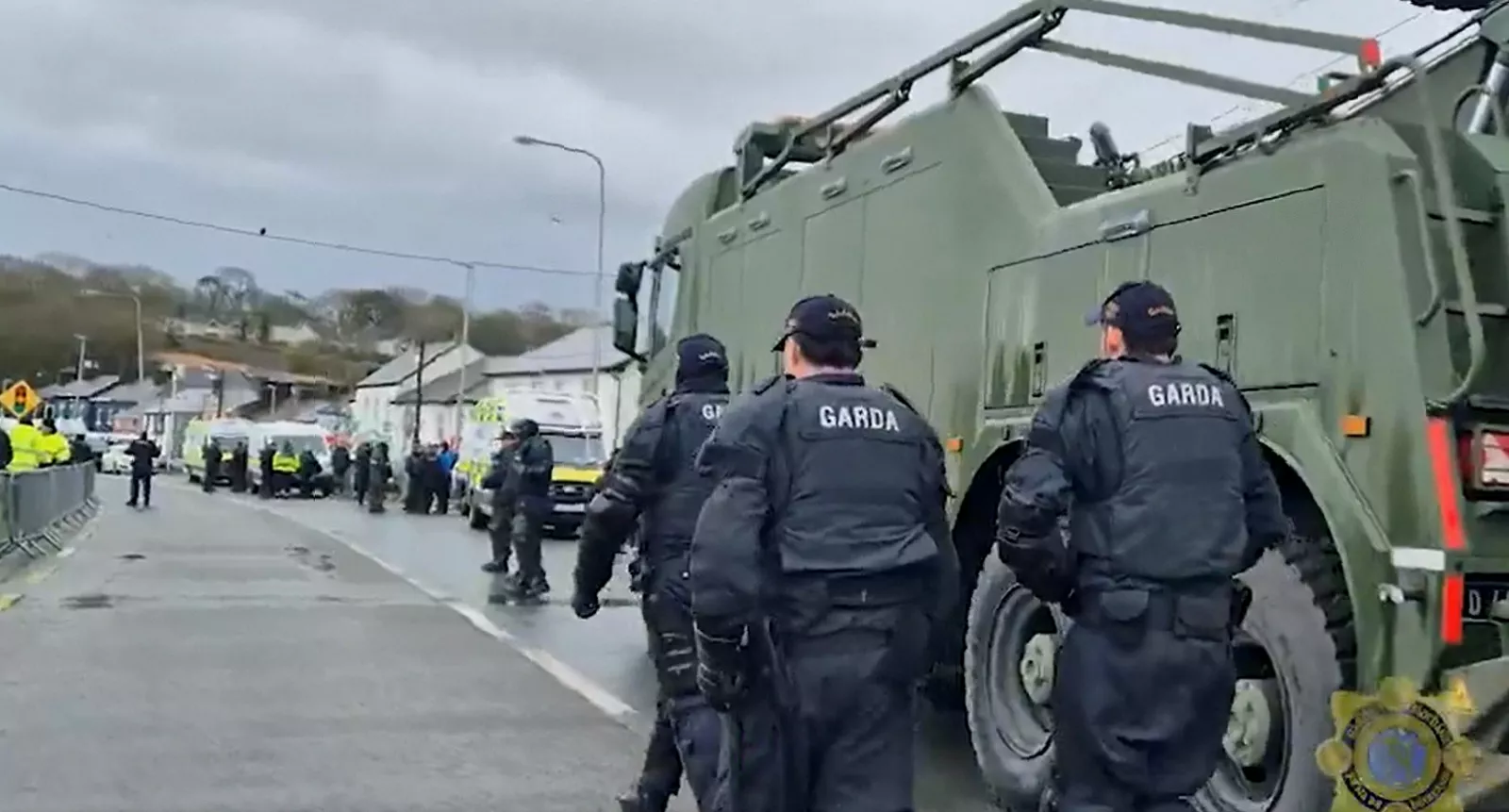
Following the O’Connell Street operation, steel barriers were erected on surrounding roads to prevent renewed access. This mirrored tactics used in other clearances. In a separate operation at Galway docks, gardaí with shields and protective gear clashed with protesters. The Defence Forces assisted, deploying a heavy-lift recovery truck—nicknamed ‘the Beast’—to drive through a makeshift barrier of pallets and logs, with a Garda helicopter monitoring overhead.
The most significant intervention came a day earlier at Ireland’s only oil refinery in Whitegate, Co Cork. Gardaí cleared that blockade on Saturday, with physical clashes leading to the use of pepper spray. Fuel trucks were then able to access the refinery under Garda escort. The Defence Forces were authorised to deploy army vehicles to remove obstructions from key transport routes and fuel facilities.
These operations also cleared blockades on the M50 motorway in Dublin and at depots in Foynes, Co Limerick, and Galway City. However, Transport Infrastructure Ireland reported significant ongoing network disruption, and Dublin Bus experienced severe service delays.
Government Package and Political Fallout
Ahead of an emergency Cabinet meeting scheduled for 4pm on Sunday, 12 April, the government prepared a “substantial” support package aimed at ending the protests. Ministers held talks with established representative bodies, concluding with plans for a temporary fuel transport support scheme and temporary fuel support.
A senior government source said the scheme would involve direct payments to businesses in sectors worst hit by high fuel costs. IRHA president Ger Hyland said there were “the bones of an agreement” and he hoped the package would be agreed by Sunday morning.
The political ramifications were immediate. Ireland’s largest opposition party, Sinn Féin, said it would call a motion of no confidence in the government over its handling of the crisis. Protest spokesman Christopher Duffy also called for rural TDs “propping up the Government” to support such a motion.
Despite the clearances, the disruption had caused severe fuel shortages. Kevin McPartlan, chief executive of Fuels for Ireland, warned it would “still take 10 days to recover” to normal supply levels. He estimated that up to two-thirds of the country’s 1,500 filling stations could have run dry by Sunday morning, with hundreds still expected to be without fuel.
The impact extended beyond forecourts, affecting businesses, supply chains, and the delivery of essential supplies like food and animal feed. Meanwhile, the Police Service of Northern Ireland stated it was “maintaining an ongoing assessment” of social media posts calling for similar protests there and had a policing response prepared to minimise potential disruption.