Understanding Consent
Google Search requires user consent to function. For readers of this website who wish to find further information about the death of a three‑year‑old girl in Chertyssey, the search feature – powered by Google Custom Search – will only become active once a user has given their explicit permission. This consent allows the service to load, and it may use cookies or similar technologies to operate. The necessity of this step is rooted in data protection law and the principle that a user’s browsing preferences should not be assumed. Without that affirmative click, the search tool remains disabled, meaning anyone seeking details on this tragic incident must first engage with the consent process.
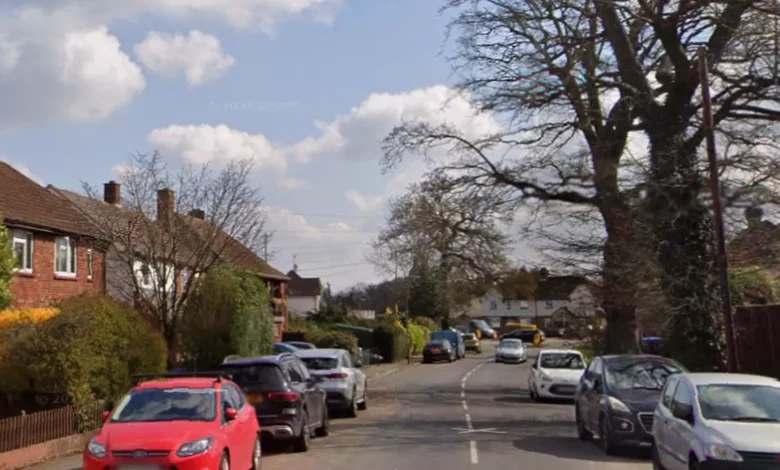
The girl was found deceased at a property on Pyrcroft Road in Chertsey, Surrey, just outside London. Police were called to the address at around 5:40 PM on Thursday, 25 June 2026, following reports of concern for safety. A 31‑year‑old man was arrested at the property on suspicion of murder and taken to hospital for treatment; he will be taken into custody once discharged. Surrey Police’s Major Crime Team is leading the investigation and believes the incident occurred “within a family setting”. A spokesperson stated: “This is a tragic incident, and our officers are working hard to build a picture of what happened.” They added that at this stage they are not looking for anyone else in connection with the investigation and have “no reason to believe there is any risk to the public”. A significant police presence is expected to remain in Pyrcroft Road for several days.
The consent requirement is not a minor technicality. It ensures that the user controls whether personal data – such as search queries – is processed. In a case such as this, where public concern is high and many will want to monitor developments, the gatekeeping function of the consent button becomes the first and most important step in accessing information.
The Privacy Policy
The website’s privacy policy provides the full framework for how data collected through Google Custom Search may be used. It explains the types of cookies and similar technologies that may be deployed, the purposes for which they are employed, and the rights users have over their information. Reading the policy before granting consent is encouraged, because it clarifies the boundaries of data processing and the user’s ability to withdraw permission at any time.
In the broader context of this tragic incident, the privacy policy also echoes wider societal questions about safety and the handling of sensitive information. The Metropolitan Police have an action plan addressing Violence Against Women and Girls (VAWG), and high‑profile cases such as those of Sarah Everard (March 2021) and Sabina Nessa (September 2021) have shaped public discourse on the role of policing. There have also been repeated calls for quicker investigations into child deaths – for example, London Mayor Sadiq Khan has urged faster inquiries into child crash deaths. Meanwhile, inquests into other tragedies have highlighted potential failures in mental health services; the case of Axel Rudakubana, who was assessed as posing “no risk to others” shortly before carrying out a fatal knife attack, is one such example.
Several related incidents in and around London and Essex in recent years show the pattern of such tragedies. In March 2026, an 18‑day‑old baby was found dead in Westminster after reportedly falling from a height; a 43‑year‑old woman was arrested on suspicion of murder in a domestic context. In July 2024, a newborn baby girl was found dead in Camden; a 26‑year‑old man was arrested on suspicion of murder, child neglect and concealment of a birth, and a 29‑year‑old woman was arrested on suspicion of child destruction. In June 2026, a 12‑year‑old boy died following a collision with a vehicle in Pilgrims Hatch, Brentwood, Essex; a 15‑year‑old boy and a 43‑year‑old man were arrested on suspicion of murder. In December 2023, a three‑year‑old girl died in Hayes, west London, and two people – Manpreet Jatana (34) and Jaskiret Singh Uppal (36) – were charged with murder in September 2025. In January 2023, a seven‑year‑old girl died at an address in north‑east London; a man and woman were arrested on suspicion of child neglect and later released on bail. In February 2024, three children all under the age of ten were found dead in Sea Mills, Bristol; a 42‑year‑old woman was arrested on suspicion of murder, and police reported prior contact with the individuals involved.
Beyond the UK, similar cases have drawn international attention. In London, Ontario, Canada, four members of a Muslim family were killed and a child injured in June 2021 when a vehicle was driven onto a sidewalk; police believe the attack was intentional and motivated by Islamophobia. Also in London, Ontario, eight‑year‑old Alexandra Stemp died in a collision in December 2021. In the United States, 11‑year‑old London Olsen was found dead in Middle River, Maryland, in January 2025; her mother was charged with first‑degree murder. Incidents of racially or religiously motivated attacks have raised concerns about community safety and the rise of hate‑driven violence.
The Button
Once a user has read the privacy policy and decided to proceed, the action required is simple: click ‘Allow and Continue’. This button is the final step that enables Google Custom Search to load, unlocking the website’s search functionality. For anyone following the Chertsey investigation, that click is the gateway to finding further news, official statements, and community updates as the Major Crime Team continues its work.
The button also serves as a reminder that every search query is a consensual transaction. In an age where data is constantly collected, the deliberate act of clicking ‘Allow and Continue’ reasserts the user’s agency. The website does not assume permission; it asks for it. This is particularly relevant in a story that involves sensitive family circumstances – the police have confirmed that the incident occurred within a family setting and that no wider risk to the public exists. Readers who want to stay informed must first make that choice.
All of the above facts – from the child’s discovery on Pyrcroft Road to the arrests in Hayes, from the Westminster baby death to the Bristol children, from the Ontario vehicle attack to the inquest into Axel Rudakubana – are now part of the public record. They become accessible through a search that begins with a single, informed decision: the decision to consent.