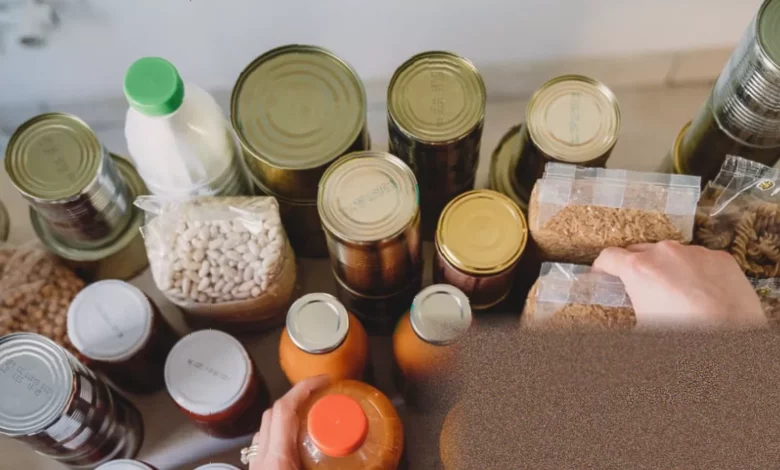
Leading UK food security experts are urging households to build emergency stockpiles of food as a buffer against potential shocks to the nation’s fragile supply networks, warning that the current level of government preparedness is dangerously inadequate.
Professors Tim Lang and Sarah Bridle are among those advocating for a significant shift in public mindset, arguing that an over-reliance on “just-in-time” supply chains has left the UK vulnerable. Their calls are supported by a stark government report from 2024, which warned the food system could be “at strategic risk of catastrophic failure” by 2030 due to climate change and geopolitical instability.
The Fragile Foundations of UK Food Security
The experts point to a confluence of pressures creating a “tinderbox” environment. Geopolitical conflict, particularly in the Middle East, has caused a 33% contraction in the global fertiliser supply chain and driven up fuel costs, directly impacting farmers and food transport. Concurrently, climate change is battering harvests, with the UK experiencing a very wet winter and spring while record global temperatures hit key exporting countries.
This external volatility intersects with deep domestic challenges. The National Farmers’ Union has consistently warned about the impact of these shocks on prices and production. Furthermore, underlying food insecurity means many would struggle immediately in a crisis: in 2023/24, 7.5 million people in the UK were in food-insecure households, including one in seven households with children.
What—and How—to Store
The core advice is to focus on long-life items that can be consumed without cooking, assuming utilities may fail. Suggested staples include tinned beans, vegetables and fish, rice crackers, and oats that can be soaked. Water is critical: a minimum of 7 to 12 litres per person per day is recommended for drinking, washing, and cooking.
However, the experts dedicate significant emphasis to a psychological and practical nuance: choosing foods you actually enjoy and routinely eat. “I learned very quickly there is to make sure you get stuff that you actually like and eat anyway,” says Professor Bridle, who incorporates tinned beans, lentils and chickpeas into her regular diet to rotate her stock. Professor Lang agrees, stating you must think about “what you wouldn’t mind living off for a week or 10 days.”
The reasoning is twofold. Firstly, morale matters during a crisis, hence the suggestion to include some treats like chocolate, sweets, or crisps, especially for children. Secondly, it ensures stockpiles are used and refreshed, preventing waste when items pass their use-by dates. Lang also suggests that even small home-grown herbs can “titivate” repetitive meals and provide micronutrients.
Both experts, alongside environmental campaigner George Monbiot, who keeps a two-month supply for his family, also stress a civic duty: being prepared to share with neighbours who cannot afford to stockpile, to maintain social solidarity and order.
International Contrast and UK Complacency
This advice stands in stark contrast to the UK government’s official position. The “Prepare” website offers only minimal guidance, which Lang bluntly calls “stupid.” This is compared to systematic approaches abroad. Switzerland provides an online tool for personalised stockpile lists and maintains state reserves; Germany has a similar resource; Latvia and Lithuania distribute survival booklets; and Sweden advises citizens to gradually build supplies.
The UK’s domestic production provides a partial buffer, producing about 60% of its food by value and being largely self-sufficient in grains. However, self-sufficiency in fresh vegetables has declined to around 53%, and sits at just 16% for fruit, creating significant import dependency. Despite the 2024 risk assessment, the government has no plans to increase self-sufficiency targets.
A Department for Environment, Food and Rural Affairs spokesperson said the UK has a “high degree of food security” and that there is “no reason for consumers to change their buying behaviours,” adding that they are monitoring developments in the Middle East.
Lang condemns this as complacency. “Britain is way, way behind on this,” he said, urging the public to pressure the government to be more realistic. His warning is underscored by immediate sectoral strains, such as UK glasshouse growers facing soaring gas prices, threatening supplies of cucumbers, tomatoes and peppers, and by ongoing labour shortages and subdued investment in the food manufacturing sector.