An online game called Omoggle has begun matching strangers for one-on-one video chats in which facial recognition software analyses and scores their attractiveness, assigning winners in contests known as “mog-offs”. The platform, which has thousands of concurrent players at any given moment, uses a suite of facial measurements — including canthal tilt, palpebral fissure ratio and nose-to-face width ratio — to generate a rating between one and ten.
Players are paired randomly, and a series of green dots appear on each face on screen as the system compares the data. The “mog-off” is won by the user deemed more physically dominant, a concept drawn from internet slang: “mogging” is believed to derive from the acronym AMOG, meaning “Alpha Male of the Group”, and describes outshining or dominating someone in appearance or overall attractiveness. Omoggle’s ecosystem mirrors that of Omegle, the anonymous chat service that ran from 2009 until its closure in November 2023 due to escalating moderation challenges, legal pressure from a lawsuit alleging child sex exploitation, and financial strain. On Omoggle, wins and losses adjust a player’s rating through a chess-style Elo ranking system. Status levels are assigned on a scale that replaces the usual manosphere hierarchy of “subhuman”, “normie” and “chad” with terms such as “sub3” and, at the very bottom, “molecule”.
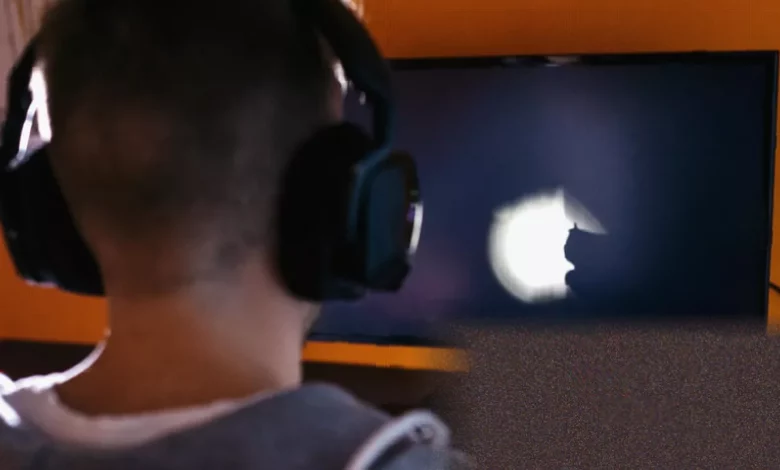
Sammy Amz, a 19-year-old streamer who first saw the trend on X at 4am last week and quickly joined, said he had already competed in hundreds of mog-offs. “It’s not [scored] by looks, but it’s like, how your head is shaped, how your face is shaped,” he explained. Amz, who boasts a “200-win streak”, insisted the game is not harmful: “I don’t think anyone takes it seriously.”
Origins in the manosphere and the PSL scale
The scoring system at the heart of Omoggle is known as the PSL scale. The letters originally stood for three incel-linked forums: PUAhate.com, Sluthate.com and Lookism.net. In contemporary usage, the acronym is often reinterpreted as “Proportion, Size and Lineation”, a pseudoscientific framework for mathematically assessing facial attractiveness. The scale typically runs from zero to eight, with zero described as “subhuman” and eight as exceptionally attractive. It emerged from the manosphere — a collection of online communities that are largely anti-feminist and focus on masculinity — and from incel forums where participants blamed romantic failures on biological determinism and expressed resentment towards women perceived to value only physical appearance.
The practice of “looksmaxxing” — maximising one’s physical attractiveness — grew out of these same forums. While mog-offs may be treated as entertainment by many participants, a significant number take the underlying philosophy seriously. Nicholas Graff, a 16-year-old from Iowa whose Omoggle video went viral, said: “I would say the culture is honestly a good thing. Like maximising your looks. It might be degrading to some people but overall, I don’t mind it.” Others have spoken out. A TikToker named Thoka called the trend “too far”, adding: “How can people get so jobless that their version of entertainment is going on websites to do mog-offs … Go touch grass.”
xQc goes MOGGED every single time on Omoggle 💀😭
Jesse: "You might be chopped!" pic.twitter.com/TErGy2Sm6o
— xQc Daily (@xQc_dailyy) May 1, 2026
Dr Paul Marsden, a chartered psychologist with the British Psychology Society who specialises in the impact of emerging technologies on wellbeing, described the PSL system as “nonsense”. He sees it as part of a broader societal shift towards quantification — the impulse to reduce human qualities to numbers. “The world is changing, so what do I stand for?” he said. “Some people move to numbers, some people move to religion.” Marsden urged older generations to avoid moral panic and to recognise that younger people often approach such trends with irony: “Gen Z meme-ify everything. I think it’s fabulous that they’re treating contemporary life with humour.”
Beyond the mockery, researchers and experts have raised serious concerns about looksmaxxing culture. Extreme practices linked to the trend include “bonesmashing” — striking one’s face to alter bone structure — which doctors have condemned as risk of serious injury. The emphasis on ranking and appearance is associated with negative mental health outcomes such as body dysmorphia and suicidal ideation. The trend has also been criticised for promoting hegemonic masculinity and the objectification of women. Studies indicate that incel-associated accounts have rebranded and adopted self-improvement language to bypass moderation and normalise their ideologies on platforms like TikTok, Instagram and X.
Twitch has changed its mind and will now allow all random video services, such as Omoggle, to be streamed on the platform.
They officially removed the rule from the Community Guidelines documentation 30 minutes ago. pic.twitter.com/OVro04MUGk
— Zach Bussey 🇨🇦 (@zachbussey) May 5, 2026
Twitch changes its rules
Until this week, Twitch’s community guidelines prohibited streamers from using “randomised video chat services” because of the difficulty in moderating content on streams that broadcast footage from a less strictly moderated third-party app. The platform had stated: “Randomized video content that you can not control is never allowed under any circumstances.” On Tuesday, Twitch updated those rules to allow “participation in current trends” such as Omoggle. The Amazon-owned live-streaming platform said the change was intended “to give you more choice around the content you stream and allow for participation in current trends”.
Despite the policy shift, Twitch warned streamers to exercise caution. In its announcement, the platform recommended that users “quickly remove” themselves from any problematic encounter by “switching scenes and not engaging further”. A Twitch spokesperson said: “We’ll continue to enforce against content from randomised video chat sites if the content itself violates our guidelines by featuring sensitive or otherwise prohibited content.” The company’s stated aim is to empower creators while protecting them from harm.