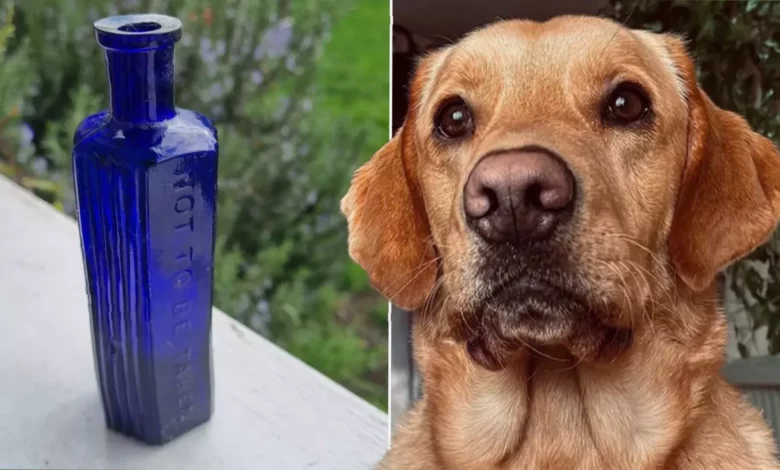
The persistent scratching of a Labrador’s paw in a Devon garden has unearthed a chilling artefact, potentially linking a modern-day home to one of the region’s most infamous Victorian murders.
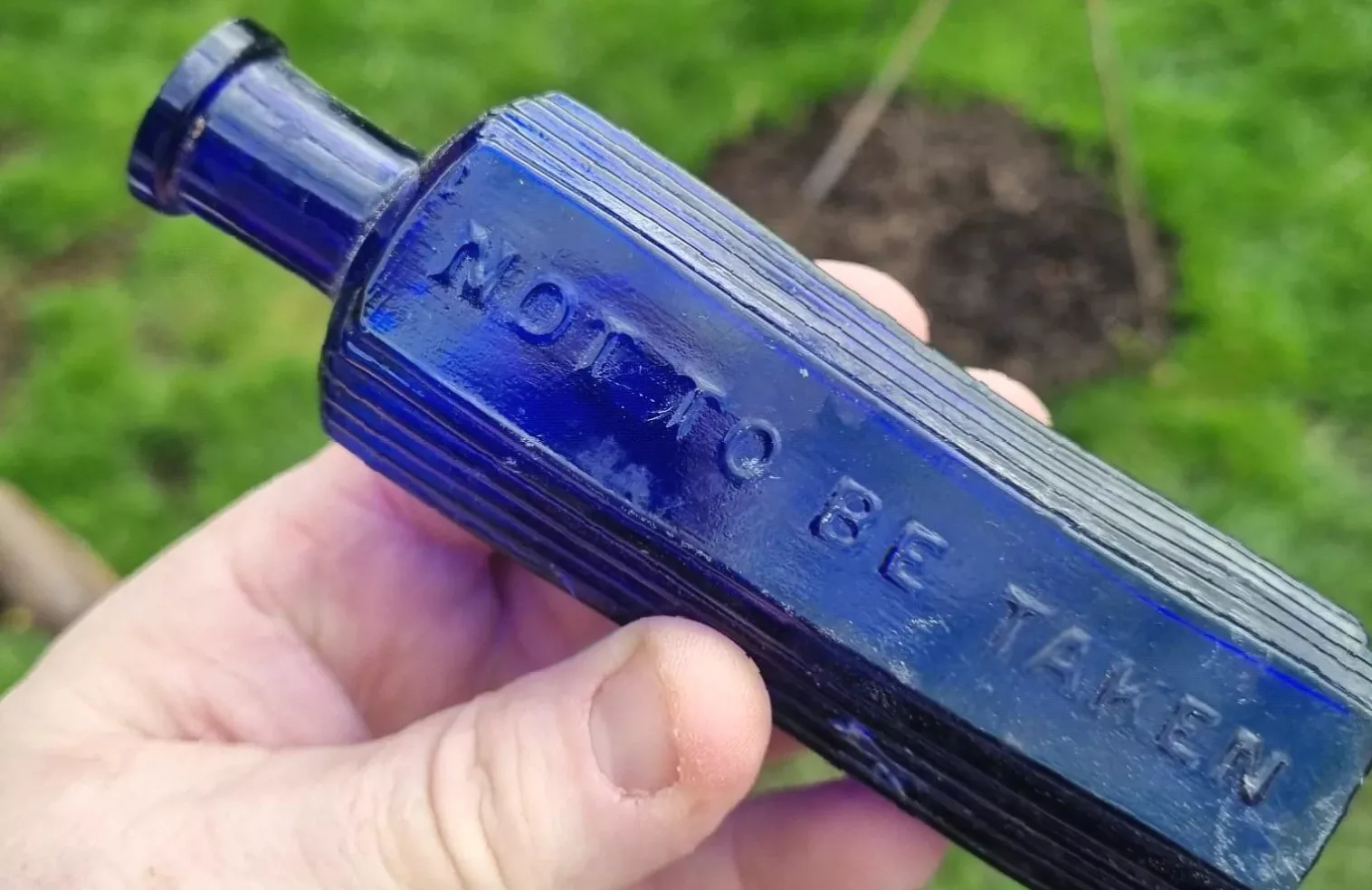
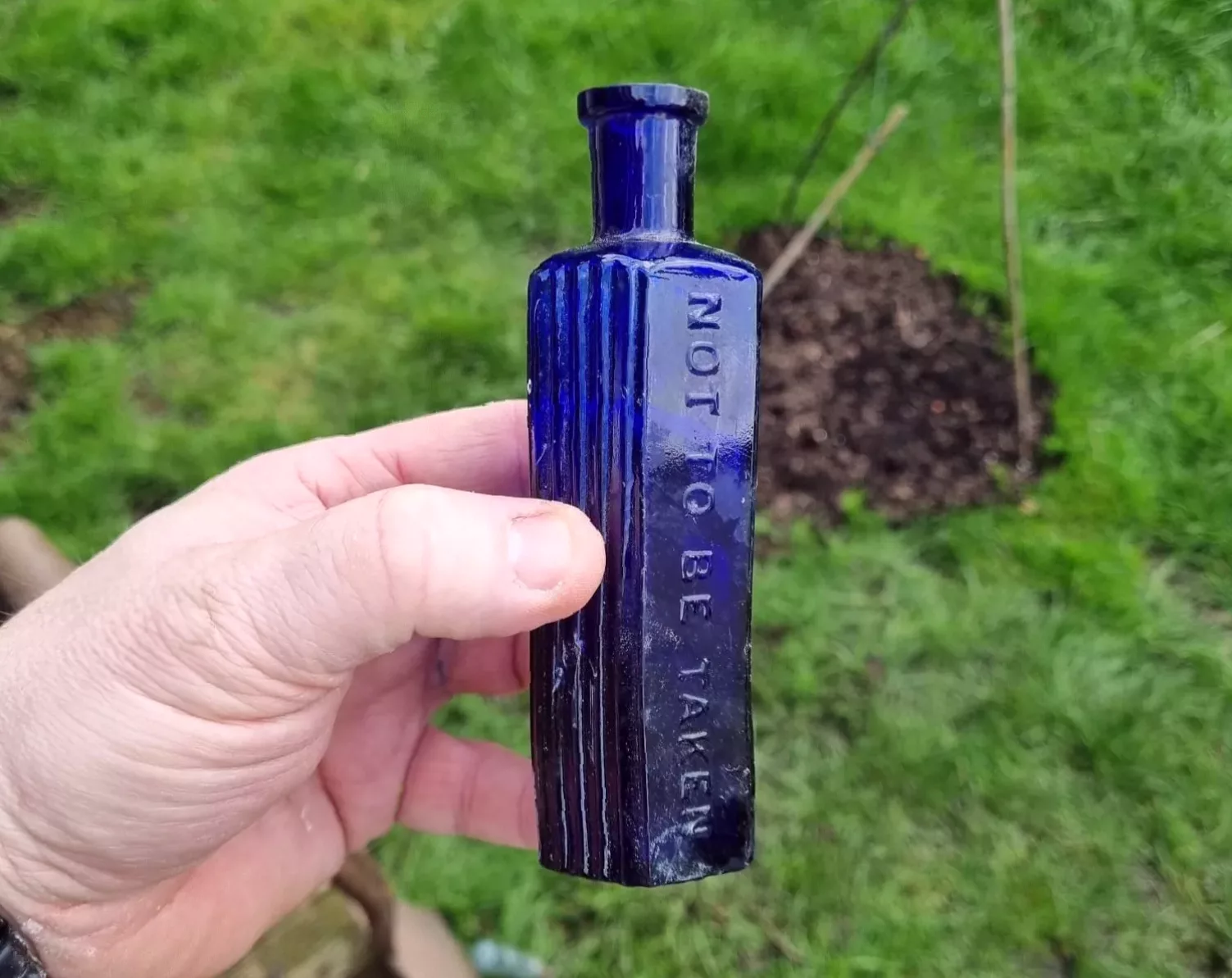
For months, Stanley, a dog owned by Clyst Honiton resident Paul Phillips, 49, was fixated on a single patch of earth. His owner’s curiosity eventually led to a “mini-excavation,” revealing a perfectly preserved bright blue glass bottle bearing the stark warning: “Not To Be Taken.”
Research identified it as a Victorian poison bottle, dating from the mid-19th century. For Mr Phillips, the discovery triggered a macabre local memory. “I remember reading something about a hanging in the village years ago,” he said.
A Murder Two Doors Down
His subsequent research uncovered a grim historical coincidence. In 1865, Mary Ann Ashford lived just two doors away from his current home. She was convicted of murdering her husband, William, a shoemaker, by poisoning his tea.
Contemporary newspaper reports suggest William had been suffering from an undiagnosable illness and was regularly given medicine. Following his sudden death, Mary Ann Ashford was arrested by the police officer living next door. Tests later revealed traces of arsenic and strychnine on her clothing.
The motive, as presented at the time, was theft and passion. She aimed to steal her husband’s money—his estate was valued at £120—and elope with her lover, a workman named Frank Pratt.
Mr Phillips finds the buried bottle deeply suggestive. “If you had bought that bottle for the right reasons – like killing rats or something – why would you bother burying it?” he said. “The fact it was buried and not thrown away shows someone was trying to hide it.”
“A Brutal Hanging”
Mary Ann Ashford’s crime led her to the gallows outside Exeter’s County Gaol on 28 March 1866, in front of a crowd estimated at 20,000 people. Her execution became a notorious example of judicial bungling.

Her death was agonisingly slow, taking three minutes. According to historical accounts, the hangman, William Calcraft, had to pull on her legs to end her suffering. Calcraft was England’s most prolific executioner of the era, serving from 1829 to 1874 and carrying out an estimated 450 executions.
He was known for his use of the “short-drop” method, which often resulted in death by strangulation rather than a broken neck, leading to prolonged endings. The botched execution of Mary Ann Ashford is frequently cited as a key event that swayed public and political opinion against public hangings. Calcraft himself conducted Britain’s last public execution in May 1868, after which all executions were moved behind prison walls.
A Grisly Relic of the “Poison Panic”
The blue bottle now stored in Mr Phillips’s garage is a tangible relic of a 19th-century societal fear: the “poison panic.” Substances like arsenic and strychnine were readily available from chemists and grocers for pest control and other uses, often with minimal regulation.
The Arsenic Act of 1851 introduced some controls, requiring sellers to record transactions and only sell to adults, but the use of distinctive warning bottles like the one found in Clyst Honiton became a common, and later legal, safeguard. The symptoms of such poisons—vomiting and gastrointestinal distress—could easily be mistaken for common illnesses, making them a frighteningly discreet weapon.
The village of Clyst Honiton itself, a parish located about four miles from Exeter, was a small community with a population of 467 in 1850, making the Ashford scandal a major local event.
Uneasy about the bottle’s grim potential history, Mr Phillips has no plans to bring it into his home. “It was a brutal hanging so there was no way I want bottle in my home,” he stated. “It is in the garage at the moment which is a shame because it’s lovely but I bet it comes with some weirdness!”
He notes an eerie change in his dog’s behaviour: Stanley has not dug in the spot since unearthing the bottle. The family is now keen to learn more and has appealed for a local historian to help investigate the unique story further, hoping to shed more light on the Ashford family’s history and the final resting place of Frank Pratt, the lover at the centre of the scandal.