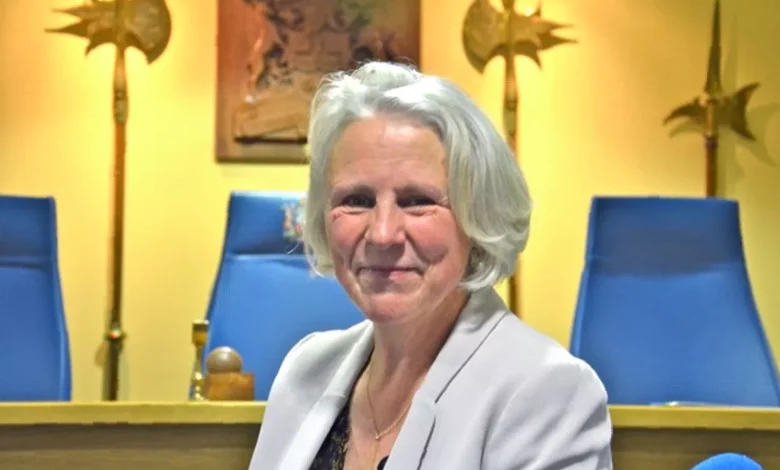
Councillors have branded the government’s decision to strip Rossendale of its power to determine major housing applications an “attack on democracy”, after the borough became one of nine local authorities placed under special planning measures.
Housing and Planning Minister Matthew Pennycook issued designation notices to the councils on June 15, 2026, meaning developers can now submit applications for major housing and commercial schemes directly to national planning inspectors, bypassing elected local committees entirely. The move targets authorities where, over a 24-month period, more than 10 per cent of appeals against refused planning applications were allowed by the Planning Inspectorate.
Rossendale recorded the highest appeal success rate among the nine designated councils at 15.4 per cent, according to figures covering the period up to late 2025. But the town hall insists the figure was driven by just two applications – both recommended for approval by council officers but refused by the planning committee, and both subsequently allowed on appeal.
The first appeal, for 71 homes at Fieldfare Way, Bacup, was allowed on May 6, 2025, with McDermott Homes as the appellant. The site is identified as a housing allocation in the Rossendale Local Plan adopted in 2021, but councillors raised concerns over highway safety, biodiversity and the viability of delivering 30 per cent affordable housing. Residents reported diggers arriving on site in September 2025. The second appeal, for 44 homes at Hardman Avenue, Rawtenstall, was allowed on July 21, 2025, with MCI Developments Ltd as the applicant. Councillors had refused permission in August 2024 over house sizes, road access and impact on existing homes. The site, adjacent to the urban boundary of Rawtenstall, has a history of flooding and drainage problems. MCI later sought changes to house designs, drainage and landscape details to allow for larger homes.
Rossendale Council attempted to persuade government officials not to apply the designation, arguing that the small number of major applications it receives each year meant two refusals overturned on appeal were enough to push it over the 10 per cent threshold. Its representations were rejected by the Secretary of State.
Labour council leader Alyson Barnes voiced her disappointment, saying: “The numbers involved in these appeals were small but the implications are massive for local residents. The Bacup site was included in the council’s local plan but that does not mean developers can simply put forward any housing proposal they wish. Our planning committee does important work and local councillors’ knowledge can ensure developments are more acceptable, whether it’s about the density or size of houses, highway access or other matters.” She added that the council would “explore any options to appeal this designation, even though there is no formal appeal process”.
Conservative councillor Scott Smith said: “This Labour government’s message is clear – if local councillors don’t make the decisions that ministers want, they’ll simply take those decisions away from them. First, the government more than doubled Rossendale’s housing target without any regard for our infrastructure, roads or public services. Now they’re stripping powers from locally-elected councillors and handing them to planning inspectors. This is an attack on local democracy dressed up as planning reform. Rossendale residents elect local councillors to stand up for their communities – not to rubber-stamp housing numbers imposed by Whitehall.”
Fellow Conservative Alan Woods said he struggled to recall any large developments being overturned on appeal during his five years as a councillor other than Fieldfare Way, adding that the designation “seems that Rossendale residents will be treated unfairly through yet another poorly thought-out piece of legislation by this Labour government”. Green councillor Julie Adshead called the decision “out of all proportion and most unfair”, noting it “erodes another layer of democratic input into planning” and “allows free-rein to developers”.
Government rationale: speeding up housing delivery
Ministers say the designation is necessary to hold councils accountable for performance and accelerate the delivery of much-needed homes. Pennycook stated that the nine councils are “not adequately performing” their duty to determine major development applications. The threshold for intervention is that more than 10 per cent of a council’s decisions on major residential or commercial schemes are overturned on appeal by planning inspectors – a benchmark Rossendale exceeded at 15.4 per cent.
The action is part of a broader drive by the Labour government to meet its target of building 1.5 million homes within its first five years. Reforms include an updated National Planning Policy Framework with mandatory housing targets, a prioritisation of “grey belt” land, and the introduction of a Planning and Infrastructure Bill aimed at streamlining the system. The government has also launched a New Homes Accelerator programme, described as a collaboration between government, Homes England, local authorities, developers and other stakeholders to unblock delayed housing developments, deploy expert support and inform future policy changes.
Alongside Rossendale, the other councils designated are Cherwell District Council, Dacorum Borough Council, Epping Forest District Council, Hertsmere Borough Council, Malvern Hills District Council, South Tyneside Council, Staffordshire Moorlands District Council and Wychavon District Council. Reports indicate that some of those authorities, including Wychavon and Malvern Hills, are considering legal action to challenge the decision.
The Local Government Association has previously voiced concerns that incoming planning reforms could erode local democracy and reduce the system’s flexibility by imposing a standardised national scheme of delegation. In Rossendale, the adopted Local Plan covering 2019-2036 was passed in December 2021, and the council is currently updating it to accommodate higher housing requirements and address climate change, biodiversity and design quality – a process now complicated by the removal of its decision-making powers on major applications.