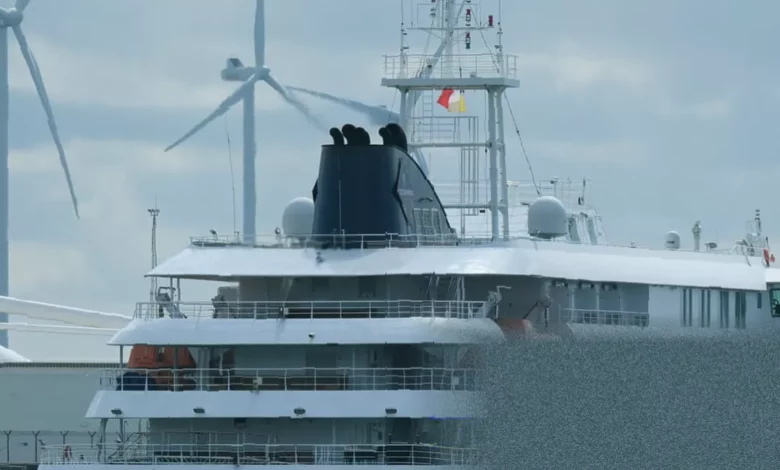
A doctor on Ascension Island spotted unusual cases among passengers brought ashore from the cruise ship MV Hondius, triggering a cross-continental response that averted a global hantavirus outbreak.
The doctor at Georgetown Hospital recognised a cluster of severe respiratory illnesses when a sick passenger was brought in for treatment. Newly developed diagnostic equipment on the island allowed clinicians to rule out common causes, making it clear they were dealing with something unusual. That moment of clinical suspicion set in motion a chain of international cooperation that prevented the ship from sailing on to Cape Verde, where passengers incubating the Andes strain of hantavirus would have disembarked and travelled to their home countries, potentially seeding infections worldwide.
Cross-continental collaboration to identify the virus
A crucial meeting brought together the Ascension Island doctor, the infection consultant for the UK Overseas Territories (UKOTs) programme, the ship company’s medical adviser, and a colleague at the National Institute for Communicable Diseases (NICD) in South Africa. Possible causes were reviewed across the continents. Samples from two passengers who had been medically evacuated to South Africa were tracked down and analysed. The NICD diagnosed hantavirus within 24 hours, a feat commended by the South African Cabinet alongside the Department of Health’s swift contact tracing. Scientists have since confirmed that hantavirus has not been detected in any rodents in South Africa or on the African continent.
This diagnosis alerted the World Health Organization and national public health organisations. The World Health Organization was notified of the cluster on 2 May 2026. By 8 May, eight cases had been identified – six confirmed and two probable – including three deaths, all linked to the Andes virus. Passengers on the MV Hondius represented 23 different nationalities. The UK Health Security Agency worked with devolved administrations and UK Overseas Territories to trace individuals with potential high-risk contact. British nationals onboard were asked to isolate for 45 days upon returning to the UK, with UKHSA monitoring them. A UK Public Health Rapid Support Team, including microbiologists and an infection prevention and control expert, was deployed to St Helena and Ascension to support PCR testing and provide training.
The role of the UK Overseas Territories programme
The key success in averting a wider disaster lay in the UKOTs programme, funded by the Foreign, Commonwealth & Development Office and managed by the UK Health Security Agency. The programme supports health services in all UK Overseas Territories around the globe – small, vulnerable communities with very limited medical services in most cases. The lean but effective programme’s success is built on close communication and strengthening local health services. Without the diagnostic equipment and the established networks for immediate consultation, the cluster on the MV Hondius might never have been flagged. The ship would have continued its voyage, and passengers incubating the virus would have dispersed across multiple countries before symptoms appeared.
Hantaviruses are a group of zoonotic viruses that can cause life-threatening illnesses. They are primarily transmitted through the urine, droppings or saliva of infected rodents, though the Andes strain involved in this outbreak is notable because it can, rarely, be transmitted from person to person through close, prolonged contact. Early symptoms mimic flu – fever, muscle aches, fatigue, headache – but can rapidly progress to severe respiratory distress (hantavirus pulmonary syndrome), low blood pressure, irregular heart rate, shock, and in some strains, kidney damage. There is no specific cure or vaccine; treatment is supportive, often in intensive care. The incubation period ranges from one to seven weeks, extending to eight. Rodent control is the primary preventive measure.
Global health inequality exposed
The fortunate outcome for passengers on the MV Hondius stands in stark contrast to the experience of highly vulnerable populations elsewhere. Dr Brian Jones, a retired consultant writing from Yarcombe, Devon, pointed out that the same good fortune does not apply to those in the Democratic Republic of the Congo or neighbouring countries, such as the Batwa pygmies in Uganda. This marginalised and endangered group is currently fighting the Bundibugyo strain of Ebola virus – a rare variant for which there is no approved vaccine or specific treatment. The Bundibugyo ebolavirus was first identified in Uganda in 2007–2008 and has a case fatality rate of 30–50%. Current Ebola vaccines and treatments, developed primarily for the Zaire strain, offer limited protection. The World Health Organization declared the outbreak of the Bundibugyo strain in the Democratic Republic of the Congo and Uganda a Public Health Emergency of International Concern in May 2026.
Structural inequalities, including wealth inequality and social segregation, not only make certain groups more vulnerable during health crises but also accelerate disease spread. Marginalised populations often face higher exposure risks through their work – such as agriculture and waste management – and living conditions, including overcrowding and poor sanitation. Until all people throughout the world have equal access to public health measures against novel infectious diseases, every population remains vulnerable to the next unexpected product of a world stressed by inequality and a privileged elite.