Forget the aerial and the satellite dish. Mainstream channels such as the BBC, ITV, Channel 4 and Channel 5 can now be streamed wirelessly around your home using Freely, a subscription-free service from the makers of Freeview and Freesat. Backed by the UK’s major public service broadcasters, Freely delivers live television and on‑demand content over a broadband connection, giving you the freedom to watch from any room without the need for a rooftop antenna or a cable point.
How Freely Works
Freely is a free‑to‑air IPTV service launched in April 2024 by Everyone TV, a joint venture of the BBC, ITV, Channel 4 and Channel 5. It is the first time all four broadcasters have partnered on a streaming platform, a collaboration designed to “future‑proof public service broadcasting” as the country moves away from traditional terrestrial distribution. The service provides a unified electronic programme guide (EPG) that lets you switch seamlessly between live broadcasts and on‑demand programmes from the partner channels.
The channel line‑up includes BBC One, BBC Two, ITV, Channel 4, Channel 5, STV, S4C and UKTV channels such as Dave, Drama, Yesterday and W. Some channels are available in higher definition than their Freeview equivalents. Crucially, Freely is subscription‑free – you do not pay a monthly fee beyond the mandatory TV Licence that is required to watch live television on any device in the UK.
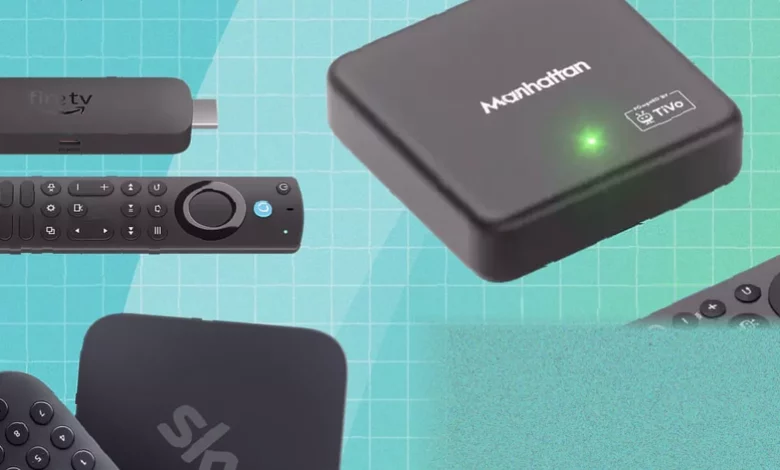
All you need is a compatible device – either a smart TV with Freely built in (from manufacturers such as Hisense, Toshiba, Bush and JVC) or a dedicated streaming box such as the Manhattan Aero or the Netgem Pleio. These boxes connect to your television via an HDMI port and to your home network via Wi‑Fi or an Ethernet cable. No aerial socket is required, meaning you can put a Freely box on an old television in a spare room and carry on watching as before. The service also offers a huge library of on‑demand content, all included with the free platform.
Freely does not currently support recording; instead it relies on catch‑up and on‑demand services. The platform is widely seen as the long‑term successor to Freeview. The government has committed to supporting the Freeview digital terrestrial television (DTT) platform until at least 2034, but the Future TV Taskforce, involving the public service broadcasters, favours a managed transition to internet‑delivered television, potentially by the mid‑2030s.
Sky Stream: A Premium Alternative
Pay‑TV provider Sky offers its own broadband‑based solution with the Sky Stream puck, a compact plug‑and‑play box that also connects via Wi‑Fi or Ethernet. Sky Stream gives access to Sky’s premium channels – including Sky Atlantic, Sky Max, Sky Witness and Sky Comedy – alongside a growing portfolio of third‑party streaming services. Packages start at £15 a month for Sky Essential TV (24‑month contract) or £18 a month on a rolling contract, which includes Sky Atlantic, Netflix Standard with ads, discovery+ basic and around 100 free‑to‑air channels. The Sky Ultimate TV package, from £24 a month (24‑month contract), adds more than 30 premium channels, Sky Box Sets, Disney+ Standard with ads and HBO Max Basic with ads. Additional subscriptions are available for Sky Sports, Sky Cinema, TNT Sports, Sky Kids and UHD with Dolby Atmos.
Unlike Freely, Sky Stream relies on a monthly subscription and is designed for viewers who want a broader selection of exclusive entertainment, sports and movies. It does not have a hard‑disk recorder; instead it uses cloud‑based playlists. Sky recommends a fibre broadband connection with speeds of at least 10 Mbps for basic streaming, 25 Mbps for UHD content and 30–35 Mbps if you are using multiple pucks via its Whole Home Pack, which allows viewing on up to six devices for an additional monthly fee.
What You Need to Stream Wirelessly
All wireless TV streamers deliver content over your home broadband, so a fast and stable internet connection is essential. For Freely, the minimum recommended download speed is 10 Mbps, but the service advises 20–25 Mbps for a buffer‑free experience, especially if you want to watch in 4K. Sky Stream similarly suggests 10 Mbps as a baseline, rising to 25 Mbps for UHD and 30–35 Mbps for households running multiple pucks. Amazon, whose Fire TV Stick 4K Max is another popular device, recommends at least 36 Mbps for 4K HDR video.
Not every room in your home will receive a strong Wi‑Fi signal; much depends on the size and construction of your property and the location of your router. If you know you have Wi‑Fi “not‑spots”, you may be better off choosing a streaming box that includes an Ethernet port, so you can connect directly to your router with a cable or use a powerline adapter that sends data through your mains wiring. A hard‑wired connection is generally more stable for high‑bandwidth 4K streaming.
The Best Wireless TV Boxes Reviewed
Steve May, a home‑entertainment specialist with more than thirty years’ experience, tested five of the latest wireless TV boxes straight out of the box. He connected them to an OLED television to assess picture quality and a high‑end home‑cinema amplifier to evaluate audio output, then watched a variety of content including HD Freely streams, 4K UHD and premium pay‑TV. The winners were:
Best Freely TV streamer: Manhattan Aero – a straightforward device that allows you to add Freely to any television with an HDMI port, requiring only a power socket and a Wi‑Fi or Ethernet connection. No aerial socket is needed, making it ideal for any room.
Best budget wireless TV stick: Amazon Fire 4K Max – the second‑generation (2024) model features Wi‑Fi 6E, a faster processor and an “Ambient Experience” mode. It supports all major HDR formats (HDR10, HLG, HDR10+ and Dolby Vision) and Dolby Atmos, and has 16 GB of storage. While its recommended retail price is considered high for the UK market, it remains a capable device for accessing apps such as Netflix, Prime Video, Disney+, Apple TV and BBC iPlayer. For most users, the standard Fire TV Stick 4K is still a strong contender.
Best Freely streamer for families: Netgem Pleio – launched in November 2025 as the first dedicated Freely box, it lacks an aerial port and is designed specifically for the Freely service, making it a simple, family‑friendly option for cord‑cutters.
Best premium TV streamer: Sky Stream – the puck delivers Sky’s full suite of premium channels and integrates with Netflix, Disney+ and HBO Max. It is the best choice for those who want a broad range of exclusive entertainment and sports, albeit at a monthly cost.
Other boxes on the market focus on cloud gaming or include a wider smart‑TV operating system with apps for Netflix, Prime Video, Apple TV and Disney+. Freely itself is also available on certain smart TVs, but the dedicated boxes offer the most flexibility for upgrading older televisions.
The Benefits of Going Wireless
Moving to a wireless TV streamer is a practical way to extend the life of televisions you already own, especially if you have poor terrestrial reception or want to consolidate the channels you regularly watch with the streaming apps you subscribe to. A Freely box, for example, lets you place a television anywhere in your home without worrying about an aerial point, and the subscription‑free nature of the service means you can access live and on‑demand content from the main broadcasters without an ongoing cost (beyond the TV Licence). If you are cutting the cord from a premium service provider but worry you will miss out when a big new movie lands on home video, you can always buy it on disc.