Sir Keir Starmer has announced a proposed social media ban for children under the age of 16, vowing to protect young people from what he described as addictive and harmful online environments. The unprecedented block would cover more than 12 million under-16s across the UK and is expected to target platforms including TikTok, Instagram, Threads, Facebook, X, YouTube, Snapchat and Reddit. Messaging services such as WhatsApp and Signal are not intended to be included.
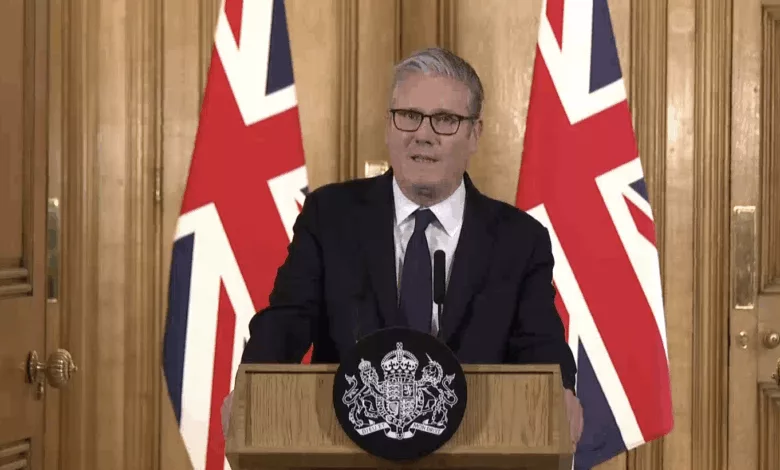
The Prime Minister said the ban would not come into force until May 2027, giving time for detailed legislation and enforcement systems to be put in place. Speaking at a press conference in Downing Street, he thanked campaigners who had contributed to a government consultation on online safety, which received more than 116,000 responses. He described social media as “designed to be addictive”, pointing to features like the infinite scroll, and said it was making children unhappy, exposing them to dangerous content and enabling bullying.
Enforcement through facial scans and digital IDs
The centrepiece of the ban is a requirement for platforms to deploy what Sir Keir called “highly effective age assurance systems”. These are likely to involve age-recognition facial scans and digital IDs, building on the framework already established by the Online Safety Act 2023. That act, which became law in October 2023, already obliges tech companies to implement age checks to prevent children from accessing age-inappropriate content, with the regulator Ofcom responsible for overseeing compliance. Ofcom has the power to impose fines of up to £18 million or 10 per cent of annual turnover for non-compliance.
The proposed ban goes significantly further than the existing age verification rules. Under the Online Safety Act, age verification for adult content came into effect on 25 July 2025, requiring users to prove they are over 18. The new proposal would require all under-16s to be blocked from the listed social media platforms, using methods such as facial age estimation, photo ID checks and credit card verification. The government has indicated these measures will be enforced through third-party companies, raising concerns about data privacy and security.
Critics have warned that mandatory age verification for online services could lead to what some describe as a “digital surveillance state”, requiring adults to surrender sensitive personal data merely to access everyday platforms. There are also questions about the accuracy of age estimation technology, with potential for erroneous blocking of legitimate users or exclusion of younger children who might circumvent the system. The policy is modelled on Australia’s social media ban for under-16s, but the UK version is expected to go further, including restrictions on romantic or sexual AI chatbots and blocking strangers from contacting children on gaming and live-streaming platforms.
Parental support and expert warnings
The Prime Minister framed the policy as a way to support parents, citing a government consultation in which 91 per cent of parents backed a minimum age of 16 for social media access and 77 per cent supported a ban for under-16s. Some 83 per cent of parents said the risks of social media outweigh the benefits for children. Ellen Roome, whose son died in 2022 and who has blamed social media for his death, welcomed the announcement, telling the BBC: “To actually hear him step up and do this was phenomenal … The devil is in the details of how this actually happens but I think, well done, thank you.”
However, not all reactions were positive. Jeffrey Demarco, a top adviser at Save the Children UK, warned that a blanket ban could appear “protective on paper” but risked “pushing children into less regulated spaces, where they are less likely to seek help when something goes wrong”. Other child safety advocates and online safety experts have criticised the approach as an “abdication of responsibility for tackling harmful algorithms”, suggesting it could set back children’s safety by failing to address the algorithmic design that drives harmful content. Some industry sources and advocacy groups described the consultation and policy development process as “rushed” and driven by political timelines.
The US government has also expressed concerns, warning against what it called “prescribed one-size-fits-all government restrictions” and “blunt regulatory instruments”, arguing that age-gating for 13- to 16-year-olds would not work and could impose disproportionate burdens on American companies. Meanwhile, children’s own views on the ban are mixed. While some recognise the dangers of social media, others favour time limits or tougher content controls over a complete ban. Some young people use social media to run businesses or publicise youth council work, raising questions about the impact of a blanket prohibition on those activities.
The announcement comes at a politically sensitive moment for Sir Keir Starmer, with the Makerfield by-election just days away and recent local election results putting pressure on his leadership. He acknowledged that the ban “won’t be easy” and that some high-flying tech firms would resist, but insisted: “We must always protect our children.” The proposed ban is also expected to trigger legal challenges from tech companies, with some platforms already engaged in judicial review proceedings over aspects of the Online Safety Act.