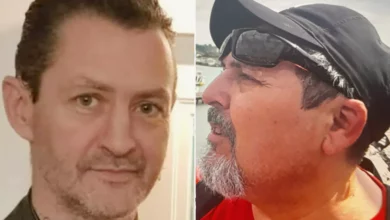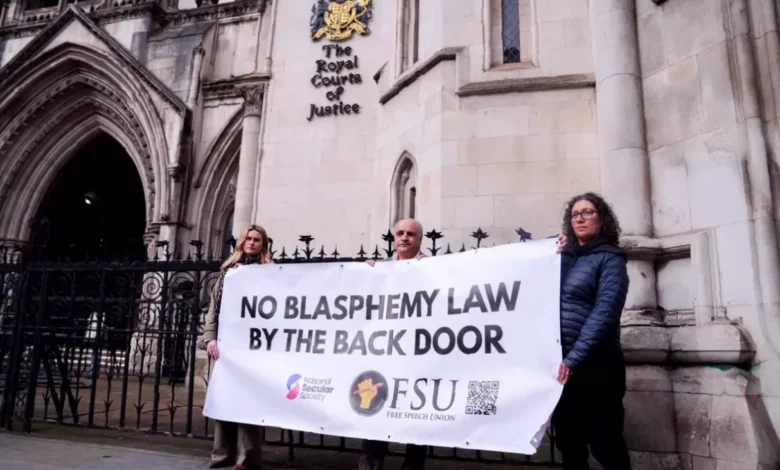
The High Court has decisively upheld the right to express deeply offensive views in public, dismissing an attempt by the Crown Prosecution Service to criminalise the burning of a Quran. In a ruling on February 27, 2026, Lord Justice Warby and Ms Justice Obi rejected the CPS’s appeal against the acquittal of Hamit Coskun, a decision campaigners have hailed as a vital defence of free speech and a rejection of a “wrongheaded attempt to introduce a blasphemy law by the back door.”
The case stems from an incident on 13 February 2025, when Hamit Coskun, an atheist asylum seeker from Turkey of Armenian and Kurdish heritage, burned a Quran outside the Turkish Consulate in London. He shouted slogans including “f*** Islam” and “Islam is religion of terrorism,” later stating his protest was a political act against the Turkish government’s policies and the rise of Islamism, not an attack on individual Muslims.
Coskun’s path through the courts has been turbulent. He was initially convicted in June 2025 at Westminster Magistrates’ Court of a religiously aggravated public order offence. District Judge John McGarva found his actions “highly provocative” and motivated “at least in part by a hatred of Muslims,” imposing a £240 fine. That conviction was overturned in October 2025 at Southwark Crown Court, where Mr Justice Bennathan ruled that the right to freedom of expression “must include the right to express views that offend, shock or disturb,” and that criminal law is not a mechanism to avoid people being upset.
Undeterred, the Crown Prosecution Service took the case to the High Court, arguing that burning a Quran is “in itself disorderly” and that Coskun’s words and actions together amounted to disorderly behaviour demonstrating hostility towards a religious group under the Public Order Act 1986. The CPS contended the act had led to “widespread international protests” and documented disorder, and that it crossed the line from free speech into criminal conduct.
The High Court judges were unpersuaded, stating they were “not persuaded that the court left any material factor out of account or relied on any immaterial factor.” Their ruling firmly upheld the principle that freedom of expression protects speech that may offend, shock, or disturb, with the remedy for offense being “more speech, not criminalization.”
Legal observers and free speech organisations had warned that a successful CPS appeal would have dangerously blurred the line between causing offence and causing harm. They argued it would have effectively created a “stabber’s veto,” where violent reactions to offensive speech could be used to justify prosecuting the speaker. The case was seen as a test of whether abolished blasphemy laws could be resurrected through public order legislation, a concern given that blasphemy laws were formally abolished in England and Wales in 2008. Contemporary legislation like the Racial and Religious Hatred Act 2006 focuses on stirring up hatred rather than criticising religions.
Coskun, who has a history of political activism and says he was imprisoned and tortured in Turkey, expressed relief at the final ruling, stating he is now free to speak about “the damage of sectarian politics and Islamism.” His protest came at a personal cost: during the event, he was attacked by two men, one armed with a knife, requiring hospital treatment. Following the attack, he has received death threats and has been moved to a safe house by the Home Office.
In response to the ruling, a CPS spokesperson said the body would be “carefully reviewing the High Court decision,” adding: “There is no law to prosecute people for ‘blasphemy’ and burning a religious text on its own is not a criminal act – our case was always that Hamit Coskun’s words, choice of location and burning of the Koran amounted to disorderly behaviour, and that at the time he demonstrated hostility towards a religious group.”
Campaign groups have welcomed the outcome but questioned the prosecution’s pursuit of the case. The National Secular Society and the Free Speech Union have called for a review of why Coskun was originally charged and why the CPS pursued the appeal, arguing it is not the state’s role to police religious sensibilities and that criminal law should protect people from harm, not from being offended.