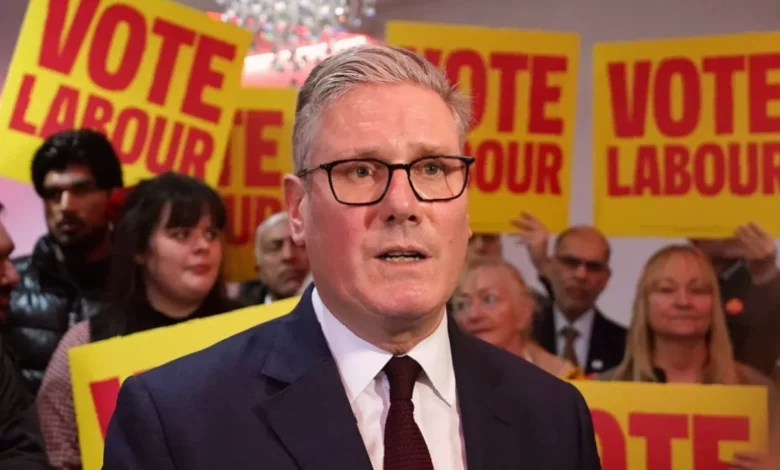
The Green Party has secured its first-ever parliamentary by-election victory in a stunning upset in Gorton and Denton, unseating Labour in a constituency it had held for nearly a century and plunging Sir Keir Starmer’s leadership into crisis.
Hannah Spencer, a plumber and Green Party councillor, won the seat with 14,980 votes, a majority of 4,402 over second-place Reform UK, while Labour slumped to a humiliating third place with just 9,364 votes. The result, detailed in the 2026 Gorton and Denton by-election, marks the Green Party’s fifth MP in Parliament and their first in northern England.
This victory for the Green Party of England and Wales represents a dramatic shift, with their vote share increasing by 27.5% since the 2024 general election, while Labour’s support collapsed by 25.4%.
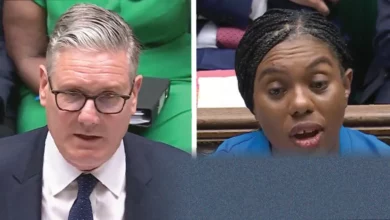
The catastrophic defeat has ignited what Labour MPs are describing as a “civil war” within the party, with senior figures openly challenging Sir Keir’s authority and calling for his resignation.
Former deputy prime minister Angela Rayner, seen as a potential leadership contender, said the result must be a “wake-up call” and urged the party to “be braver” and rededicate itself to “a Labour agenda that puts people first”.
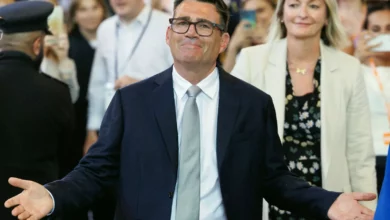
Scottish Labour MP Brian Leishman directly blamed Sir Keir and his advisors, stating it was “time he did the right thing for the country and the Labour Party, and go”. Another MP, Karl Turner, told the BBC the result was “catastrophic” and that blocking Greater Manchester Mayor Andy Burnham from standing was a mistake.
Labour MP Chris Curtis has said he is “almost certain” that Mr Burnham would have won the by-election had he been allowed to stand.
The decision by Labour’s National Executive Committee to block Andy Burnham from standing as the candidate has been heavily criticised, with many believing he could have retained the seat. Mr Burnham himself congratulated Ms Spencer, acknowledging she would have faced a “harder fight” if he had been the candidate.
Government minister Heidi Alexander refused to “pontificate” on the decision to block Mr Burnham, telling Sky News the public wants the party focused on fixing the country’s problems.
The leader of the Unite union, a major Labour donor, Sharon Graham, told Sir Keir to “stop listening to your rich mates” and “ditch the gimmicks and get back to being Labour”.
Reform UK secured second place with 10,578 votes, though their candidate Matt Goodwin faced controversy over past comments about British Muslims. Party leader Nigel Farage claimed “cheating” and “family voting” occurred during the election.
In her victory speech, Ms Spencer, a plumber and plasterer, said people were being “bled dry” and “sick of our hard work making other people rich”. She emphasized inclusivity, stating she was proud to show that “anyone, from any background, is a welcome voice in politics”.
Labour’s deputy leader Lucy Powell had earlier admitted the Green Party won the “argument that they were best placed” to keep Reform UK out of the constituency. She insisted “there is no leadership contest” and that Sir Keir “is resolute in his job as leader of the Labour Party, as our prime minister”.
Despite the pressure, Sir Keir Starmer has vowed to “keep on fighting”, stating he came into politics to fight for change and would continue to do so.
The by-election was triggered by the resignation of former Labour MP Andrew Gwynne due to health reasons after he was suspended from the party over offensive messages sent in a WhatsApp group.
Some commentators suggest that Labour’s strategy of adopting positions similar to Reform UK on issues like immigration has alienated its traditional voter base, contributing to this devastating loss. The result challenges Labour’s claim to be the only party capable of defeating Reform UK and signals a growing challenge to the traditional two-party system in the UK.