BA owner records 20% profit increase despite passenger decline last year

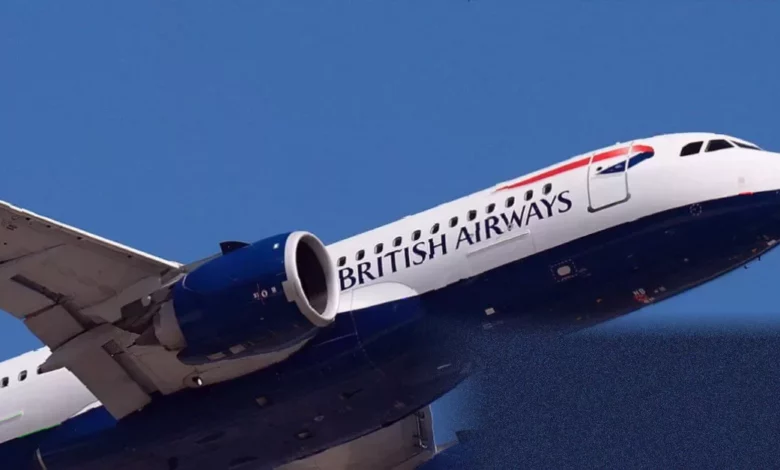
International Airlines Group (IAG), the parent company of British Airways, has posted a 20% surge in annual pre-tax profits to €4.5 billion (£3.9bn) for 2025, capping what its chief executive called “another year of exceptional performance.” The strong results were driven by record operating profits and margins exceeding 15% at flagship carriers British Airways and Iberia, alongside a 3.5% rise in group revenue to €33.21 billion.
Despite the soaring profitability, the group’s share price fell by approximately 6% on the day of the announcement. Analysts pointed to a confluence of factors, including a slight 0.4% dip in overall passenger numbers to 121.6 million and broader investor concerns about future costs and capacity. Andrew Lobbenberg, an analyst at Barclays, suggested the market reaction indicated a sense that IAG’s post-Covid boom may have peaked, with the company now performing above its cyclical financial targets.
The group is moving to return significant cash to shareholders, announcing a total dividend for 2025 of €448 million (€0.098 per share) and a further €1.5 billion share buyback programme. This follows a €1 billion buyback initiated earlier in the year, with an initial €500 million tranche due to be completed by the end of May 2026.
Heathrow expansion sparks fare warning
A major point of contention emerged around the future of Heathrow Airport, where British Airways operates about half of all flights. IAG’s CEO, Luis Gallego, issued a stark warning over the airport’s expansion plans, which include a government-backed third runway and are estimated to cost a total of £49 billion. The third runway alone is projected to cost £21 billion.
Gallego stated that Heathrow is already “the most expensive airport in the world” and argued the current expansion plan could see passengers “paying double” their current fares. IAG has conducted an internal analysis proposing a maximum investment of £30 billion—a 40% reduction—which it believes would allow Heathrow to expand while keeping fares flat for passengers. “We support this commitment to growth but the cost must be far lower to ensure that Heathrow remains globally competitive,” Gallego told investors. He added that IAG would support the project if Heathrow capped charges at current levels.
Heathrow Airport Limited has previously disputed airline costings, arguing that expansion will ultimately drive fares down through increased competition and choice. A government notice on the third runway proposal forms the basis for the expansion plans.
Fleet renewal and mixed passenger trends
Looking ahead, IAG is embarking on a major, long-term fleet renewal programme, a factor analysts note will require “large-scale, climbing capital expenditure… right out to the 2030s.” In May 2025, the group placed firm orders for 71 new wide-body aircraft from Boeing and Airbus for delivery between 2028 and 2033. The order includes 32 Boeing 787-10s for British Airways and 21 Airbus A330-900neos for Aer Lingus, Iberia, and LEVEL, alongside other models. Approximately two-thirds of these jets will replace older aircraft, with the remainder supporting growth on key long-haul routes.
Operationally, the group reported improved punctuality and customer satisfaction in 2025. While overall passenger numbers edged down, this masked growth at specific airlines: British Airways saw a 0.4% increase to 46.3 million passengers, and Aer Lingus grew by 2.9% to 11.3 million. The Spanish carrier Vueling—also part of IAG—is adding five new aircraft for summer 2025 to support its expansion, having carried 33 million passengers in 2024.
The group’s cargo division, IAG Cargo, reported a 0.3% rise in commercial revenue to €1,238 million, with strong demand for time-critical and perishable goods services, particularly on routes from Latin America into Europe.
Confidence amid geopolitical headwinds
Addressing the slight decline in passenger numbers, Gallego cited concerns over tensions between the US and Iran and the potential for higher fuel prices. Such geopolitical tensions have led to airspace closures and costly flight detours for the industry. However, he struck an optimistic note for 2026, stating that premium leisure bookings on lucrative North Atlantic routes were doing “very well” and that market data indicates travellers in core European and transatlantic markets remain committed to flying.
“Looking ahead, demand is strong,” Gallego said, pointing to “compelling market dynamics” and expecting the North American market to grow at low-single-digit rates medium-term. IAG plans to raise its overall capacity by approximately 3% this year. Barclays’ Lobbenberg, who has maintained a ‘Hold’ rating on the stock, noted that the substantial capital expenditure for fleet renewal, while necessary, means “future cash generation and hence shareholder returns are likely to fall.”