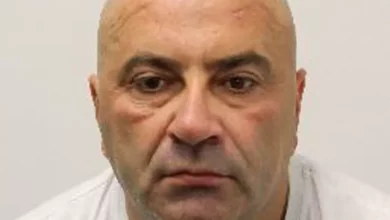
Labour under fire after nearly 200 prisoners mistakenly released and 98% of victims uninformed


Ninety-eight percent of victims were left uninformed about the mistaken release of nearly 200 prisoners, according to official figures that have reignited scrutiny of the criminal justice system’s treatment of those it is meant to protect. Of the 179 inmates released in error between April 2025 and March 2026, only three of the 14 victims enrolled in the Probation Service’s Victim Contact Scheme (VCS) were told of the mistake.
Victims left in the dark
The VCS gives people affected by serious and violent crime the right to receive information about the offender’s custody and release. In these cases, however, the system failed to provide even the basic notification that the person who harmed them had been freed early by accident. Shadow Justice Secretary Nick Timothy said Labour had “broken the trust victims place in the criminal justice system”. He added: “Victims of crime place their trust in the system to treat them with basic dignity, to tell them, at minimum, when the person who wronged them has been let out of prison by accident. Labour have broken that trust.”
The issue was starkly illustrated by the case that triggered the official report: the accidental release of migrant sex offender Hadush Kebatu from HMP Chelmsford in October 2025. The Ethiopian national, an asylum seeker, had been convicted of sexually assaulting a 14‑year‑old girl and a woman in Epping and was serving a 12‑month sentence. The teenage victim discovered he had been let out via social media — and was only informed by the authorities hours later. Her father called the error “unbelievably irresponsible”.
Dame Lynne Owens, former Deputy Commissioner of the Met and ex‑Director General of the National Crime Agency, whose independent review examined the releases, said such errors cause “serious and far‑reaching impacts, retraumatising victims and families and undermining trust in the criminal justice system”. The Ministry of Justice acknowledged the distress, with a spokesman saying: “We understand the distress releases in error cause to victims and their families, and we’re taking action to fix the crisis‑hit system we inherited.”
Scale of mistaken releases
The 179 mistaken releases in the year to March 2026 represent a 31% decrease from the previous year’s record high of 262 — itself a 128% increase on the year ending March 2024. Historically, accidental releases have been far rarer: the average between 2006‑07 and 2022‑23 was 56.4 per year. Since 2023, that figure has jumped by 228%, with the average for 2023‑24 to 2025‑26 reaching 185.3 per year.
Other high‑profile cases include Brahim Kaddour‑Cherif, an Algerian sex offender mistakenly released from HMP Wandsworth in October 2025, who was apprehended nine days later, and fraudster William Smith (known as Billy), released from the same prison in November 2025, who handed himself in after three days. The Kebatu manhunt alone cost Essex Police and the Metropolitan Police a combined £150,000 before he was caught in Finsbury Park, London, on October 26, 2025. He now faces deportation.
Underlying causes: a broken system
The Prison Governors’ Association cautioned that accidental releases are “neither rare nor hidden” and “have occurred under every Government’s watch”. Yet the sharp rise since 2023 points to deeper structural problems. Dame Lynne Owens’ review described them as “simply one symptom of a broken system” caused by “a lack of strategic vision and coherent policy choices, with the necessary funding”. Her report highlighted “poor communication between staff” and a complex sentencing regime with limited technological support as contributing factors.

Justice Secretary David Lammy has repeatedly blamed “fourteen years of austerity, staffing cuts, failure to build prison places, and underinvestment in digital infrastructure”. Frontline prison officers were cut by a quarter between 2010 and 2017, leading to less experienced staff and increased pressure. In November 2025, HM Chief Inspector of Prisons, Charlie Taylor, noted that over 50% of frontline officers had less than five years’ experience. The system still relies on “archaic paper‑based system[s] that were developed in the 1980s”, according to Dame Lynne’s report.
The introduction of early release schemes to ease overcrowding has also been linked to the rise in errors. The Labour government introduced a scheme in 2024 allowing some offenders to be freed after serving 40% of their sentence rather than 50%, forcing staff to recalculate tens of thousands of sentences and increasing the potential for human error. Other reasons for mistaken releases include miscalculating sentences, incorrect recording of offence outcomes, and mistaken identity — particularly when prisoners use multiple aliases.
Political fallout and historical context
Both Labour and the Conservatives are trading blame. Labour ministers attribute the crisis to the system they inherited from the previous Conservative government, pointing to cuts and underinvestment. Conservatives accuse Labour of incompetence, with Nick Timothy and Robert Jenrick calling the situation a “disgrace” and a “total dereliction of duty”. David Lammy offered what he called an “unequivocal apology” in the Commons, saying: “We recognise the distress that is caused to victims who learn that the person who harmed them is free when they should be behind bars.” He has since faced accusations of withholding information and being evasive when questioned by MPs about the number of prisoners still at large.
The data on victim notification was obtained by the Conservatives through a Freedom of Information request. In November 2025, the then Victims Minister Alex Davies-Jones said victims on the VCS would be notified if the offender was released in error — but the figures show that promise was not kept.
The government has pledged up to £82 million to address the review’s recommendations, including investment in manual checks in courts, recruitment of additional court clerks, and the rollout of digital and biometric systems (fingerprints and facial scans) to replace outdated paper processes. Lammy also announced measures for “more direct senior accountability for ensuring that protocols and checks are correctly applied, including a clear checklist for governors”. The government is exploring the use of AI bots to help prevent errors, and has pledged £550 million over three years for victim and witness support services. Efforts are under way to strengthen the Victim Contact Scheme and the Victim Notification Scheme by placing them on a statutory footing, though concerns remain about delays, poor information sharing, and restrictions due to GDPR.
The Prison Governors’ Association has made clear that achieving zero errors would require substantial investment in staff training, IT infrastructure and recruitment, acknowledging that the current system is complex, under‑resourced and prone to errors.