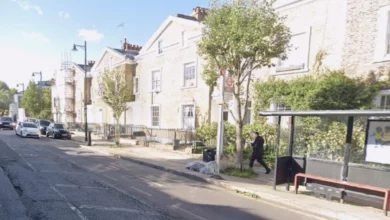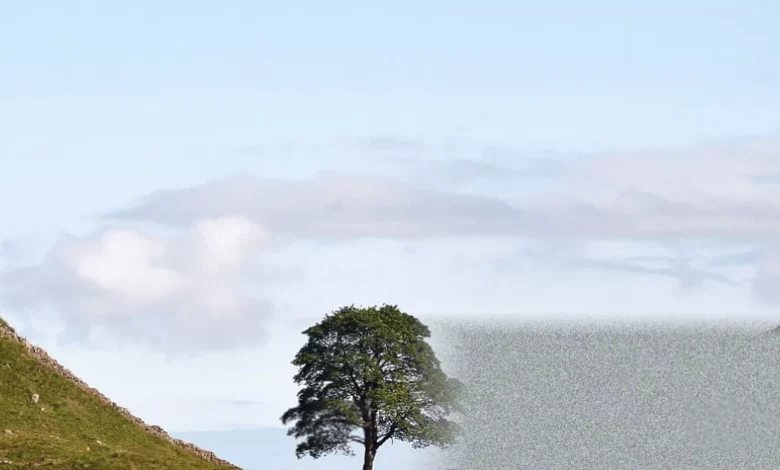
A sapling grown from the iconic Sycamore Gap tree has been stolen from the grounds of Wray Castle in Cumbria, just weeks after it was planted as a symbol of hope and resilience.
Cumbria Police believe the theft occurred between 9 and 16 June 2026. National Trust staff at the castle, which sits within the Lake District National Park, said the sapling was taken deliberately, not carelessly uprooted. Jez Westgarth, the National Trust’s assistant director for Cumbria and Lancashire, told the BBC that whoever took it must have planned the act. “It hasn’t just been pulled up recklessly – somebody’s thought about what they’re doing,” he said, suggesting the sapling was likely removed to be planted elsewhere.
The sapling was one of 49 successfully grown from seeds collected from the original Sycamore Gap tree, which stood on Hadrian’s Wall in Northumberland for an estimated 150 to 200 years. That tree, over 15 metres tall, was illegally felled on a stormy night in September 2023 in what a judge later described as an act driven by “sheer bravado” and premeditation. The felling caused widespread shock and grief across the UK and internationally. In July 2025, Daniel Graham and Adam Carruthers were found guilty of criminal damage and each sentenced to four years and three months in prison – reportedly the first time in the UK that someone had been jailed for illegally felling a tree.
The original Sycamore Gap tree was one of Britain’s most recognisable and beloved trees. It was voted English Tree of the Year in 2016 and became world-famous after featuring in the 1991 blockbuster Robin Hood: Prince of Thieves. For generations it was a cherished landmark where people celebrated engagements, held picnics, enjoyed quiet walks and marked important life moments.
‘Trees of Hope’ initiative
The National Trust collected seeds from the fallen tree and successfully raised 49 saplings – a number that matches the tree’s height in feet at the time it was felled. These saplings are part of a living legacy called the “Trees of Hope” initiative, designed to create a symbol of resilience and renewal. Nearly 500 applications were received from gardens, historic sites and community projects across the country for the chance to host one.
Laura Lee, the National Trust’s general manager for the Lake District, explained that the stolen sapling had been planted at Wray Castle in April 2026 as one of 15 planted across the UK’s national parks. She described it as “a symbol of hope and resilience among our most protected landscapes.” The sapling also played a key role in a wellbeing project called “Branches of Care,” a partnership between the National Trust and St Mary’s Hospice in Ulverston that uses nature to support people experiencing dementia, illness and bereavement.
The symbolic importance of the saplings runs deep. Each one is intended to carry the spirit of the original tree – a living reminder that even after devastating loss, life can renew. They are between four and six feet tall and have been planted in carefully chosen public spaces across the UK, many with their own powerful stories.
Saplings planted in places of memory and hope
Among the locations selected are a site commemorating the Minnie Pit mining disaster in Staffordshire; the Tree Sanctuary in Coventry, where three teenage friends set up a project to rescue their city’s vandalised trees; and Coton Orchard in Cambridgeshire, for a grassroots initiative called Coton Loves Pollinators. Another sapling was planted at Greenham Common in Berkshire, formerly the site of women’s peace camps. In Leeds, one was installed at the Rob Burrow Centre for Motor Neurone Disease; in Northumberland, another went to Hexham General Hospital. Veterans in Crisis in Sunderland received one too. Henshaw Church of England Primary School, the closest school to the original Sycamore Gap tree, was also chosen. The King received the first sapling, to be planted for the nation at a later date.
One of the most poignant locations is Strabane in Northern Ireland. The town suffered heavily during the Troubles, a 30-year conflict that scarred many communities, but today it is a place with a vibrant arts and music scene where much has been done to foster a sense of resilience and hope. The sapling there is a quiet, living testament to that recovery.
Laura Lee said the theft was “shocking and saddening,” but stressed it does not undermine the spirit the tree represents. “Acts of care, restoration, and community support remain far stronger,” she said. “We urge those involved to do the right thing, return the sapling, or come forward. The tree belongs to everyone.” The National Trust is working with Cumbria Police and appealing for anyone who visited Wray Castle and its grounds between 9 and 16 June to provide information.
The stump of the original Sycamore Gap tree, meanwhile, has shown signs of regrowth, with 25 new shoots emerging. The National Trust is considering how best to manage that regrowth – whether as a coppiced stool or by reducing it to a single tree. But the theft of one sapling, while a setback, has not dimmed the wider purpose of the initiative. As Lee put it, the loss will be deeply felt, but it does not change what the tree represents: resilience, care, and the quiet strength of nature.