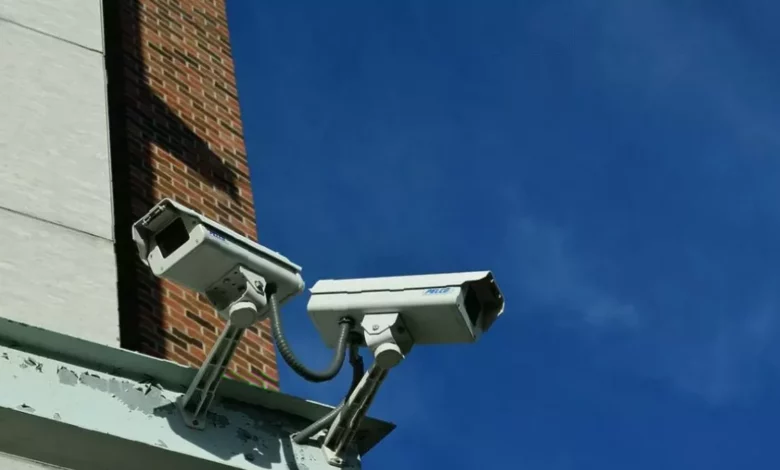
Newham Council is embarking on a £2 million overhaul of its public surveillance network, a significant investment aimed at tackling a crime rate that consistently ranks among the highest in the capital. The move comes as official data paints a stark picture of the borough’s safety challenges, with violence, theft, and domestic abuse driving an overall crime rate 20% above the London average.
The funding will expand camera coverage across the borough, modernise ageing equipment, and introduce upgraded technology intended to support crime prevention and evidence-gathering. In a statement, Cllr Amar Virdee, the deputy mayor and cabinet member for community safety, said the council was committed to “doing everything within our powers to protect residents – particularly young people and those most vulnerable to the impacts of crime and anti-social behaviour.”
Targeting the hotspots
The deployment of new cameras is strategically focused on areas identified as priority locations. Green Street, East Ham and Stratford are slated for new and improved coverage. An additional 20 cameras will be installed in locations including East Village Area E20, High Street North E12, High Street South E6, Barking Road E13 and Pier Road Foot Tunnel E16.
This targeting aligns with crime data which identifies Stratford and East Ham as the borough’s top hotspots, accounting for nearly 20% of all crime. These areas see high volumes of theft—Newham’s most common offence—alongside violence, knife crime, domestic abuse, and hate crime. Theft and violence against the person have both been increasing year-on-year, according to the council’s own community safety analysis.
Cllr Virdee framed the upgraded system as essential to a “partnership-led approach” to public safety. “A modern, resilient and intelligent CCTV system is a critical enabler of this partnership-led approach—supporting rapid response, evidence-led investigations and proactive intervention across streets, town centres and housing estates,” he said. The investment will also address the council’s outdated radio transmission system and replace broken or obsolete cameras.
Questions of effectiveness and privacy
The substantial investment revives a long-standing debate about the efficacy and impact of widespread public surveillance. Over a decade ago, in 2013, a council debate highlighted concerns after a report indicated that less than 1% of arrests in Newham in 2012 resulted from its then-network of 959 cameras. Questions were raised at the time about whether the benefits outweighed the financial costs and potential intrusion on privacy.
Mick Neville, a former Metropolitan Police detective who led the force’s CCTV initiatives, has noted that camera positioning and image quality are crucial for effectiveness, and that timely access to footage adds to operational costs. He has also pointed out that CCTV’s value extends beyond convictions to public assurance and deterrence.
The council’s current policy operates within the Data Protection Act 2018 and GDPR. Footage is typically retained for 31 days unless needed for an investigation. Residents can request access to footage featuring them, but it may be withheld if it breaches others’ privacy or relates to an ongoing case. Notably, Newham Council is officially opposed to the police’s use of Live Facial Recognition (LFR) technology, having voted unanimously to suspend its use due to concerns over its intrusive nature, unreliability, and potential to exacerbate racist outcomes in policing.
The broader upgrade forms part of the council’s 2026/27 budget, which totals £520.9 million and includes other capital growth investments. It also complements other community safety initiatives, such as “Community Safety Days of Action” conducted with police in hotspots to tackle issues like illegal dumping and anti-social behaviour, which have previously led to arrests for weapons and drugs.
Alongside physical surveillance, Newham Council is investing in Artificial Intelligence for public sector use, partnering with the University of East London to establish a UK centre for AI research, with a stated emphasis on ethical deployment. The council’s community safety strategy also highlights a commitment to tackling racism, inequality, and disproportionality through its “TRID” programme, working alongside a Social Inclusion Strategy.