Cuba employs freedivers and discarded cables to conserve reefs as US blockade persists

Cuban scientists at the National Aquarium in Havana are being forced to manually oxygenate fish tanks housing fragile species during frequent power cuts, as an escalating economic crisis compounded by decades of US sanctions brings the country’s marine conservation work to the brink.
Power Cuts and Petrol Shortages
The scarcity that grips daily life in Cuba has become the defining constraint on scientific research. Petrol, essential for scientists to carry out and monitor conservation projects, transport volunteers over long distances and enable the government to control illegal fishing, is in critically short supply because of the US oil blockade. The same fuel shortage has crippled commercial airlines, decimating the tourism industry that had provided an alternative livelihood for many coastal communities.
“Compared with other places, we don’t have major polluting sources,” said Marileidy Albertus, a specialist in exotic and wild species at the National Aquarium. “We don’t have big industries, oil spills are almost nonexistent, maritime transport is also limited, and for many years, agroecological practices have been implemented.” But the advantages of Cuba’s relatively low-impact economy are being overwhelmed by the inability to acquire basic equipment.
Every aspect of scientific work is affected. Researchers struggle to purchase equipment made in or sourced from the United States, cannot access scientific journals and magazines associated with the US, and face uncertain internet connectivity. Non-governmental organisations have difficulty channelling funding to Cuban institutions and securing visas for scientists to attend international events. The US blockade also deters foreign investment, leading to a lack of vital infrastructure such as wastewater management systems, and blocks access to finance and materials needed for climate adaptation — including solar panel components and irrigation systems.
“The US administration’s decision to underinvest in the environment is extremely misguided and self-defeating,” said Daniel Whittle, an expert in US and Cuban environmental law and policy and director of the Resilient Caribbean initiative. “Cuba contributes very little to climate pollution and has been very proactive since 1992 in having a climate strategy. They understand, as an island nation, how without these common resources everyone loses.”
Innovation in the Face of Adversity
Despite these constraints, Cuban scientists, aided by a growing network of local conservationists, have developed remarkable innovations. Luis Mesa, a conservationist scuba diver in the Ciénaga de Zapata national park, described the limits on their work as akin to freediving compared with scuba gear. “With scuba diving gear there are so many possibilities: you can go deeper and stay underneath the water for longer. But to protect the ecosystem, our resources are limited.”
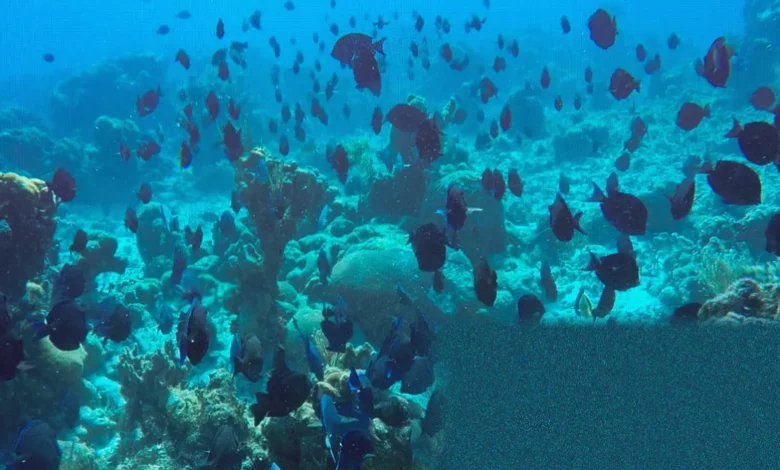
The park itself is the largest wetland ecosystem in the Caribbean, designated as a biosphere reserve and a Ramsar site for its biodiversity and geodiversity. Coral cover across the Caribbean has declined by 48% since 1980, according to the Global Coral Reef Monitoring Network, driven by climate-induced heat stress, overfishing and diseases. Sharp bleaching events in 1998, 2005 and 2023 each caused significant losses. Stony coral tissue loss disease (SCTLD) — first reported in Florida in 2014 and now present in at least 18 Caribbean countries and territories — is considered the deadliest coral disease ever recorded, killing susceptible corals within weeks. Cuba was slower to experience the disease, but in 2023 both SCTLD and an intense bleaching event struck, prompting the government to adopt a new coral protection policy.
Facing such threats with meagre resources, scientists at the National Aquarium have turned to freediving techniques to conduct experiments at a depth of 17 metres, accessible by swimming from their workplace — a method that reduces fuel consumption. They are developing their own substrates for coral restoration from recycled materials, including broken clay and leftover cables from the national telecoms company. Since 2019 they have experimented with coral farming through fragmentation and assisted reproduction cycles (IVF). Now they are innovating by combining the two techniques, a practice so expensive and logistically complex that it is not used elsewhere.
“Most organisations depend on financing, and working on long-term projects like this is not easy,” Albertus said. A network of local volunteers, many of whom learned about conservation through local institutions, now monitors the reefs and reports changes to experts. “After I changed from military to recreational scuba diving, I realised that protecting marine life is important,” said Jorge Sánchez, a volunteer diver. Early each morning, divers gather at Ciénaga de Zapata to collect plastic and drinks cans from the sea, using an electric trailer to reach their designated spot; in a few hours they can fill five sacks of waste.
Necessity’s Toll
The same economic pressures that fuel innovation also threaten to undo conservation gains. While overtourism causes environmental problems elsewhere, the collapse of tourism in Cuba — driven by the pandemic and the tightening of the blockade — has pushed many people who once rented out houses back to their original activities, including illegal fishing and other damaging practices. “If there aren’t any tourists, they will go back to fishing because that’s what they know,” Mesa said.
Eduardo Abrego, a biologist with years of experience in Ciénaga de Zapata, summed it up bluntly: “The worst enemy of conservation is necessity. Humans always try to find a solution to their hardship in nature.”