Swiss startup GR3N nets €15.5m to construct microwave PET recycling plant targeting 85% of unrecycled plastic

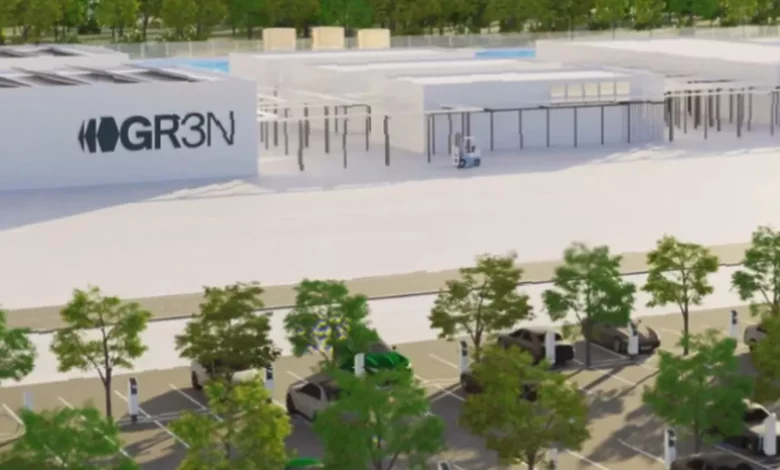
GR3N, a Swiss cleantech company, has secured €15.5 million to build the world’s first industrial plant using its microwave-based chemical PET recycling technology. The plant, named MODUS, will be constructed in Spain with a capacity of 40,000 tonnes per year and is designed to handle 100% of PET waste – including coloured bottles, films, textiles and contaminated streams that conventional mechanical recycling cannot touch.
The Series B round was led by 360 Capital, the Paris and Milan-based deep-tech and climate-tech venture capital firm, with VP Textile joining as a new strategic investor. Growth Capital acted as financial adviser for the transaction. The funding brings GR3N’s total capital raised to approximately €24 million across all rounds. Alongside the equity, the MODUS project has secured a €35 million grant agreement under the EU Innovation Fund’s Large Scale Industrial Projects category – more than double the Series B amount – reflecting the European Union’s conviction that chemical recycling infrastructure requires public subsidy to reach viability. The plant is being developed in partnership with Intecsa Industrial, the engineering arm of the Cobra IS industrial group, which leads the engineering, procurement and construction execution.
Financial closure for MODUS is expected in the fourth quarter of 2027, with commercial operations planned for the second quarter of 2030. This represents a three-year delay from the original target of 2027, a pattern common in first-of-a-kind deep-tech industrial projects where engineering complexity, regulatory approvals and supply chain realities routinely extend timelines, according to Dealroom.
How MADE Works
GR3N’s core technology is MADE – Microwave Assisted DEpolymerization. Unlike mechanical recycling, which can only process transparent and light-blue bottles – about 15% of the 100 million tonnes of PET produced globally each year – MADE uses microwave energy to break PET and polyester down at the molecular level into their core monomers: terephthalic acid (TPA) and monoethylene glycol (MEG). The resulting monomers are food-grade and of virgin quality, allowing them to be re-polymerised into new PET endlessly without degradation. The company says the process achieves depolymerisation in less than 10 minutes and reduces CO₂ emissions by up to 80% compared to producing virgin PET from fossil feedstocks.
GR3N holds three patent families – two covering the depolymerisation process and one on its proprietary equipment (PEQ). The initial patent was filed in 2011. The team comprises six PhDs with backgrounds in material science, chemistry, aerospace engineering and economics. Industrial shareholders include Intecsa Industrial, Standex International and Chevron.
Differentiation in a Crowded Field
GR3N operates in a technically fragmented chemical recycling landscape. Carbios, the French enzymatic depolymerisation company listed on Euronext Growth, is building a 50,000-tonne commercial plant in partnership with Indorama Ventures and has raised over €200 million. DePoly, a fellow Swiss PET chemical recycler that has raised $41 million total, opened a 500-tonne demonstration plant in Monthey, Switzerland in 2025 using a cold-temperature acid hydrolysis process. Loop Industries in Canada, which has raised $139 million, uses low-temperature, low-pressure depolymerisation targeting the North American market.
What differentiates GR3N is its microwave energy mechanism. The company says MADE enables faster reaction times and higher energy efficiency than competing approaches, and it has no feedstock limitations – unlike glycolysis, methanolysis or dissolution methods. MADE can handle up to 30% of non-polyester materials – such as colourants, dyes, polyurethane, polyamide and cotton – within the feedstock, reducing the need for precise sorting and cutting costs. The technology does not rely on enzymes or solvents, avoiding the sourcing constraints of Carbios’s biological approach and the handling requirements of dissolution methods. GR3N has also partnered with Schneider Electric to create the first open automation system for advanced plastic recycling, integrating its EcoStruxure Automation Expert platform. A demonstration of MADE with Schneider Electric’s technology took place in Italy in March 2024.
“I am very excited to join this talented team with the goal to bring the Microwave Assisted Depolymerisation technology to the market and make it the Best Available Technology for PET chemical recycling,” said Martin Stephan, who has taken over as CEO of GR3N.
Leadership Transition and Market Drivers
The funding announcement coincides with a significant leadership change. Maurizio Crippa, the Italian inventor who founded GR3N in 2013 and served as CEO since then, has handed over the role to Martin Stephan, who brings over two decades of international executive experience in technology-driven businesses. Crippa, who holds a PhD in materials science from the Università di Milano-Bicocca, invented the MADE technology and guided the company from laboratory concept to industrial development. Stephan now takes it into the commercialisation phase. “Textile waste is one of the most urgent, and most unsolved, problems in the sustainability transition,” said Alessandro Zaccaria, partner at 360 Capital. “The fashion industry generates over 90 million tons of waste annually, polyester dominates global fiber production, and yet less than 1% of clothing is ever recycled back into clothing. The loop has never been closed because the technology to close it didn’t exist. Until now.”
The market context is compelling. According to Grand View Research, the global chemical recycling of plastics market was valued at $14.82 billion in 2023 and is projected to reach $26.88 billion by 2030, growing at a compound annual growth rate of 9.4%. The PET-specific chemical recycling segment is growing faster – projected to reach $9.5 billion by 2030 at a CAGR of 14.5%, driven directly by regulatory mandates and brand commitments. EU regulations require producers to meet 30% recycled PET content by 2030 and 65% by 2040, creating a structural demand gap that mechanical recycling alone cannot fill. Chemical recycling is the only technology capable of meeting it at scale.
Textile waste adds urgency. An estimated 92 million tonnes of textile waste are generated globally each year, projected to rise to 134 million tonnes by 2030. Polyester accounts for approximately 52% of global fibre demand – 59.3 million tonnes in 2023 – yet less than 1% of clothing is ever recycled back into clothing. GR3N’s MADE technology can process polyester fibres as well as bottles, enabling bottle-to-textile, textile-to-textile and textile-to-bottle recycling, creating a truly circular system. The less precise sorting required also contributes to cost savings, the company says.
The central question for GR3N – and for every company in this space – is not whether the chemistry works. It does. The question is whether a 40,000-tonne plant in Spain, operational in 2030, can demonstrate economics competitive with virgin PET at a moment when oil prices, energy costs and regulatory enforcement timelines remain outside anyone’s control. Financial closure for MODUS is expected in Q4 2027, with commercial operations set for Q2 2030 – a three-year delay from initial projections.