Khan and Bloomberg point to London and New York as proof air pollution can be overcome

Every year, air pollution kills more than eight million people worldwide – more than HIV, malaria and tuberculosis combined. Yet unlike those diseases, this public health emergency rarely makes headlines. It is largely invisible, often undetected, and strikes without mercy, causing heart and lung disease, cancers and other deadly conditions. The heaviest burden falls on low- and middle-income communities and nations, but the problem transcends borders and classes.
The scale of a silent crisis
Day after day, billions of people inhale air that shortens their lives and makes them sicker with every breath. Fine particulate matter (PM2.5), the most dangerous pollutant, is a major contributor. According to the World Bank, health damage from air pollution costs the global economy an estimated $6 trillion annually – a reduction of five per cent in global GDP. The World Health Organization notes that 99 per cent of the world’s population is exposed to PM2.5 levels above its guidelines. Noncommunicable diseases account for 86 per cent of the 7.9 million premature deaths attributed to air pollution each year.
The health consequences are wide-ranging: stroke, heart disease, lung cancer, chronic obstructive pulmonary disease, diabetes and even dementia. Children, the elderly and pregnant women are especially vulnerable, with maternal exposure linked to adverse birth outcomes. Yet the problem is fixable – and cities do not need to wait for national governments to act.
How London turned data into action
London’s transformation offers a powerful blueprint. In 2016, experts at King’s College London predicted that without additional action it would take almost 200 years – 193 to be precise – for the capital to meet legal limits for roadside nitrogen dioxide (NO2). With robust and bold action from City Hall, London achieved those limits in just nine years, hitting them for the first time in 2024. That is 184 years ahead of schedule.
The key was following the data. London installed an extensive network of automatic and passive monitors, alongside low-cost air quality sensors through the Breathe London programme. These sensors were placed where people live, play and work: schools, hospitals and cultural centres. But data alone was not enough. The Breathe London network engaged with community leaders and the general public to raise awareness and install additional sensors in the areas most in need. This close-to-the-ground approach ensured the information reflected real-life exposure, not just roadside monitoring.
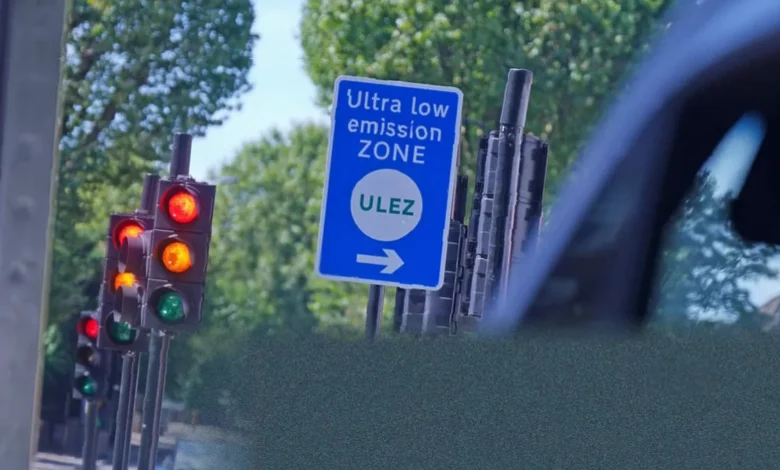
The data informed two major policy solutions: the ultra-low emission zone (Ulez), now the world’s largest clean air zone, and the rollout of zero-emission buses on London’s streets. The impact has been dramatic. New research published by Imperial College London found that fewer Londoners were admitted to hospital with breathing and heart problems as a direct result of the Ulez. Specifically, emergency hospital admissions in central London saw an annual decrease of three per cent after the scheme and its predecessor, the T-charge, were introduced. Heart admissions fell by eight per cent and breathing admissions by six per cent. (The study noted that the impact on respiratory outcomes was statistically insignificant when considering broader trends, possibly because it focused only on adults, whereas children are more vulnerable to the respiratory effects of air pollution.)
Beyond hospital admissions, broader studies have documented additional benefits. Following the introduction of London’s earlier Low Emission Zone (LEZ), sick leave fell by 18.5 per cent, the incidence of health problems dropped by 6.8 per cent and respiratory issues decreased by 10.2 per cent. Annual public health savings are estimated at more than £37 million. These steps required facing down political opponents, pressure groups and vested interests – but, as the data makes clear, the public has benefited.
None of this happened in isolation. London built on pioneering work in New York City, where air-quality sensors helped city government target its efforts and drive air pollution down to a 50-year low. Both cities proved that rapid, measurable progress is achievable, and that lower emissions improve health, the climate and the economy – cleaner air helps attract private investment, boosts tourism and creates a more productive workforce.
A global movement takes shape
The lessons from London and New York are now being exported worldwide through a programme called Breathe Cities, launched by Bloomberg Philanthropies in partnership with the Clean Air Fund and C40 Cities. The initiative gives mayors what they need to attack the problem head-on: real-time data on where pollution is worst, technical support to convert that data into policy solutions, and a global network of cities to share ideas with.
Nearly 1,200 air sensors have already been deployed across 14 participating Breathe Cities, including the first hyper-local networks ever established to detect pollution in Accra, Ghana, and Nairobi, Kenya. In Nairobi, air pollution was linked to approximately 2,500 premature deaths in 2019. The city launched its first municipal air quality monitoring network in June 2025, with 50 sensors designed to identify pollution hotspots and inform new regulations. In Accra, the Breathe Accra project provides real-time data that communities and officials can act on. Ten of the 14 Breathe Cities have committed to clean air zones by 2030, collectively covering an area where more than 18 million people live and work. The initiative has already helped participating cities reduce toxic nitrogen dioxide pollution by 14 per cent.
C40 Cities supports these efforts through technical assistance, peer-to-peer collaboration and data-driven frameworks, and its “It’s in the Air” campaign aims to raise public awareness and build support for clean air policies. The early results show that this blueprint works not only in global capitals but also in cities with widely varying resources and political dynamics.
By using data, cities are tackling air pollution as a public health challenge while also making progress against the climate crisis – even as some national governments retreat from environmental protection. People rightly expect their local leaders to make it safe to walk outside. That includes protecting them from toxic pollution. Breathing clean air is a fundamental right, and the more cities that uphold that right, the more lives will be saved.