A powerful El Niño event is forming in the tropical Pacific, threatening to unleash extreme weather across the globe as forecasters warn it could become one of the strongest on record. The National Oceanic and Atmospheric Administration (NOAA) has confirmed the formation of El Niño and expects it to strengthen through the winter of 2026–27, with a 63% chance it will reach the “very strong” threshold. Some models project sea surface temperatures in the equatorial Pacific could surge 3 degrees Celsius (5.4 degrees Fahrenheit) above average, leading meteorologists to describe the phenomenon as a “Super El Niño”.
Imminent global risks
In a world already experiencing record heat, such an event would bring dangerous extremes: drought, wildfires, flooding, and, in the Pacific, a more active hurricane season. Warmer oceans fuel more intense storms, and although El Niño can suppress Atlantic hurricane development by strengthening upper-level winds, it enhances storm formation in the eastern and central Pacific. Studies cited by researchers indicate that climate change has already increased the intensity of recent Atlantic hurricanes, with wind speeds boosted by 3 to 14 mph in 2024 due to elevated sea surface temperatures. Marine heatwaves are also “supercharging” hurricane damage, making landfalling tropical cyclones more likely to intensify rapidly.
The agricultural risks are severe. El Niño disrupts atmospheric circulation, triggering cascading weather effects globally. The Food and Agriculture Organization (FAO) has mapped areas with a high probability of drought, including parts of the Sahel, Southern Africa, South and Southeast Asia, and Central America’s Dry Corridor. The World Food Programme (WFP) notes that El Niño can affect major food-producing regions, impacting supply and prices worldwide. Combined with existing pressures from conflict and economic stress, a strong El Niño could escalate acute food crises into famines, particularly in already vulnerable regions.
Lessons from history
The stakes are underscored by the 1877–78 El Niño, one of the strongest ever recorded. It coincided with an unusually mild winter in North America, known as the “year without a winter”. Scientists suspect the same El Niño was a major factor in one of the worst environmental disasters in history. As much of the world was enveloped in drought, harvests collapsed in India, China, parts of Africa and Brazil. The drought, compounded by colonial and other socioeconomic policies, led to the “Great Famine” – sometimes referred to as the “Late Victorian Holocausts” – which killed between 30 and 60 million people, about 3 to 4% of the world’s population at the time.
What distinguishes us from the victims of 1877, according to Terry Garcia, a former deputy administrator of NOAA, is not luck but data. Modern ocean monitoring and forecasting provide the advance warnings the Victorians lacked. “This lead time saves thousands of lives and billions of dollars each year. Today, we can anticipate climate shocks before they arrive,” Garcia writes. But that capability is under threat.
Assault on ocean monitoring
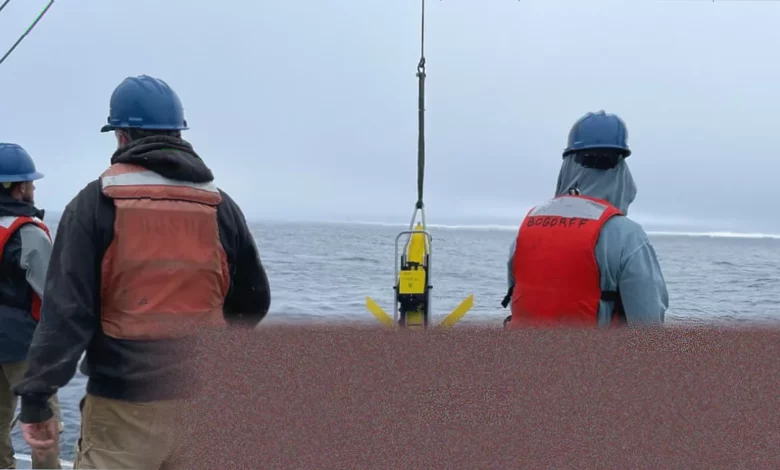
In the face of this evolving threat, the Trump administration has sought to cripple forecasting capabilities. This spring, the National Science Foundation (NSF) began “descoping” the Ocean Observatories Initiative (OOI), a network that delivers real-time ocean data from more than 900 sensors. “Descoping” is bureaucratic language for dismantling the programme. The agency announced plans to pull all sensors, buoys and other equipment from four of the programme’s five sites: the Irminger Sea between Greenland and Iceland, Station Papa in the Gulf of Alaska, the Endurance Array off the US Pacific Northwest, and the Pioneer Array off North Carolina. Built over a decade at a cost of approximately $386 million, the system is among the most advanced ocean-observing networks in the world and was designed for a 30-year operational lifespan.
Garcia argues that pulling these arrays was not a budgetary exercise. “Rather, NSF’s actions are more properly viewed as an extension of the Trump administration’s broader assault on federal climate science. The objective is apparently to weaken the programs that measure climate change and then claim the problem is ‘uncertain’. But turning off the alarm does not put out the fire.” The broader pattern includes funding freezes, data purges and mass firings across scientific agencies. The NSF’s Fiscal Year 2026 budget request proposed an 80% reduction in funding for the OOI, and the agency had previously ceased paying grants to researchers and paused grant review panels.
The scientific community and members of Congress reacted with fierce objections. In a rare display of bipartisan unity, the Senate unanimously passed a bill introduced by Senators Lisa Murkowski (R-AK) and Jeff Merkley (D-OR) – the “Saving the OOI Act” – to prohibit the use of federal funds to dismantle the network until a thorough review is conducted. On June 18, 2026, following this intervention, the NSF announced it would halt further removal, keep the system running, and redeploy the sensors that had already been pulled out of the water.
But this is merely a temporary reprieve, and the system remains at risk. The NSF has paused its actions and deferred the network’s future to a yet-to-be-convened panel. Sensors have already been removed, and data streams have been interrupted. Their redeployment after removal is not equivalent to uninterrupted operation.
The critical importance of the OOI
While these sensors do not detect El Niño formation directly, they measure deep-ocean temperature – the best gauge of how much excess heat the planet is absorbing. The ocean stores most of that excess heat, which shapes storms, marine heatwaves and climate shocks such as El Niño events. The OOI also monitors changes in the Atlantic Meridional Overturning Circulation (AMOC), a critical component of global climate regulation that scientists warn is nearing a tipping point. Independent researchers warn that removing US observations like these would increase the error in annual ocean-heating estimates by 163%, degrading forecasts and early-warning systems that help the country prepare for disasters.
In 2025 alone, weather and climate disasters cost the United States approximately $115 billion from 23 billion-dollar events. The same data from the OOI informs the management of fisheries. In 2023, the US commercial fisheries and seafood industry generated $173.4 billion in sales and supported 1.4 million jobs; the broader fishing and seafood industry, including recreational fishing, supported 2.1 million jobs and $319 billion in annual sales impacts. To dismantle a system that costs just $56 million a year to run would be to put all of that at risk. “That is the scale of its recklessness,” Garcia writes.
The OOI provides real-time, publicly available data on meteorological, biological, oceanographic and geophysical conditions – data that is vital for improving climate models and for disaster preparedness. Without it, the ability to anticipate and respond to climate shocks would be severely diminished.
The need for permanent protection
If these systems remain vulnerable to political whims, an extreme event will eventually catch us unawares. Garcia warns that an unexpected flood, a failed harvest or a catastrophic storm will be dismissed as an unavoidable act of nature – just as the famines of 1877 were attributed to fate, when they largely resulted from failures to anticipate and respond.
Last week, the system was saved – for now. The panel the NSF plans to convene should recommend permanent protection, and Congress should write that protection into law, so the instruments we rely on to understand the ocean are not at the mercy of an election outcome. The ocean stores most of the excess heat that shapes the climate. We now have the ability to measure it, issue forecasts based on what it tells us, and brace for what may be coming. We came far too close to throwing it away.