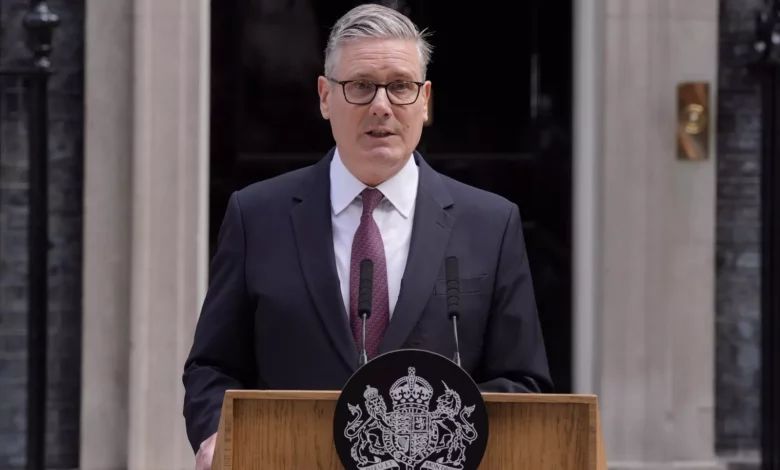
Foreign direct investment projects in the UK fell 14% last year, according to EY’s latest UK Attractiveness Survey, which recorded 730 projects in 2025 compared with 853 the year before. The decline was sharper than the 7% drop seen across Europe as a whole over the same period, and it came as Britain heads towards its seventh prime minister in a decade following Sir Keir Starmer’s resignation on Monday.
The survey, which draws on a poll of 360 international investment decision-makers conducted in March and April, also asked investors to name the biggest disadvantages the UK faces as a destination for their capital. Political instability was flagged as the second most serious concern, behind only energy costs. Labour market costs and tax competitiveness were also cited as areas of worry.
Why political instability is spooking investors
The rapid turnover of leaders — Britain is now set for its seventh prime minister in ten years — has created a perception of unpredictability at the top of government. Investors closely monitor political stability because sudden changes in leadership can signal shifts in fiscal policy, regulatory direction, and long-term economic strategy. The uncertainty has been compounded by the manner of recent transitions, which have often taken place without a general election, meaning the incoming leader may lack a fresh electoral mandate.

These concerns have been reflected in financial markets. UK government bonds — gilt-edged securities through which overseas investors effectively lend to Britain — have come under pressure since the start of 2025. Prices have fallen as yields have risen, driven by downgrades to the UK’s economic growth outlook and the political uncertainty. Goldman Sachs Research had previously projected that 10-year gilt yields would decline by the end of the year, banking on Bank of England interest rate cuts, but acknowledged that investor worry about the government’s fiscal outlook and sticky inflation had pushed yields higher. By September 2025, 30-year gilt yields were close to their highest level in three decades, reflecting concerns over government finances and the premium investors demand to hold longer-dated debt.
Broader economic headwinds have added to the unease. The Organisation for Economic Co-operation and Development (OECD) downgraded its UK growth forecast for 2025 to 1.3%, citing high government debt interest payments and new trade barriers. The British Chambers of Commerce (BCC) revised its own growth expectations down to 0.9%, attributing the slowdown to rising cost pressures, weaker business investment, and global uncertainties. Productivity forecasts have also been cut, and government borrowing remains at near-record highs.
Energy costs were rated the single biggest disadvantage for the UK as an investment destination, surpassing even political instability. High energy prices continue to weigh on the operating costs of foreign-owned businesses and dampen the appeal of UK-based manufacturing and industrial projects. Brexit, too, has left a lingering mark: research indicates the departure from the European Union has had a statistically significant and negative impact on the flow of foreign direct investment into Britain.
UK still second in Europe despite the slide
Despite the overall drop, the UK retained second place in the European rankings for FDI projects last year, with 730 projects. France led the continent for the seventh consecutive year, attracting 852 projects. Germany came third with 548. France’s sustained performance has been built on strength in industrial investments and growth in strategic sectors such as artificial intelligence, defence, and low-carbon energy, supported by its infrastructure, innovation capacity, talent pool, and market size.
Within the UK, the investment picture was sharply uneven. Greater London was the only English region to see growth, with a 5% rise in FDI projects, widening the regional investment gap. Scotland held its position as the top UK destination for foreign investment outside London for the eleventh year running, praised for its skilled workforce and business environment. Manchester was the best-performing city outside the capital for the fourth time in six years. The UK continued to lead Europe in attracting investment into technology and business and professional services. Financial and professional services (FPS) remained a stronghold, with the UK topping the continent for FPS FDI by both project count and investment value in 2025, attracting £1.7 billion. More than half of the jobs created by foreign investment in that sector were located outside London.

Anna Anthony, EY UK & Ireland regional managing partner, said: “Despite an overall decline in FDI project numbers amid a challenging economic and geopolitical backdrop, investor sentiment suggests the UK – particularly London – remains a strong contender in a highly competitive global market. While the UK is well positioned to attract long-term capital and compete with leading destinations such as the US and France, the priority now is to convert this into sustained investment that drives growth, supports innovation and strengthens economic momentum across all regions.”
More than half of the global investors surveyed said they expect the UK to become more attractive to invest in over the next three years. That cautious optimism is, however, tempered by the immediate challenges flagged in the survey — and by the political uncertainty that has already begun to play out in bond markets and confidence indices alike.