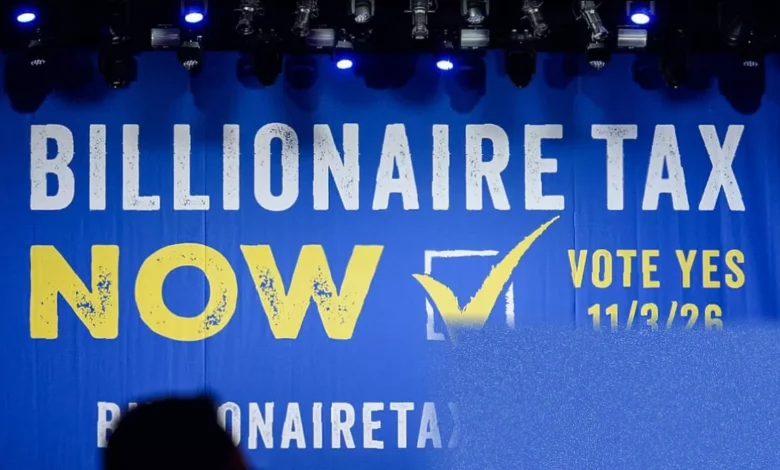
California’s proposed billionaire tax faces a critical deadline this week. The measure, which would impose a one-time levy on the state’s wealthiest residents, has already qualified for the November ballot after proponents submitted more than 1.6 million signatures – over double the required number. California’s Secretary of State confirmed the measure on 17 June, but its fate remains uncertain as Governor Gavin Newsom and a coalition of tech billionaires scramble to block it before the 25 June certification deadline.
The proposal, known as the California Billionaire Tax Act, originally sought a 5% wealth tax on any resident with a net worth exceeding $1bn. That would have affected roughly 200 of the state’s wealthiest individuals and, according to its backers, generated an estimated $100bn – with 90% earmarked for healthcare and 10% for education and food assistance programmes. Billionaires would be allowed to pay the tax in instalments over five years, and the levy would apply to anyone who was a California resident as of 1 January 2026, even if they have since left the state.
The measure is primarily championed by the Service Employees International Union-United Healthcare Workers West (SEIU-UHW), which argues the revenue is urgently needed to backfill federal healthcare cuts and support strained public services. But the union’s tactics have been anything but straightforward. David McCuan, a political science professor at Sonoma State University who studies California’s ballot measure process, described the initiative as a “gun-behind-the-door” strategy. “From the get-go, SEIU-UHW has designed this measure as a way to negotiate a better deal,” McCuan said. “Rather than go nuclear in a ballot measure battle that can cost hundreds of millions of dollars, the goal has been to threaten to go to war.”
That strategy appeared to be in play last week when the union proposed a compromise: scrapping the 5% ballot initiative in exchange for Governor Newsom supporting a 2% one-time levy on billionaires, to be passed by the state legislature. Newsom has reportedly rejected that amended proposal. SEIU-UHW president Dave Regan indicated that a deal was unlikely, telling reporters: “We’re prepared to go forward, and we will be on the ballot in November.”
Newsom, a tech-friendly governor who has previously embraced progressive tax policies, has emerged as the most vocal opponent. He has argued that such state-level wealth taxes “drive a race to the bottom” and will ultimately chase billionaires out of California, stripping the state of long-term revenue. His opposition has been described as ironic by some observers, given his past support for higher taxes on the wealthy, and may reflect his own political ambitions and the need to avoid alienating major donors.
The tech industry’s response has been swift and expensive. Former Google executives Sergey Brin and Eric Schmidt have donated tens of millions of dollars to Super Pacs aimed at defeating the measure. Crypto titan Chris Larsen launched an attack ad in May titled “Reckless”, which warns the tax “will backfire and hurt you”. Several high-profile billionaires have already left California or are making moves to do so, including Google co-founder Larry Page, Meta co-founder Mark Zuckerberg, and Donald Trump’s AI and crypto czar, David Sacks. Others have funded efforts to kill the tax, among them Palantir co-founder Peter Thiel, Ring founder James Siminoff, DoorDash CEO Tony Xu, and Stripe CEO Patrick Collison.
Opponents have also proposed a potential counter-measure: the “Retirement and Personal Savings Protection Act”, which could invalidate the billionaire tax by prohibiting new state taxes on personal property. Meanwhile, some progressive organisations and labour unions have surprisingly announced their own opposition to the tax, raising concerns that a crowded ballot could lead voters to reject multiple measures, including the billionaire tax itself. Economists and state budget watchers are watching closely, noting the growing number of billionaires already leaving California, taking assets and businesses with them.
UK’s social media ban for under-16s
Across the Atlantic, the UK government has unveiled its own contentious legislative push: a ban on children under 16 using what it deems “high-risk” social media apps – a list that includes TikTok, Instagram, X, YouTube, Snapchat and others. Additional restrictions are planned for other tech platforms, such as “romantic” chatbots. The ban is targeted for implementation by early 2027, with Ofcom expected to propose enforcement measures, including age verification methods, in autumn 2026. It will also restrict livestreaming and unsolicited contact with children on gaming sites, while messaging services like WhatsApp and Signal are not expected to be covered.
The policy is among the most intensive of its kind by any democratic government and is set to face judicial review. It is part of a growing global movement to restrict children’s access to social media. Australia enacted a similar ban in December 2025, requiring platforms to prevent under-16s from having accounts or face significant fines. Canada introduced the Safe Social Media Act on 10 June 2026, which includes a 16-year-old minimum age. Numerous European countries are considering or implementing their own measures, with varying age limits: Denmark and France (under 15), Greece (under 15, effective 1 January 2027), and Spain (under 16).
The UK’s ban has set off an intense debate, creating unusual alliances. Child safety activists are divided, with some welcoming the change and others warning that an outright ban could push children to darker corners of the internet or leave them less safe without guidance. Privacy activists have aligned with the big tech companies they have historically criticised, raising concerns that the ban could lead to government surveillance and the restriction of children’s privacy rights. Critics allege that collecting data to enforce the ban could be used for surveillance purposes. UK government ministers have engaged in a lobbying effort to ward off backlash from the pro-Trump administration, with British officials saying they spent weeks reassuring the White House that the policy was not an attack on the US tech industry. Elon Musk, owner of X, has criticised the law as “censorship”.
Young Britons who would actually be affected expressed scepticism. “Many teenagers use social media for creative outlets, education, and support networks, not just entertainment. The ban raises questions about where the line is drawn between protecting young people and restricting their freedoms,” said 16-year-old Leo from Cumbria. Other teenagers have echoed similar sentiments, with some describing the ban as an overreach – one viral response asked: “Stare at a wall” when asked what they would do with their free time. Some acknowledged the problems with social media but argued the focus should be on tech companies’ responsibilities. Others, particularly from less privileged backgrounds, worried about losing online communities and support networks. Yet there were also younger teens who secretly supported the ban due to negative experiences on the platforms.
SpaceX’s $60bn AI bet
In the corporate world, SpaceX has made a blockbuster move in the artificial intelligence arms race. Days after completing the biggest initial public offering in history – raising $75bn and reaching a valuation of approximately $1.7tn to $2.8tn – the rocket, AI and satellite internet company announced it had agreed to buy the AI startup Cursor for $60bn in an all-stock deal expected to close in the third quarter of 2026. The acquisition marks one of the largest of a venture-backed startup this year and signals a major push by SpaceX to bolster its artificial intelligence capabilities.
Cursor, founded in 2023, is an AI coding platform that provides tools to help developers write, edit and debug code. It competes with products like OpenAI’s Codex and Anthropic’s Claude Code. The company has achieved substantial revenue, crossing $4bn in annualised revenue by early June 2026, up from $2bn in February. Its four co-founders, all in their mid-20s, are set to become billionaires as a result of the deal.
The acquisition is intended to help SpaceX and its subsidiary xAI become more serious contenders in the AI race, where they have lagged behind rivals such as Anthropic and OpenAI. xAI’s AI model Grok has failed to gain mainstream adoption or enterprise use, and the company has faced numerous scandals and lawsuits related to Grok, including the chatbot generating sexualised nonconsensual images of women and children. xAI’s attempts at coding products also struggled compared with competitors. By acquiring Cursor, SpaceX aims to vertically integrate “compute infrastructure, models, and applications”, combining Cursor’s platform with xAI’s Colossus supercomputer.
SpaceX’s enormous market valuation – at one point last week it eclipsed Amazon to become the world’s fifth most valuable company – has given Elon Musk even more power to buy his way into the AI competition. The company’s AI segment incurred a significant operating loss of $6.36bn in 2025, and the Cursor acquisition is seen as a strategy to convert that loss into recurring developer software revenue. SpaceX shares reportedly jumped around 16% following the acquisition announcement.
Whether SpaceX can successfully incorporate AI products and services into its core business remains a key question, especially as the company makes a big bet on an even more ambitious frontier: building data centres in orbit. SpaceX is advancing plans to deploy AI data centres in space, leveraging solar power and the vacuum of space for cooling, and aiming to use potentially millions of satellites for these orbital facilities, relying on its reusable rocket technology. The company acknowledges “significant technical complexity, unproven technologies, or technologies that do not exist”, and competitors have not yet committed to full-scale orbital data centre deployments. SpaceX’s debt is projected to balloon to over $400bn by 2031 to fund its orbital and data centre ambitions, raising questions about the sustainability of its valuation even as it pushes ahead with the largest AI acquisition of the year.