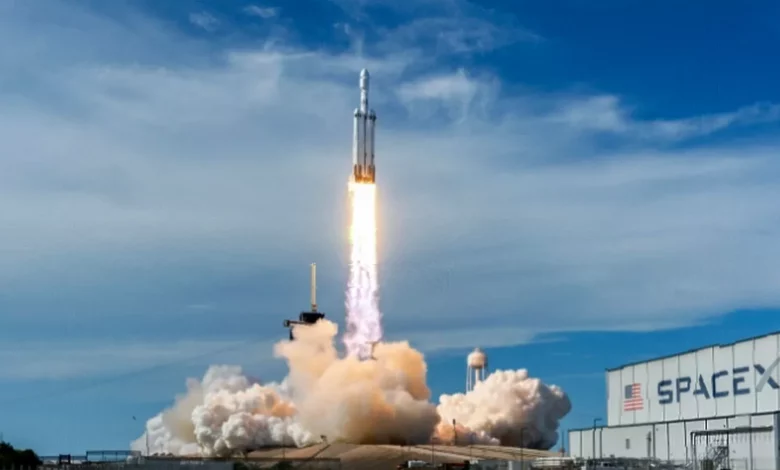
SpaceX has signed a computing agreement worth up to $6.3 billion with Reflection AI, the open-source artificial intelligence startup founded by two veterans of Google DeepMind, securing the startup immediate access to Nvidia GB300 chips at SpaceX’s Colossus 2 data centre near Memphis, Tennessee. Under the terms of the deal, Reflection will pay $150 million a month from July 1, 2026, with the contract running through to 2029 if both parties choose not to exercise a 90-day exit clause after the first three months.
The addition of Reflection brings the total committed compute revenue SpaceX has secured from outside clients at its Colossus data centres to more than $80 billion through 2029, according to regulatory filings and public reporting. The client list already includes Anthropic, which in May 2026 leased the entire capacity of the original Colossus 1 site in a deal worth approximately $45 billion through mid-2029, and Google, which committed roughly $30 billion in early June for access to Colossus 2. SpaceX is also in the process of acquiring Cursor, the AI coding startup, for $60 billion; Cursor is already a tenant.
Reflection AI was founded in March 2024 by Misha Laskin, who led reward modelling for Google DeepMind’s Gemini project, and Ioannis Antonoglou, DeepMind’s sixth-ever researcher and a co-creator of AlphaGo, the system that defeated the world Go champion in 2016. The company emerged from stealth in March 2025 with $130 million at a roughly $545 million valuation, raised $2 billion at an $8 billion valuation from Nvidia, Sequoia, Lightspeed and others in October 2025, and was last reported seeking $2.5 billion at a $25 billion valuation. Nvidia alone has invested $800 million.
An open-source bet after the Anthropic Fable shutdown
What makes Reflection’s $6.3 billion compute deal strategically pointed is that the company has not yet released a public frontier model. That fact sits awkwardly alongside a $25 billion valuation and a six-billion-dollar compute commitment, but the founders’ track record — and a thesis that has gained ground specifically because of events such as the shutdown of Anthropic’s Fable project — commands attention. Reflection positions itself as an open-source alternative to closed frontier AI labs, developing open foundation models and software agents for AI-assisted software development. Its initial product, launched under the name Asimov, is a code-comprehension agent that helps engineering teams answer questions about software systems by drawing on code, emails and project updates.
The open-source pitch is now more compelling than it was a year ago. The Anthropic Fable shutdown — the details of which remain unclear but which has become a touchstone in the debate over closed versus open AI — demonstrated, in the view of many in the field, the risks of reliance on proprietary models that can be switched off or restricted. Reflection’s model weights, once released, will be publicly available. Its revenue model depends on large enterprises and governments — what the industry now calls sovereign AI customers — who need models they can inspect, modify and run on their own infrastructure without depending on a directive from Washington on a Friday afternoon. The company already has early ties to U.S. government and national security customers, including the Department of Energy’s Genesis Mission and Pentagon AI programmes, according to materials viewed by CNBC.
The deal also reveals an increasingly common circular capital structure in AI infrastructure. Nvidia has invested $800 million in Reflection. Reflection will now run on Nvidia GB300 chips that SpaceX purchased. The same handful of players — chipmaker, landlord, startup — appear in each other’s cap tables, customer lists and supply chains, creating a tightly interwoven ecosystem where capital, hardware and compute capacity circulate among the same actors.
The broader compute race: billions stacked on billions
Access to top-tier Nvidia chips has become the central constraint for any company trying to build or serve frontier AI. The Reflection deal is one piece of a spending wave that shows no sign of slowing. Groq, which is building its own inference chips rather than renting GPU capacity, raised $650 million to scale its global inference cloud. CoreWeave has expanded through multi-billion-dollar infrastructure commitments. Microsoft, Amazon and Google continue pouring capital into data centres. Nvidia itself raised $25 billion in debt with a 30-year tranche, signalling that lenders believe AI infrastructure demand will run for decades. Morgan Stanley estimates nearly $3 trillion in global data centre construction by 2028. Power availability has become a critical bottleneck, prompting the White House to introduce a “Ratepayer Protection Pledge” under which tech companies commit to building or buying their own power infrastructure for data centres.
SpaceX, meanwhile, has transformed from a rocket company into a compute landlord faster than almost anyone anticipated. Its Colossus data centres near Memphis now house approximately 555,000 Nvidia GPUs acquired at a cost of around $18 billion, spread across multiple buildings with a planned total power capacity of two gigawatts. Colossus 1 was built rapidly in 2024 to train xAI’s Grok models, but was largely underutilised after xAI shifted focus to the newer, Blackwell-based Colossus 2. The result was a vast pool of idle compute capacity that SpaceX has now monetised through multi-billion-dollar leases with some of the biggest names in AI. The company completed its initial public offering on June 12, 2026 at $135 per share, valuing it at $1.77 trillion in what was the largest IPO in history. Shares surged on debut, briefly pushing the market cap above $2.1 trillion intraday and making Elon Musk the world’s first trillionaire.
For Reflection, the deal resolves the single biggest constraint facing any frontier AI lab: guaranteed access to chips. Leasing from Colossus rather than building its own data centres lets the company spend its capital on research rather than concrete and cooling systems. The unanswered question is what Reflection actually ships. Pedigree does not guarantee products, and a $25 billion valuation with no public model is a bet that commands scrutiny as well as attention. The compute deal buys time, credibility and capacity. Whether that translates into frontier models capable of competing with OpenAI, Anthropic and Google is the question the next 12 months will answer, and the one SpaceX has now, in a sense, also staked a claim on.