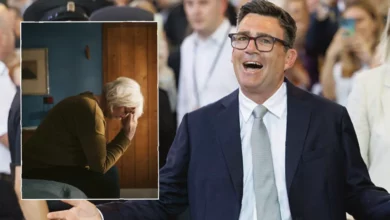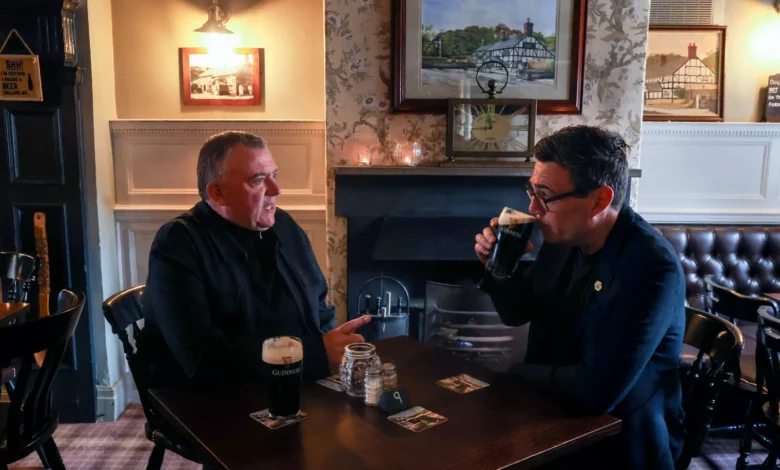
Andy Burnham has pledged to slash business rates for pubs by 20 per cent if he becomes prime minister, setting out a tax plan he says would reverse what he called Labour’s failure to support small businesses.
The Greater Manchester mayor and Labour candidate in the Makerfield by-election, who has said he will challenge Sir Keir Starmer for the party leadership if he wins the seat, used the campaign to unveil a series of tax pledges aimed at hospitality and independent retailers. Central to the package is a 20 per cent cut in business rates for pubs, clubs and music venues — a more generous offer than the 15 per cent relief the government granted to pubs in January for the 2026-27 financial year. Under the government’s current scheme, eligible pubs also have their bills frozen in real terms for the following two years, but Burnham’s proposed cut would begin in 2027-28 and cost an estimated £100 million.
Burnham also promised to raise the threshold at which other small businesses — including independent shops, restaurants and cafes — would need to pay business rates, in effect abolishing the tax for the smallest concerns. A taper system would be introduced to avoid a sudden “cliff edge” for businesses that grow beyond the threshold. “Our high streets matter to me because they matter to the people who live here,” Burnham said. “I want to make sure that these family-owned businesses, as the heart and soul of this country, are protected and given the chance to thrive. I am willing to be honest about where we have fallen short — and say that my party has got this wrong in Government. They have undervalued the contribution these businesses make to our livelihoods and our communities.”
The pledge comes as the hospitality sector faces what trade bodies have described as a “perfect storm” of rising costs. The government’s business rates revaluation, effective from 1 April 2026, is expected to result in significantly higher levies for many properties, particularly pubs. UKHospitality has projected that an average pub’s rates could be £4,500 higher in 2027-28 than current levels, rising to £7,000 higher the following year. The removal of the 40 per cent Retail, Hospitality and Leisure discount, which expired in April 2026, is a further factor. The sector as a whole could face a bill of £928 million if relief ended, the trade body has warned. Hotels are facing particularly steep increases of up to 300 per cent in rateable values, with average bill rises of an estimated £205,000 over three years.
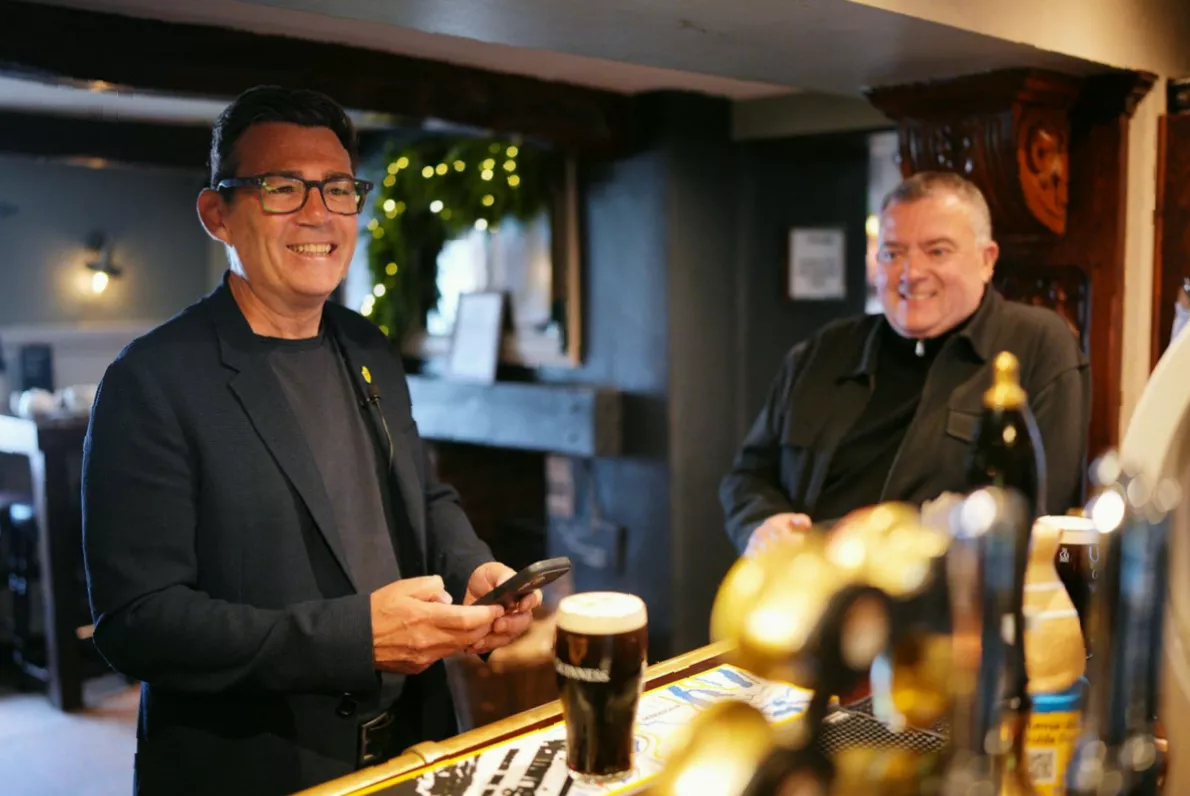
Burnham has also expressed sympathy with calls to reverse Chancellor Rachel Reeves’s increase in employers’ national insurance contributions. In her first budget, Reeves raised the rate by 1.2 percentage points to 15 per cent from April 2025 and cut the threshold at which employers start paying from £9,100 to £5,000 per year — a measure intended to raise £25 billion annually to fund public services. The Employment Allowance was increased to £10,500 to partly offset the impact, but businesses with lower-paid staff have said the burden remains heavy. Burnham told BBC’s Newsnight that the decision was “not the right decision” and that more needed to be done. “People just feel they are at the kind of limits of what they can do,” he said. Asked if he was open to reversing the rise, he replied: “I’m sympathetic to that, because I’ve been on the record of saying that before, this thing I’m announcing today isn’t the be-all and end-all.”
Funding the plan: taxing tech giants
To pay for the business rates cut for pubs, Burnham said he would increase taxes on online tech giants and their warehouses in Britain. The UK already has a Digital Services Tax — a 2 per cent levy on the revenues of large digital companies that derive value from UK users, introduced in April 2020 as an interim measure pending international corporate tax reform. The government has also been involved in the OECD’s Pillar Two agreement, which aims to establish a minimum 15 per cent corporate tax rate for large multinationals, though implementation has faced delays and the US has threatened tariffs over the UK’s digital services tax. Burnham’s proposal would go further, explicitly targeting the warehouses and distribution centres that underpin e-commerce giants’ operations, in an effort to level the playing field for high street businesses. Labour has previously pledged to replace the existing business rates system with one that “levels the playing field” between physical shops and online corporations, arguing that the current system unfairly burdens hospitality — with venues paying “three times more than they should” relative to their economic activity.
Burnham’s announcement arrives in the context of a high-stakes by-election in Makerfield, triggered by the resignation of Josh Simons. The mayor has explicitly stated his intention to challenge for the Labour leadership if he wins the seat, arguing that the party needs “fundamental change.” Downing Street has said the process for challenging the leader has not been triggered and that the focus should be on governing. Sir Keir Starmer has previously been described as resilient, with no one having “got rich betting against Keir Starmer,” and other potential contenders such as Wes Streeting have also been mentioned. But Burnham is framing his campaign as a means of reconnecting Labour with working-class Britain. “Reconnecting Labour to working-class Britain means backing our high streets and reconnecting with our local family-run businesses,” he said. “I want to build a future where businesses in Makerfield can grow in confidence knowing we are on their side. That starts with giving them a fairer tax system and standing up for the people who run them.”