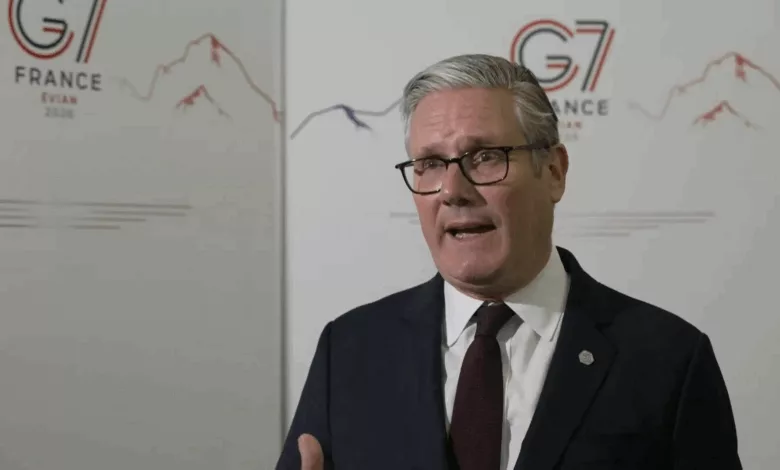
Keir Starmer has insisted his critics are “wrong every time” as he mounted a defiant defence of his premiership and vowed to “not walk away” from Number 10, despite mounting pressure over his leadership following the dramatic resignations of two senior defence figures last week. Speaking ahead of the G7 summit in France, the Prime Minister batted away suggestions that he should step down, pointing instead to the 2024 general election landslide that handed Labour a five-year mandate. “We got a landslide victory in 2024 for a five-year mandate for this Labour government,” he said, adding that on his political journey people had repeatedly told him things were not possible — turning the party around, winning an election, investing in public services while stabilising the economy — and that “they were wrong every time. That’s why I intend not to walk away from this, but to carry on with what I was elected to do.”
Starmer’s remarks come at a moment of acute vulnerability. By mid-May 2026, more than 95 Labour MPs had reportedly called for him to resign, according to multiple reports, while public dissatisfaction has been fuelled by a prolonged cost-of-living crisis, protests and a series of policy U-turns. Potential leadership challengers are circling, among them Greater Manchester Mayor Andy Burnham, Health Secretary Wes Streeting — who is said to have resigned from cabinet — and former Armed Forces Minister Al Carns. Starmer has previously warned Burnham against “chaos” and stated he wants “10 years in No 10”, vowing to “fight my challengers”. Some observers see the upcoming Labour Party conference as a litmus test for his survival.
The Prime Minister sought to counter the narrative of a government in trouble by listing what he described as tangible achievements. He highlighted that NHS waiting lists had “come down, the biggest drop in 17 years just the other week”. Research data shows that in March 2026 the NHS hit its target for patients waiting 18 weeks, with the overall list falling to 7.11 million — the lowest in three and a half years. The proportion waiting more than a year dropped to 2.7% in February 2025, the lowest since August 2020. However, other figures from February 2026 put the waiting list at 7.29 million in December 2025, and a study published that month warned the list must more than halve to 3.4 million to meet the constitutional target of 92% of patients treated within 18 weeks by 2029. Starmer also boasted that “our economy is stable, and we’ve got the highest growth in the G7 at the moment”. The UK economy did rebound in early 2024 after a recession, with GDP growth of 1.2% over the first half of the year, making it the fastest-growing G7 economy for a period. But growth slowed to 0.1% in the third quarter, and by September 2024 the OECD forecast UK growth at 1.1% for the year — matching Canada and France but behind the US. The OECD described the growth as “relatively robust” but warned of risks from geopolitical and trade tensions, while economists note that GDP per head rose by only 0.3% in the second quarter of 2024 once immigration was adjusted for. Chancellor Rachel Reeves has acknowledged that further action is needed, calling economic growth the government’s “number one mission”.
Defence spending under the microscope after ministerial resignations
The greatest challenge to Starmer’s authority, however, stems from defence. Last week, former Defence Secretary John Healey and Armed Forces Minister Al Carns both resigned, citing deep dissatisfaction with the government’s Defence Investment Plan. Healey said the plan “falls well short of what is required for defence and the country at this dangerous time” and that he was being forced to make decisions that would “reduce the readiness of our Forces and increase the risk to personnel on operations, and could make the country less safe”. Carns, a former Royal Marines officer, described the plan as “not fit for purpose” and “neither transformative enough nor sufficiently funded”, and called for a “new way of governing”. Both resigned on 11 June 2026, throwing the government’s defence strategy into turmoil. Healey had held the defence brief since Starmer became Labour leader in 2020 and was described as a loyal Labour man for over 30 years.
Questioned on the row, Starmer insisted that his government had already increased defence spending from 2.3% to 2.6% of GDP last year — “the biggest increase since the 1980s” — and that this would mean £270 billion spent on defence over this Parliament. He said: “On top of that defence investment plan, which obviously gives us the capability for the future, we will put even more money into it.” He acknowledged that delivering on that commitment would require “difficult decisions”, revealing that he had decided to “reallocate funds from other departments”. The new Defence Secretary, who was reading in, was now discussing with the Prime Minister how and what that money would be spent on in terms of capability, with his own thoughts on priorities. “That’s the discussion we’re in the middle of at the moment,” Starmer added.
The government has committed to reaching 2.5% of GDP on defence by 2027, with an ambition of 3% in the next Parliament subject to economic conditions — a target similar to that set by the previous Conservative government. Starmer had said in July 2024 that a strategic defence review would set out a roadmap to 2.5%. But reports suggest deep unhappiness over the specifics: military chiefs are said to have told ministers that an additional £13.5 billion was less than half the £28 billion they considered necessary. The Defence Investment Plan itself has been repeatedly delayed. Starmer, in his response to Healey’s resignation, said he was “proud of our record on funding” and that the plan would deliver “an unprecedented increase in defence spending in a sustainable way”, adding that the government would cut the international aid budget to help fund the uplift. The government has claimed this represents the largest sustained increase in defence spending since the Cold War.