Wes Streeting has confirmed he will stand for the Labour leadership if a contest is triggered, telling a conference in central London on Saturday that the party needs “a proper contest with the best candidates on the field”.
Leadership bid and the case for delaying
Streeting, who resigned as Health Secretary on Thursday citing a “loss of faith” in Sir Keir Starmer’s leadership, insisted he has enough support among Labour MPs to launch a challenge. However, he argued that rushing into a contest now would “lack legitimacy” unless rival Andy Burnham is given a chance to return to Parliament first. Burnham, the Mayor of Greater Manchester, has been cleared by Labour’s National Executive Committee to seek selection in the Makerfield by-election, a move widely seen as paving the way for a potential leadership bid. Streeting endorsed Burnham’s candidacy, saying he has the “best chance of winning” the by-election.
Speaking at the Progress think tank conference, Streeting explained his decision to hold back. “We could have rushed straight into a leadership contest, knowing not all of the candidates would be on the pitch, that Andy Burnham was about to stand in a by-election,” he said. “If we had rushed ahead without giving Andy a chance to stand, the new leader, whether it was me or anyone else, would lack the legitimacy, and so we would end up extending instability and uncertainty. That might have been the self-interested thing to do for candidates who are in parliament presently, but it wasn’t in the party’s interest and wasn’t in the national interest.”
Streeting’s stance reflects a broader calculation about the contest’s credibility. Under Labour rules, a leadership election can be triggered if the leader resigns or if 20% of MPs – currently 81 – nominate a challenger. Although Streeting said he has the required support, he has chosen not to force the issue until Burnham, a popular figure with positive favourability ratings in recent YouGov polls, has the opportunity to stand. Makerfield, a constituency with a history of Labour representation but where Reform UK has shown significant support, is considered marginal, making Burnham’s path to Westminster uncertain but possible.
Warning over Labour’s direction
In his first speech since resigning, Streeting delivered a blistering critique of Labour’s recent trajectory, warning that the party risks becoming the “handmaidens of Nigel Farage and the breakup of the United Kingdom” unless it changes course. He argued that the voters’ verdict in the local elections was more than a rebuke – it was a warning. “Unless we change course, we risk being the handmaidens of Nigel Farage and the breakup of the United Kingdom,” he said.
Streeting traced the party’s problems back to the Jeremy Corbyn era, describing it as “marred by factionalism” and dominated by the “moral emergency of antisemitism in our party” – a reference to the Equality and Human Rights Commission’s 2020 report that found Labour had breached the Equality Act in its handling of antisemitism complaints. Streeting, a long-time critic of Corbyn who accused him of a “flat-footed and lackadaisical attitude” to tackling antisemitism, said that crisis left “little room for intellectual renewal or policy debate on the centre left”.
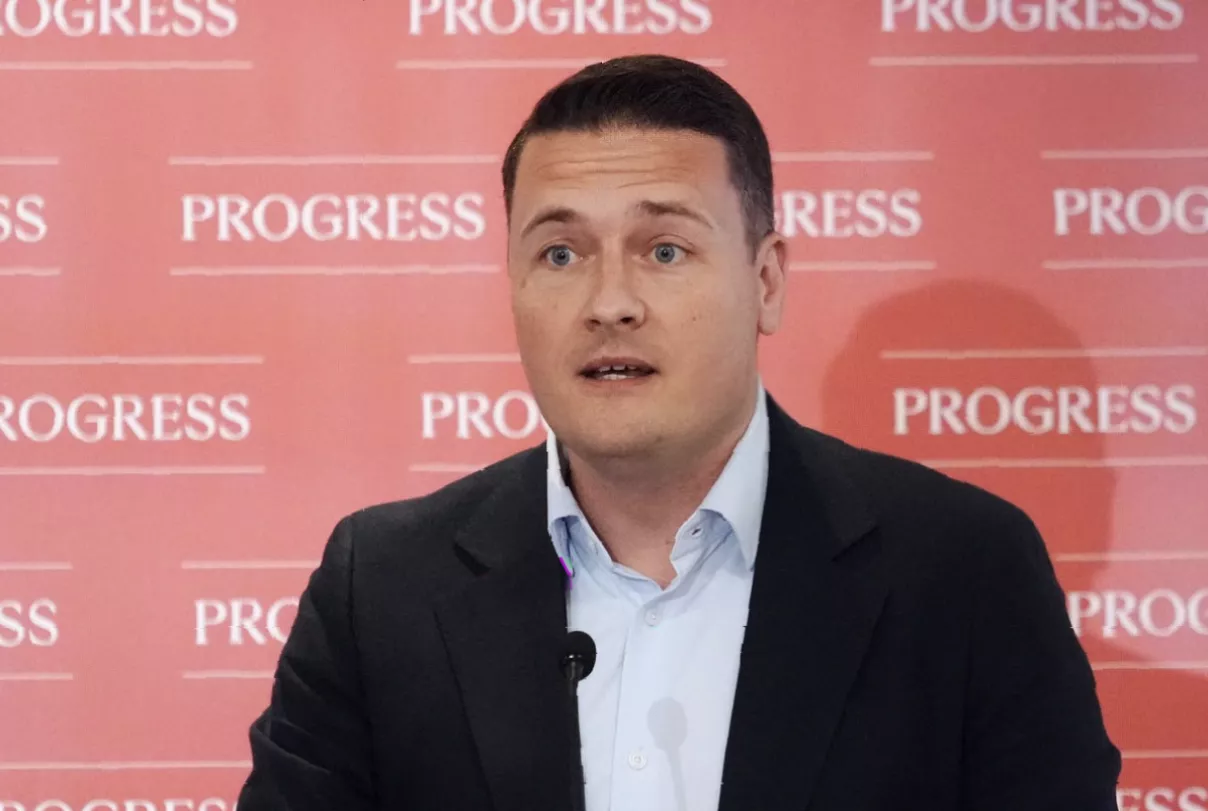
He then criticised what he called a “dishonest leadership contest” that followed Corbyn’s tenure, and the “overcautiousness in opposition” under Starmer. “Interesting policy ideas couldn’t be floated because we were too afraid of what the Tories might say, so we said nothing,” Streeting said. “Instead of a willingness to challenge ideas and kick the tyres, debate was viewed as division and shut down. As a result, we arrived in government underprepared in too many areas and lacking clarity of vision and direction.”
Streeting, who is considered to be on the right of the party with past associations with the Blairite wing, has previously objected to being labelled a “Blairite”, saying there is “no future for the Labour party if it’s locked in a battle between two competing visions of the past”. He called for a broader “battle of ideas” within the party, including debate on “what type of capitalism do we want” and how to address the “destruction of shared truth”, suggesting historical models like the BBC could offer lessons in countering misinformation.
Call to rejoin the European Union
In a significant policy move, Streeting used the conference to call for Britain to rejoin the European Union, describing leaving as a “catastrophic mistake”. He argued that in a dangerous world, the UK must “club together”, both to rebuild its economy and trade and to improve defence against “shared threats from Russian aggression and America First”.
“The biggest economic opportunity we have is on our doorstep,” Streeting said. “We need a new special relationship with the EU, because Britain’s future lies with Europe – and one day back in the European Union.” The stance marks a shift from his previous position, where he had advocated only for a “deeper trading relationship” with the EU, hinting at a customs union. Streeting, who campaigned for Remain in 2016 and later for a “People’s Vote”, has been a vice-chair of the All-Party Parliamentary Group Against Antisemitism and a supporter of Labour Friends of Israel.
Streeting also urged the party to embrace “diversity of thought and competition for ideas as a strength”, adding: “We won’t find radical solutions by ignoring ideas in favour of just problem solving – as though Government is the same as management consultancy – or if we believe that one person or one political tradition has a monopoly on ideas and wisdom.” His call to rejoin the EU comes amid the rise of Reform UK, led by Nigel Farage, which has made significant local election gains, including in areas that voted heavily for Brexit. Sir Jacob Rees-Mogg has warned that pro-EU stances may not resonate in traditional Labour “Red Wall” seats, but Streeting insisted the party must change course or risk being complicit in the breakup of the UK.