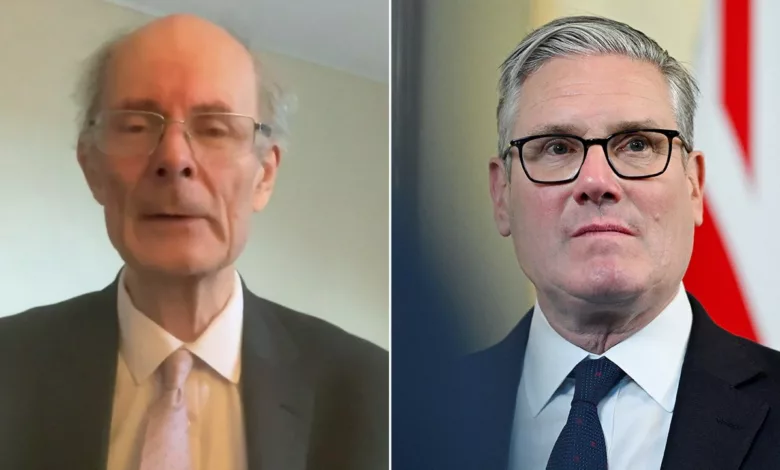
Sir Keir Starmer’s future as Prime Minister “rests on the outcome” of the upcoming Makerfield by-election, the veteran pollster Sir John Curtice has warned, as new polling confirms Andy Burnham would crush the Labour leader in a direct membership vote.
The Pollster’s Warning
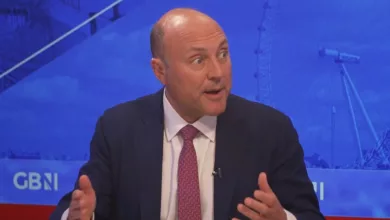
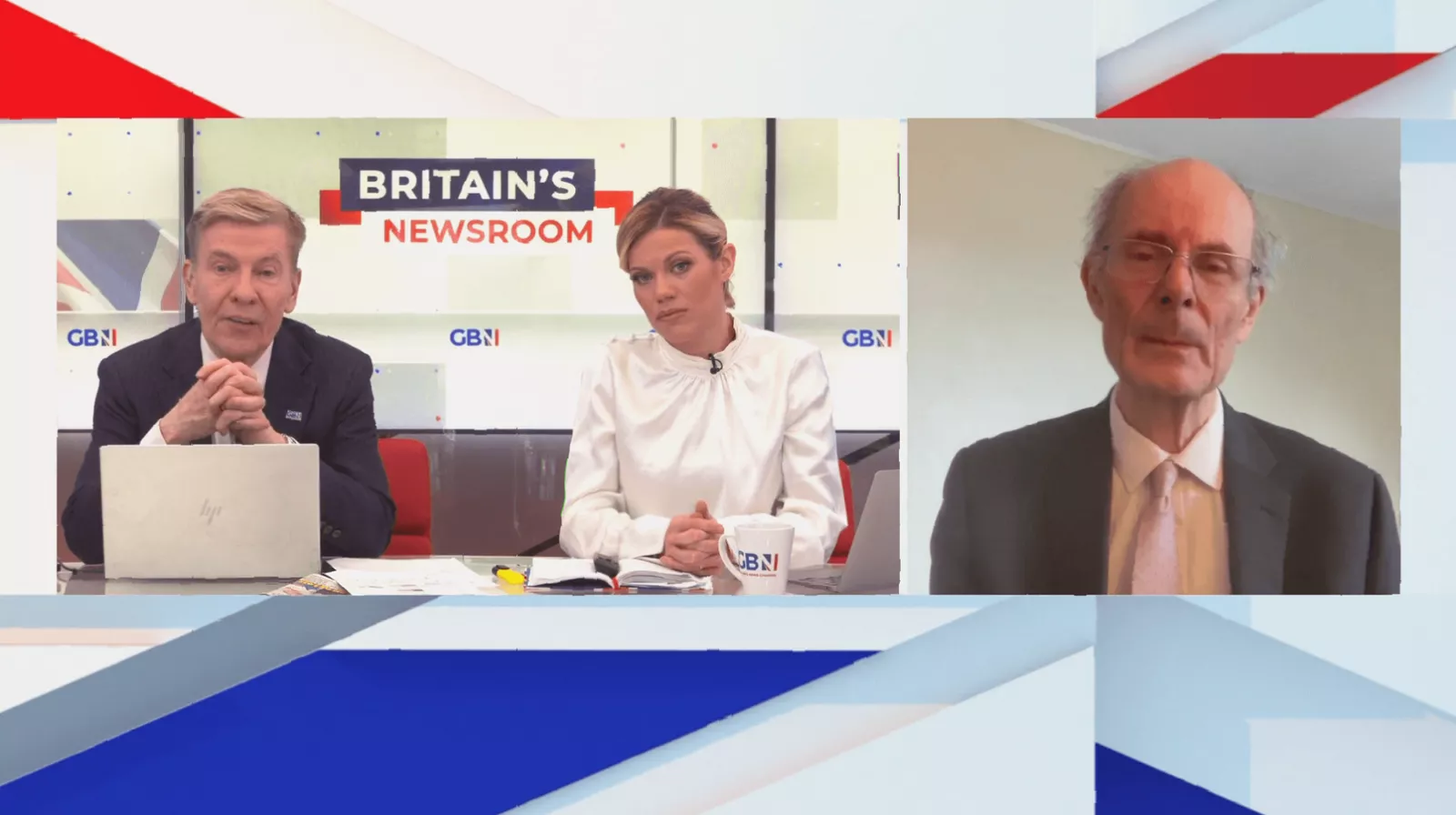
Speaking to GB News, Sir John argued that the by-election — triggered last week when the incumbent MP, Josh Simons, announced his resignation to allow the Greater Manchester Mayor to stand — will determine whether the party’s leadership crisis deepens or reaches a conclusion. “It just emphasises the extent to which Keir Starmer’s fate probably rests on the outcome in Makerfield,” he said.
Sir John cautioned that while a Burnham victory could clear a path to a leadership challenge, a defeat would leave Labour mired in uncertainty. “On the other hand, if Andy Burnham doesn’t make it, the Labour Party will find itself still in a leadership crisis, although the majority of Labour MPs, at least in private, think that Keir Starmer should go,” he added.
The Polling Data
His assessment follows fresh YouGov polling conducted on May 18 that lays bare the scale of the challenge facing Sir Keir. Among Labour Party members, 47 per cent named Mr Burnham as their first choice to lead the party, compared with just 31 per cent for Sir Keir. The Health Secretary, Wes Streeting — who resigned from the cabinet in a move widely interpreted as a bid for the leadership — saw his support tumble to only four per cent.
In a head-to-head contest between the two men, YouGov found Mr Burnham leading Sir Keir by 59 per cent to 37 per cent among members. Separate polling from Survation, conducted on May 12, put Mr Burnham on 42 per cent as first choice, with Wes Streeting and Angela Rayner tied on 11 per cent each.
Members’ confidence in Sir Keir’s electoral appeal is notably low: only 28 per cent believe Labour would win the next general election with him as leader, compared with 74 per cent who think the party would triumph under Mr Burnham. While 66 per cent of members said Sir Keir has done a good job as Prime Minister, 57 per cent think he should stand down before the 2029 election. Crucially, only 28 per cent believe he should go “right away,” according to Sir John’s analysis of the data.
Public opinion is even more damning. Sir Keir’s net favourability rating stands at minus 46, with just 23 per cent viewing him favourably against 69 per cent unfavourably. By contrast, Mr Burnham holds a net favourability of plus nine among the general public and plus 41 among Labour voters.
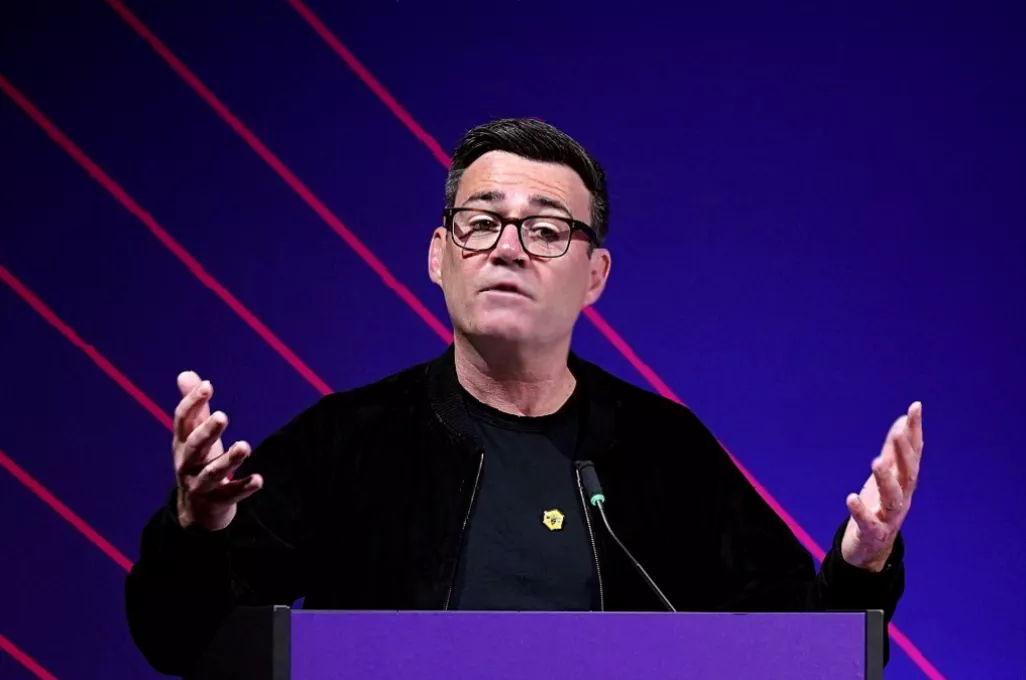
The By-Election’s Significance
The Makerfield contest, expected to take place on June 18, was triggered on May 14 when Josh Simons announced he would step aside to allow Mr Burnham to seek a return to Parliament. The constituency, which has been a safe Labour seat since it was created in 1983, covers suburban and former industrial areas south of Wigan. At the 2024 general election, Simons held it with a majority of 5,399 votes — 13.4 per cent — over Reform UK.
However, recent local election results in the area paint a far more precarious picture for Labour. Reform UK won all wards in the constituency, securing around half the vote, while Labour’s support slumped. The seat, once considered a Labour stronghold, may now be highly marginal.
Labour’s National Executive Committee has approved Mr Burnham to stand for selection in the constituency, after an earlier attempt by him to contest the Gorton and Denton by-election was blocked. Under party rules, any candidate for the leadership must be a sitting MP — the core reason Mr Burnham needs to win a seat in the House of Commons.
Sir John described the situation as “remarkable,” comparing it to the 1963 Kinross and West Perthshire by-election, when Sir Alec Douglas-Home — having just been appointed Prime Minister by the Conservative “Magic Circle” — had to win a seat to enter the Commons. “The nearest we have to compare is the by-election in 1963,” Sir John said. “Yes, this by-election is remarkable in the sense that we’ve got somebody who, if they stand, may well also indeed become Prime Minister, but not with at least the official acquiescence of the incumbent, but rather with the incumbent being very clear that they don’t wish to leave.”
A further historical parallel is the 1965 Leyton by-election, where Labour’s Patrick Gordon Walker lost narrowly to the Conservatives, significantly reducing Harold Wilson’s majority and weakening his government’s ability to govern.
What a Burnham Victory Would Mean
If Mr Burnham wins in Makerfield, the path to a formal leadership challenge opens immediately. Sir John said he has “no doubt” Mr Burnham could secure the 81 nominations from Labour MPs required to trigger a contest. “If Andy Burnham can win, I don’t think we have any doubts that he can get the 81 nominations amongst MPs,” he told GB News. “And it’s clear from last week’s polling and this week’s that Mr Burnham is well ahead of Keir Starmer in the popularity contest between the two of them.”
His mayoral record reinforces that popularity. As Mayor of Greater Manchester since 2017, Mr Burnham has focused on public transport, rough sleeping, housing and economic growth, and is often dubbed the “King of the North.” Before the 2024 general election, he secured 63 per cent of the vote across the entire Greater Manchester mayoral area — a figure that dwarfs Labour’s 43 per cent in the parliamentary election. “Now the question is just how much of that personal popularity will translate into this constituency, which is not a million miles away from where Mr Burnham lives,” Sir John said.
Mr Burnham has contested the Labour leadership twice before, finishing fourth in 2010 and second to Jeremy Corbyn in 2015. Should he return to Westminster, polling suggests he would comfortably defeat Sir Keir in a membership ballot. The YouGov data indicates that 74 per cent of members believe Labour would win the next election with Mr Burnham at the helm.
What a Burnham Defeat Would Mean
Conversely, if Mr Burnham loses in Makerfield, Sir John warned that the Labour Party would “find itself still in a leadership crisis.” The majority of Labour MPs — though reluctant to speak publicly — are understood to want Sir Keir to go, but no alternative candidate has yet emerged with sufficient support among the membership to guarantee victory.
“Whether or not there is anybody else around who can be sure of beating him amongst the membership at the moment at least is still uncertain,” Sir John said. Wes Streeting, despite resigning as Health Secretary, polled at just four per cent in the YouGov survey and would lose a head-to-head contest against Sir Keir. His position on Brexit — he has called it a “catastrophic mistake” and suggested rejoining the EU — could prove a liability in a constituency that voted Leave in the 2016 referendum.
Reform UK’s strength in Makerfield poses a further obstacle. The party’s anti-immigration, EU-sceptic platform resonates strongly in the area’s working-class, predominantly white electorate, and local election results suggest the party could mount a serious challenge. Sir John has previously warned that Labour is losing support not only to Reform but also to the Liberal Democrats and Greens.
Sir John noted that the “only reason why we might even contemplate Labour being able to win this by-election” is Mr Burnham’s personal popularity. Without that factor, the party would be facing an electoral disaster in one of its safest seats. He added: “At this particular point in time and in these circumstances, and that is the big unknown, and frankly, we’re all waiting for the first opinion poll or two — assuming that Mr Burnham does become the candidate — to see whether or not indeed he does have a competitive chance.”